Adaptive Reuse: Transforming Yesterday’s Buildings into Tomorrow’s Landmarks

In an era defined by sustainability, cultural awareness, and economic pragmatism, adaptive reuse has evolved from a niche preservation strategy into one of architecture’s most powerful design disciplines. The most compelling cities are no longer those that erase their past, but those that reinterpret it. Adaptive reuse stands at that intersection—where memory, material, and modernity converge.

At its highest level, adaptive reuse is not simply about salvaging an old structure. It is about unlocking latent potential. It is about recognizing that within aging warehouses, former schools, vacant factories, and underutilized commercial buildings lie the bones of future landmarks. Firms such as Netta Architects understand that reimagining existing structures demands both technical rigor and creative vision—an ability to see what a building has been and what it could become.

The Strategic Intelligence of Reuse

Demolition is often the easiest option—but rarely the most strategic. Existing buildings contain embodied energy: the cumulative environmental cost of materials, manufacturing, and construction already invested. By preserving and repurposing structural frameworks, architects significantly reduce carbon impact while maintaining architectural continuity within a community.

Yet sustainability is only one dimension of adaptive reuse. There is also economic intelligence at play. In many urban contexts, land values far exceed building values. Retrofitting an existing structure can shorten construction timelines, reduce material costs, and expedite approvals—particularly when historical character is preserved.

More importantly, adaptive reuse creates differentiation. In a marketplace saturated with ground-up developments, authenticity becomes a competitive advantage.

Architecture as Narrative

New construction offers a blank slate. Adaptive reuse offers something more complex: narrative. Original brickwork, exposed beams, steel trusses, and masonry facades carry the imprint of time. They anchor a project in place and memory.

The most successful reuse projects resist the temptation to over-sanitize. Instead, they curate contrast. Modern glass inserts meet weathered brick. Contemporary lighting systems illuminate century-old timber. Sleek interior layouts unfold within industrial shells.

This dialogue between eras produces architectural richness. It allows buildings to evolve without losing their identity. The past becomes a design collaborator rather than an obstacle.

Technical Precision Meets Creative Reinvention

Adaptive reuse is inherently more complex than new construction. Existing structural systems must be analyzed, reinforced, and sometimes reinterpreted. Mechanical, electrical, and plumbing systems require thoughtful integration without compromising architectural character.

Floor-to-floor heights, column grids, and load-bearing walls present constraints—but also opportunities for innovation. Creative programming can transform former manufacturing floors into open-plan offices, loft-style residences, boutique hospitality spaces, or mixed-use destinations.

What separates successful adaptive reuse from superficial renovation is architectural precision. It requires a deep understanding of structural integrity, building codes, accessibility standards, and modern performance requirements—all layered within a creative framework that elevates the original structure.

Sustainability Beyond Certification

While adaptive reuse often aligns with green building initiatives, its sustainability impact transcends certification metrics. By retaining core structures, projects reduce demolition waste and conserve natural resources. They also reinforce walkable urban environments by revitalizing existing districts rather than expanding outward.

Moreover, reuse encourages long-term thinking. Buildings designed to adapt once can adapt again. Flexibility becomes embedded in the architectural DNA, allowing spaces to evolve with shifting economic and social needs.

True sustainability is not just about efficiency—it is about longevity.

Cultural Continuity and Community Identity

When historic or legacy buildings are preserved, communities retain tangible links to their history. Schools converted into residential spaces, warehouses transformed into creative offices, or former civic buildings reimagined as cultural hubs all contribute to a city’s layered identity.

Adaptive reuse reinforces continuity while enabling progress. It avoids the sterile uniformity that can accompany large-scale redevelopment and instead cultivates distinctiveness.

For municipalities and developers alike, this cultural continuity enhances civic pride and market appeal. People gravitate toward environments that feel authentic, not manufactured.

Economic Revitalization Through Reinvention

Many adaptive reuse projects become catalysts for broader neighborhood revitalization. An abandoned factory reborn as a mixed-use destination can attract new businesses, increase foot traffic, and stimulate investment in surrounding properties.

Because these structures often occupy prominent or historically significant sites, their transformation sends a strong signal of reinvestment. They become anchors within their districts—visible proof that reinvention is possible.

Financially, adaptive reuse can unlock value where others see obsolescence. By preserving key architectural elements while upgrading systems and programming, developers can command premium pricing rooted in character and uniqueness.

Designing Forward by Looking Back

Adaptive reuse requires a mindset shift. It asks architects to approach buildings not as fixed artifacts, but as evolving frameworks. It demands respect without reverence—acknowledging history while confidently introducing contemporary expression.

The future of urban development will increasingly depend on this philosophy. As cities mature and available land tightens, the opportunity lies within existing walls. Every underutilized structure holds potential energy waiting to be released through thoughtful design.

Transforming yesterday’s buildings into tomorrow’s landmarks is not nostalgia. It is strategic foresight. It is recognizing that architecture gains richness through continuity and that the most resilient cities are those that build upon their foundations—literally and figuratively.

In adaptive reuse, architecture does more than preserve. It reinvents, reactivates, and redefines. It demonstrates that progress does not require erasure. Instead, it proves that the future can be built directly from the strength of the past.

Flavorful Soul: A Cultural Celebration with Alonia — A Night of Music, Unity, and Global Harmony

By: Lennard James 

On December 6, 2025, Atlanta will open its arms to a vibrant celebration of culture, community, and soulful artistry as Alonia “The Silky Songstress” presents Flavorful Soul: A Cultural Celebration at Plywood Place. Located at 933 Lee Street, Suite B-1, this deeply intentional event promises an evening where music becomes a shared language—one that uplifts hearts, honors heritage, and brings people together across backgrounds, rhythms, and traditions. 

Set against a backdrop of international flags, African-inspired textiles, and global symbolism, this one-of-a-kind showcase blends soul, world music, and vocal excellence. Supported by featured vocalists Yvette Moore, Ashley Perrymond, and Kristy Samantha, the gathering is positioned not merely as a concert, but as a cultural communion dedicated to spreading love, joy, and peace through the art of music. 

A Celebration Rooted in Culture and Connection 

The mission of Flavorful Soul is clear from the moment you see the flyer: unity through artistic expression. In a world increasingly hungry for authentic connection, this event serves as a cultural bridge—an intimate space where rhythm, story, and spirit remind us of our shared lineage. 

Vibrant colors, African drums, and global flags on the promotional design tell a story of belonging. They symbolize the interconnectedness of cultures, echoing the greater purpose of the night: to honor the richness of the African diaspora and uplift the universal power of music. 

At the center of this celebration is Alonia, revered as “The Silky Songstress.” Her voice—smooth, warm, and emotionally resonant—creates a sonic sanctuary. Blending soul, jazz, R&B, gospel, and diasporic influences with ease, she brings a sound that is both timeless and deeply contemporary. With a gift for storytelling and a heart for cultural preservation, Alonia pours meaning into every note. 

Flavorful Soul: A Cultural Celebration with Alonia — A Night of Music, Unity, and Global Harmony

Photo Courtesy: Aloina Jones

The Featured Vocalists: Women of Voice, Power, and Presence 

Supporting Alonia are three dynamic vocalists whose artistry enhances the evening’s depth: 

Yvette Moore 

A vocalist whose commanding presence brings emotional gravity and spiritual richness. Yvette’s signature warmth grounds the showcase, infusing it with authenticity and soul. 

Ashley Perrymond 

A storyteller through melody, Ashley’s voice carries elegance, heart, and vulnerability. Her delivery brings listeners into intimate narratives about love, resilience, and the beauty of lived experiences. 

Kristy Samantha 

Known for her smooth tone and captivating stage charisma, Kristy adds a modern vibrancy to the ensemble—enhancing the harmonic blend that defines the event’s musical identity. 

Together, these vocalists form a tapestry of sound, weaving a collective story that speaks to unity, sisterhood, and artistic brilliance. 

The Band: Masters of Rhythm, Spirit, and Global Sound 

A celebration of this magnitude requires a band capable of elevating the experience—and Flavorful Soul brings an exceptional ensemble of world-class musicians, each carrying decades of expertise and global influence. 

James Jernigan, Jr. Music Director & Percussionist 

The heartbeat of the show begins with James Jernigan, Jr., Alonia’s eldest son. With nearly 20 years of experience performing for churches, clubs, and corporate events, James is the rhythmic anchor of the production. He has been the lead percussionist for every one of Alonia’s curated shows, making this showcase #4 in their ongoing musical legacy. 

David McDaniel — Keyboards 

A multi-instrumentalist who began on violin and drums before finding his home on the keys, David brings versatility, depth, and a harmonic sophistication that elevates every performance. His background includes church stages, major gigs, and corporate events. 

Robert Galbreath, Jr. Bass Guitar 

A gifted musician and the current Band Director at Cedar Grove High School, Robert’s artistry is grounded in both skill and scholarship. Trained under Jessica Udell, a respected FAMU graduate and renowned band director, he brings both groove and precision to the ensemble. 

Rick Williamson — Guitar & Spanish Guitar 

With a career stretching back to the 1970s, Rick is a highly acclaimed guitarist who has worked with artists affiliated with Rose Royce, The Spinners, KC & the Sunshine Band, and other legendary groups. His mastery of both traditional and Spanish guitar infuses the show with elegance and global texture. 

Mario Diaz — Congas 

An internationally acclaimed percussionist, singer, dancer, and choreographer, Mario Diaz brings unmatched flair and cultural authenticity. His conga rhythms add a vibrant, international pulse that honors Afro-Caribbean and African traditions. 

Paul Shepherd — Harmonica 

What began as a gift for someone unreachable turned into a life-changing journey. Since learning the harmonica in 2007, Paul has become a soulful, expressive musician whose sound adds to bluesy emotion and unexpected charm. 

Dexter Morris, Jr. Saxophone 

An Army veteran and internationally acclaimed musician, Dexter’s résumé includes performing with the United States Army Band and playing for dignitaries, generals, and presidents around the world. A multi-instrumentalist since childhood, he began saxophone at age 11 and now brings world-class artistry and sophistication to every note. 

Together, these musicians form an elite collective—an ensemble capable of transforming the evening into a world tour of rhythm, unity, and cultural celebration. 

A Night to Remember 

Flavorful Soul: A Cultural Celebration is more than an entertainment experience. It is a moment of healing, togetherness, and cultural appreciation—an evening crafted with intention. 

On December 6th, Atlanta won’t just host another musical event. 

It will host a cultural awakening—one where heritage is honored, artistry is celebrated, and music becomes the bridge that brings us all home.  tickets are available at www.AloniaSings.com and partial of the proceeds will benefit a seniors at Frederick Douglass High School 

Event Details 

Location: Plywood Place 

933 Lee Street • Suite B-1 • Atlanta, GA 

📅 Date: December 6, 2025 

Time: 5:00 PM

Atlanta Falcons to Play in Madrid: NFL Announces 2026 International Game at Bernabéu Stadium

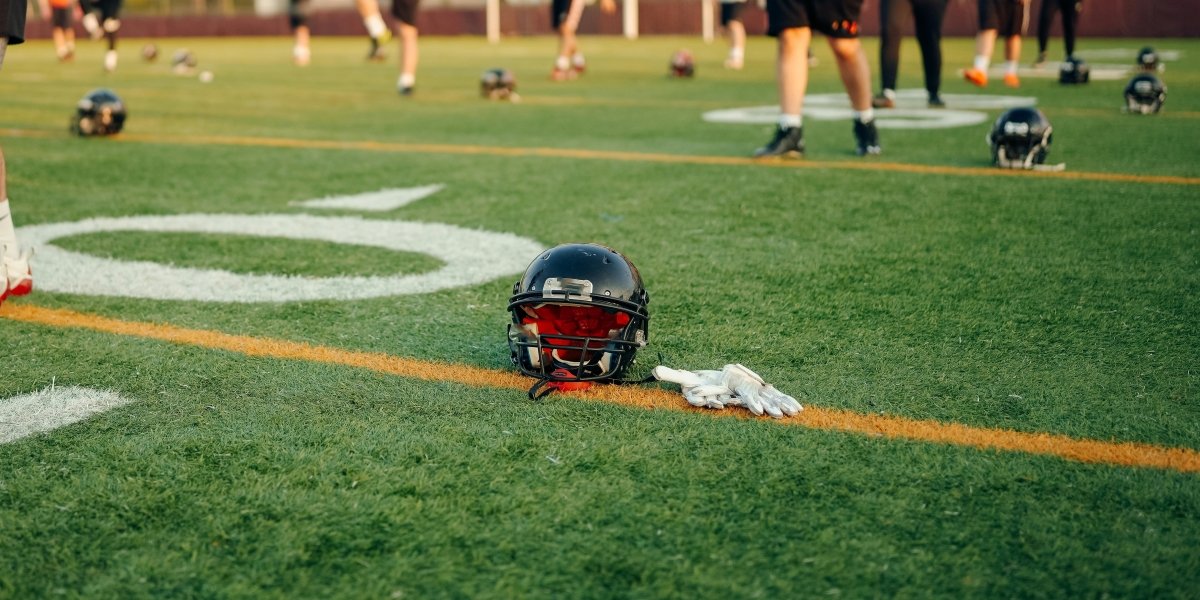
The National Football League is continuing its mission to become a global sport, and Spain is a major part of that plan. On March 3, 2026, the league confirmed that the Atlanta Falcons will travel to Madrid to play a regular-season game. This matchup will take place at the famous Santiago Bernabéu Stadium, which is the home of the Real Madrid soccer team.

This news is exciting for fans in Europe because it marks the second time the NFL will play an official game in the Spanish capital. The first game took place in November 2025, where the Miami Dolphins defeated the Washington Commanders in front of a sold-out crowd of over 78,000 people. The success of that event proved that Spain has a deep passion for American football.

A World-Class Stage for the Falcons

The Santiago Bernabéu is not just a soccer stadium; it is one of the most technologically advanced sports venues in the world. After a massive renovation, the stadium now features a retractable field that can be swapped out to host different events, including basketball and American football.

The NFL signed a multi-year deal to keep playing games at this venue. For the Falcons, playing in such an iconic location is a significant honor. The team will be the designated “home” team for this game, meaning they will give up one of their usual home games in Atlanta to play in Spain.

While the Falcons’ opponent and the exact date of the game will not be revealed until the full 2026 schedule is released this spring, the announcement has already created a lot of buzz. Fans are expected to travel from all over Europe and the United States to witness this historic moment.

The NFL’s Growing Global Map

The game in Madrid is just one piece of a record-breaking international schedule for 2026. The NFL plans to host nine games outside of the United States, reaching four different continents. This is the largest international push in the history of the league.

The 2026 international slate includes:

  • London, England: Three games across Wembley and Tottenham Hotspur Stadiums.

  • Munich, Germany: One game at the home of FC Bayern Munich.

  • Mexico City, Mexico: A return to the massive Estadio Banorte.

  • Paris, France: The first-ever regular-season game in the French capital.

  • Rio de Janeiro, Brazil: A historic game at the Maracanã Stadium.

  • Melbourne, Australia: A massive test for the league in the Southern Hemisphere.

By spreading games across these cities, the NFL is trying to find new fans and build a global community. Commissioner Roger Goodell has been vocal about his desire to make the NFL a permanent part of the international sports scene.

What the Leaders Are Saying

The leaders of the Atlanta Falcons and the NFL expressed great pride in bringing this game to Spain. They believe the partnership between the city of Atlanta and Madrid is a perfect match.

Falcons President and CEO Greg Beadles shared his excitement about the news:

“We are incredibly proud to be part of an NFL regular-season game in Madrid at the iconic Bernabéu. Atlanta and Madrid are a fitting match as we will host two of Spain’s group stage matches in the upcoming FIFA World Cup at Mercedes-Benz Stadium. This opportunity reflects the continued global growth of both the NFL and the Atlanta Falcons.”

NFL Country Manager for Spain, Rafa de los Santos, also highlighted the growing interest in the sport among Spanish citizens:

“The passion for the NFL in Spain is at an all‑time high, and welcoming the Atlanta Falcons to Madrid for a regular‑season game is a historic moment for our growing fanbase. I’m sure the Falcons will enjoy competing in such an iconic stadium as the Bernabéu, in one of the world’s great sporting capitals.”

The Falcons’ International History

The trip to Madrid will not be the first time the Falcons have played outside the United States. In fact, the team has a long history of traveling abroad to meet their international supporters. This will be the sixth time the Falcons play a regular-season game on foreign soil.

Their previous travels include:

  • 2013: Toronto, Canada

  • 2014, 2021, and 2023: London, England

  • 2025: Berlin, Germany

The organization has made a habit of playing in Europe, making this their fourth trip to the continent in just six seasons. For the players, these trips are a chance to see a new culture and play in front of a different kind of crowd. For the fans in Atlanta, the team’s official travel program, Falcons Fan Travel, is already offering packages that include flights, hotels, and exclusive events with former players.

A Special Connection to the World Cup

One interesting detail about this game is the timing. In 2026, the FIFA World Cup will be held in North America. Atlanta’s home stadium, Mercedes-Benz Stadium, is scheduled to host several matches for the Spanish national soccer team during that tournament.

Because of this, the Falcons see the Madrid game as a way to return the favor. While Spanish fans are coming to Atlanta for soccer, the Falcons are going to Madrid to share American football. This “cultural exchange” strengthens the ties between the two cities and makes the game feel even more important.

Looking Ahead to Kickoff

As the league prepares for its biggest year of international growth, the eyes of the football world will be on Madrid. The game is expected to take place in November 2026, which aligns with the international break in the soccer world. This schedule helps ensure that the Bernabéu is ready and that the city can handle the influx of thousands of visitors.

For now, fans can register for ticket alerts and start planning their trips. The announcement of the Falcons in Madrid is a clear sign that the NFL is no longer just an American tradition; it is a global event that belongs to everyone.