Research, Teaching, and Technology Transfer: The Work of Dr. Bodo Diehn

Dr. Bodo Diehn has spent much of his professional life moving between different worlds: the lab, the lecture hall, and, for a time, the policy offices of Washington. He isn’t the kind of scientist who draws a hard line between pure research and its practical side. For him, both belong to the same process of learning, one that starts with curiosity and, if done well, ends with something useful.

Early Curiosity

From the beginning, Dr. Diehn’s attention was caught by small things that respond to light. As a young researcher, he worked on Euglena gracilis, a single-celled organism whose behavior changes with shifts in brightness and gravity. He wanted to know how such a simple cell could “decide” where to move. That question led him deep into the chemistry and physics behind cell movement.

His papers from that period, many written with close collaborators, appeared in journals such as Photochemistry and Photobiology and the Journal of Protozoology. They are still cited for their careful experiments and plain, exact language. The work helped clarify how single cells sense light and orient themselves, details that later fed into larger studies of cellular signaling.

Teaching and Mentorship

Dr. Diehn’s students often say he treats the classroom like an extension of his lab. He expects accuracy but also encourages curiosity. When a student is unsure about an idea, he lets them talk it through, sometimes circling back to it weeks later. His courses in photobiology and sensory systems were never just lectures on data; they were conversations about how scientists figure things out.

Over time, he has guided graduate students and postdocs through their own research, emphasizing the small disciplines, note-keeping, patience, and clear thinking that sustain real science. Many of those former students now work in universities or research institutes of their own.

He has also been active in building communities around the topics he studies. During the 1970s he helped organize early conferences on sensory transduction in microorganisms, one of which evolved into the Gordon Research Conference series. Those meetings gave younger scientists a way to share data and ideas informally, long before online networks existed.

Science in Public Life

In the mid-1970s, Dr. Diehn stepped for a year into a very different environment: Capitol Hill. Chosen as an early Congressional Fellow of the American Chemical Society, he worked with committees on consumer protection and on aeronautical and space sciences. His job was to read through technical material and explain what it actually meant in practice.

He reviewed draft language for the Toxic Substances Control Act and looked into questions of bioavailability and drug testing. Later, he assisted staff overseeing NASA programs, translating scientific proposals into legislative summaries that could be understood by non-scientists. The experience convinced him that research and policy can inform each other, but only if both sides are willing to listen.

Following his time in Washington, Dr. Diehn continued his engagement with public policy as Director of the Science Office of the Michigan Legislature. In that role, he provided scientific and technical guidance to state lawmakers, helping them interpret research relevant to environmental policy, healthcare, and technology development. The office served as a bridge between academic expertise and legislative decision-making, ensuring that complex issues were informed by reliable data rather than speculation. Dr. Diehn viewed this work as an extension of his commitment to public understanding of science, applying the same analytical clarity from his laboratory experience to questions of governance and public interest. 

Turning Research Toward Application

Back in academia, Dr. Diehn kept looking for ways research could connect with technology. He studied questions around power generation, aircraft design, and the early ideas of electric propulsion, topics that would become important decades later. What interested him was not the engineering itself but the thought process: how a scientific principle might turn into a working system.

That interest in translation, between disciplines, between the lab and the world outside, runs through his career. He views it as part of what scientists owe the public that supports their work.

Continuing Work and Perspective

These days, Dr. Diehn remains engaged with both teaching and research communities. He writes, reviews papers, and stays in touch with colleagues across the United States and Europe. Those who know him describe a careful, exacting scientist who still enjoys the slow work of getting a question right.

He tends to downplay achievements, focusing instead on the shared nature of discovery. For him, good science is rarely about a single breakthrough; it’s about steady attention and collaboration.

Reflection

Looking over Dr. Diehn’s path, from his studies of single-cell movement to his time advising lawmakers, the through line is easy to see. He has always treated science as something that belongs in conversation: between data and theory, teacher and student, evidence and policy.

It’s a career built less on headline moments than on persistence and curiosity. And it suggests that the bridge between laboratory work and public life is not theoretical at all, it’s built, step by step, by people like him.

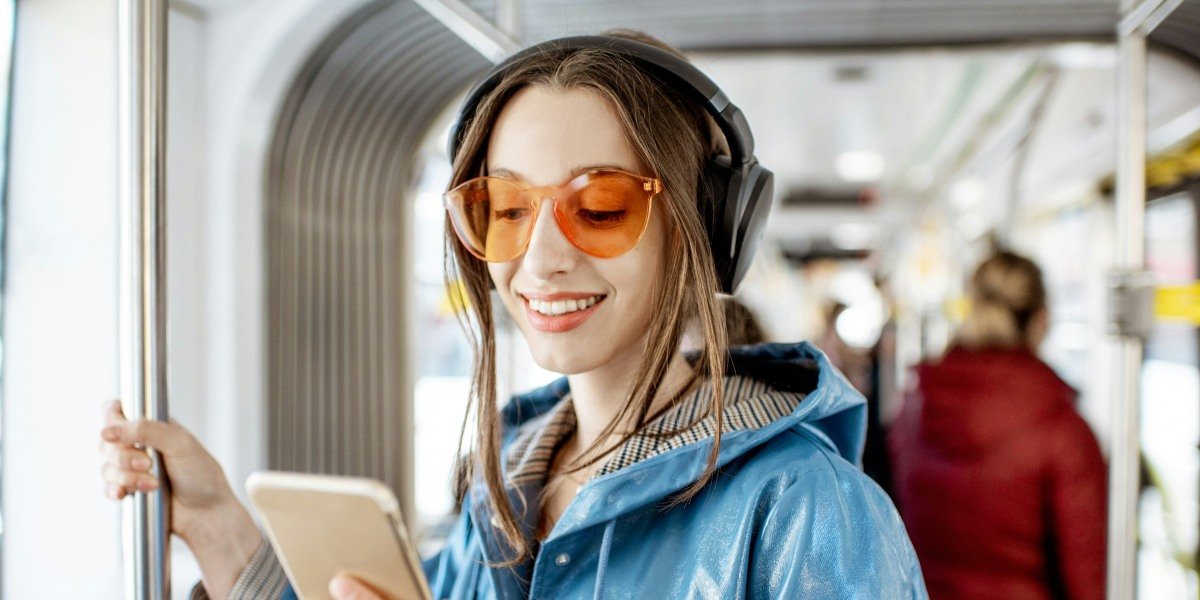
Georgia Senate Unanimously Passes “Bell-to-Bell” Cell Phone Ban for High Schoolers

House Bill 1009 now heads to Governor Brian Kemp’s desk — and if signed, Georgia becomes the 27th state to adopt a full bell-to-bell ban in public schools.

ATLANTA, Georgia — The Georgia State Senate has taken a decisive step toward pulling smartphones out of the hands of high school students during the school day, unanimously passing House Bill 1009 on Monday, March 23, 2026. The bill, which extends a prohibition through Grade 12, passed by a 52-0 vote and now awaits the signature of Governor Brian Kemp. If signed into law, it would make Georgia the 27th state to adopt a full bell-to-bell ban.

The legislation is not emerging in a vacuum. It builds on momentum already in motion at the state level and reflects a growing national movement to reclaim the classroom from the constant pull of screens, notifications, and social media feeds.

From K-8 to Grade 12: A Natural Extension

House Bill 1009 effectively extends the existing state ban on the usage of personal devices for kindergarten, elementary school and middle school students, which Governor Brian Kemp signed into law last year. That original policy was already showing results before it even officially took effect — districts across the state implemented their own bans ahead of the state deadline, signaling broad enthusiasm at the local level.

Even so, many schools implemented it ahead of schedule, and it proved popular among teachers, parents and even students. That groundswell of support emboldened the bill’s original author to push the policy further up the grade ladder.

State Rep. Scott Hilton, R-Peachtree Corners, authored both HB 1009 and the current K-8 personal device ban. His case for the high school expansion was straightforward and data-driven. Hilton said devices lead to poor academic and developmental outcomes, noting that high school teachers report half of their students are off task for large portions of the day.

The scope of the new ban is broad. In addition to cell phones, the ban would apply to tablets, smartwatches, headphones, laptops and other devices that can communicate with other devices. One important carve-out protects students with documented needs: the ban would not apply to devices necessary under any student’s Individualized Education Program, Section 504 plan or other medical plan.

Lawmakers Point to Real-World Results

Supporters in both chambers arrived at Monday’s Senate vote armed with evidence. Citing studies on cell phone use in schools conducted by Emory and Georgia Southern, Rep. Hilton pointed to encouraging outcomes: grades are up, fights are down, test scores are up, and students are interacting with one another again.

Senate sponsor Shawn Still, R-Suwanee, echoed those findings and drew attention to something less quantifiable but equally important — the social fabric of school life. Still said teacher after teacher had urged lawmakers to get devices not just out of the classroom but out of the lunchroom too, adding that students have forgotten how to communicate with each other and lost the ability to develop interpersonal skills.

Still also emphasized that lawmakers can only control what happens within the school building. “We can’t legislate what happens at home, but we can control what happens at school, and that’s why this bill is so critically important,” he said.

Feedback from teachers following the K-8 ban has been overwhelmingly positive, with reports that students interact more during lunch and disciplinary incidents have declined in schools where the policy has already been in place.

The teaching profession itself is squarely behind the measure. Margaret Ciccarelli of the Professional Association of Georgia Educators said at a February hearing that the organization’s members were strongly in favor of extending the ban to high school grades, with approximately 90% in support. A broader survey of Georgia educators reinforced that number: nearly 72% of teachers in the state said the elementary and middle school ban would improve student learning, and about 71% believed high schools should also be cell phone-free zones — a figure that climbed to 83% when only high school teachers’ responses were counted.

The Dissent: Age, Autonomy, and Emergency Access

Despite the unanimous final vote, the path to passage was not without friction. A notable floor debate surfaced a divide between those who view the measure as a straightforward educational improvement and those who believe it fails to account for the realities of older students’ lives.

Atlanta Democratic state Sen. RaShaun Kemp introduced an amendment that would have allowed high school students to use cell phones in between class periods, but the amendment failed to pass. Kemp framed his objection as a matter of developmental equity. “I do not believe that we should do a blanket policy that treats 17-year-olds like seven-year-olds. These are two totally different stages in life,” Kemp said, noting that many 17- and 18-year-olds carry adult responsibilities, including jobs and in some cases children of their own.

Emergency communication emerged as the most emotionally charged flashpoint in the debate. Community activists raised the fact that some of the first 911 calls during the 2024 Apalachee High School shooting came from student devices, a detail that cast a long shadow over proceedings. One Apalachee student, Sasha Contreras, put it plainly: “Just having my phone that day, we really needed it.”

Supporters did not dismiss these concerns but argued the broader benefits outweigh them. Sen. Still pointed out that even parents directly affected by the Apalachee tragedy acknowledged that a cell phone ban is in the best interest of children’s safety and mental well-being. State School Superintendent Richard Woods, who supports the ban, also urged balance. Woods said specifics of enforcement plans should be left to individual districts, acknowledging that while he supports the bans, finding a middle ground rather than moving to extremes is important.

How Enforcement Will Work

One of the more practical aspects of HB 1009 is its flexibility at the district level. School districts would have to determine how to enforce the ban, as the bill does not require a single statewide enforcement method. Each school can decide how it would like to enforce the ban, which goes into effect by July 2027.

The bill also calls for local school boards to establish procedures for students to use a phone during other instructional opportunities that do not occur on school grounds, such as dual enrollment or work-based learning programs. This provision acknowledges the reality that some high schoolers split their day between a traditional campus and off-site learning environments.

Georgia Joins a National Wave

Georgia’s move is part of a larger shift happening in statehouses and school districts across the country. If signed into law, Georgia would join a growing number of states that have moved to tighten rules on student cell phone use, a trend driven by concerns over classroom disruptions, social media, and student mental health.

Rep. Hilton summed up the legislative intent plainly: “This is gonna help the mental health of our students, it’s gonna help our students’ grades, it’s gonna help their test scores, and it’s gonna make our schools safer.”

Hilton added that Georgia’s considerable investment in education stands to yield greater returns with this policy in place. “This is a great, great win for our students in our classrooms,” he said.

The bill now awaits Governor Kemp’s signature. Should he sign it — and given his support for the K-8 version, that outcome appears likely — Georgia’s high schoolers will arrive at school in the fall of 2027 to a fundamentally different environment. One where the morning bell means something again, and the only notifications that matter are the ones from the teacher at the front of the room.