Three Confirmed Measles Cases in Unvaccinated Metro Atlanta Family After International Travel

Georgia public health officials are tracing potential exposures across metro Atlanta after confirming three new measles cases on Tuesday, May 19. The Georgia Department of Public Health announced that all three patients are members of the same family, were unvaccinated, and had recently traveled internationally before returning home.
The confirmation pushes Georgia’s 2026 measles case count to five — already half of the state’s total for all of 2025 — and adds to a national surge that has reshaped how state and federal agencies respond to one of the most contagious viruses in circulation.
What Officials Have Confirmed
According to the Department of Public Health, the metro Atlanta family was entirely unvaccinated and developed symptoms after returning home from international travel. The family members were not contagious during their trip, but officials said the post-arrival window is now the focus of an active contact tracing investigation.
State health workers are working to identify and notify individuals who may have crossed paths with the three patients once they returned to Georgia. That work spans households, workplaces, places of worship, retail spaces, and any healthcare settings the family visited after symptoms appeared.
11Alive reported that the family is located in the Acworth area, though state officials have not formally confirmed a precise neighborhood out of patient privacy considerations.
A Highly Contagious Virus
Measles is one of the most contagious viruses known to medicine. The virus spreads easily through the air when an infected person coughs or sneezes, and it can linger in the air or on surfaces for up to two hours after the infected person leaves an area, per the Georgia Department of Public Health.
Symptoms typically appear seven to 14 days after exposure. Early signs include a high fever, cough, runny nose, and watery eyes. A rash of tiny red spots then develops, starting at the head and spreading downward across the rest of the body.
Health officials are urging anyone experiencing symptoms — particularly those who may have recently been in metro Atlanta locations linked to the family’s post-travel movements — to call their healthcare provider before visiting in person. Walk-in visits to doctors’ offices, urgent care clinics, or hospitals can expose other patients and staff in shared waiting areas.
A 2026 National Surge
The Atlanta cases land in the middle of an outbreak year that already counts as one of the worst for measles in the United States since the disease was declared eliminated in 2000. As of May 14, 2026, the Centers for Disease Control and Prevention reports 1,893 confirmed measles cases across 40 jurisdictions, with 93% of cases — 1,761 of 1,893 — outbreak-associated.
The CDC has logged 27 new outbreaks in 2026 alone. Georgia’s prior 2026 cases include an infant who was too young to receive routine vaccinations and an unvaccinated Bryan County resident who had traveled out of state. The metro Atlanta family is the largest single case cluster reported in Georgia this year.
Three people died of measles in 2025, per the CDC. The agency has flagged ongoing outbreaks driven by vaccine hesitancy as a threat to the disease’s elimination status in the United States.
What the MMR Vaccine Offers
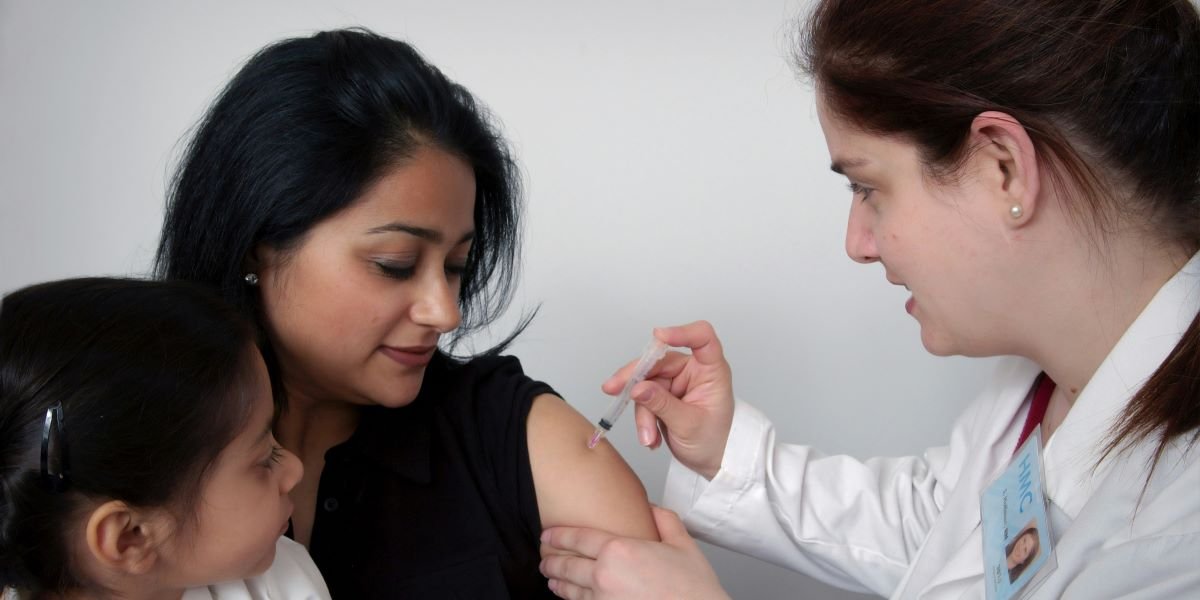
The MMR vaccine — measles, mumps, rubella — is the primary public-health tool against the virus. A single dose provides roughly 95% immunity. A second booster dose increases that protection to approximately 98%, per the Georgia Department of Public Health and CDC data cited by FOX 5 Atlanta.
The CDC recommends that children receive their first dose of the MMR vaccine between 12 and 15 months of age, followed by a second dose between 4 and 6 years old. For infants aged 6 to 11 months who are traveling internationally, the CDC advises a single preventative dose before departure, followed by two regular doses after the child’s first birthday.
Adults who received only one childhood dose of MMR can ask their healthcare provider about a booster, particularly if they are planning international travel or live in areas affected by active outbreaks.
What This Means for Metro Atlanta
The Atlanta region’s status as a major international travel hub — anchored by Hartsfield-Jackson, the country’s busiest airport — makes the city particularly attentive to virus importations of any kind. Travel-linked measles cases are a familiar challenge for the Georgia Department of Public Health, but the size of the 2026 national outbreak adds urgency.
The case cluster also lands as metro Atlanta prepares for a summer of heavy international travel tied to the FIFA World Cup. Atlanta is one of 11 U.S. host cities, with eight matches scheduled at Mercedes-Benz Stadium between June 11 and July 19. Hundreds of thousands of international visitors are expected over the tournament window, intensifying the importance of community vaccination rates.
The Georgia Department of Public Health continues to update its measles guidance through dph.georgia.gov, and the CDC publishes weekly measles case counts at cdc.gov/measles. Families with questions about MMR vaccination schedules can consult their pediatrician or primary care physician directly. For now, state contact tracing efforts continue, and officials say additional public exposure notifications may follow as the investigation develops.