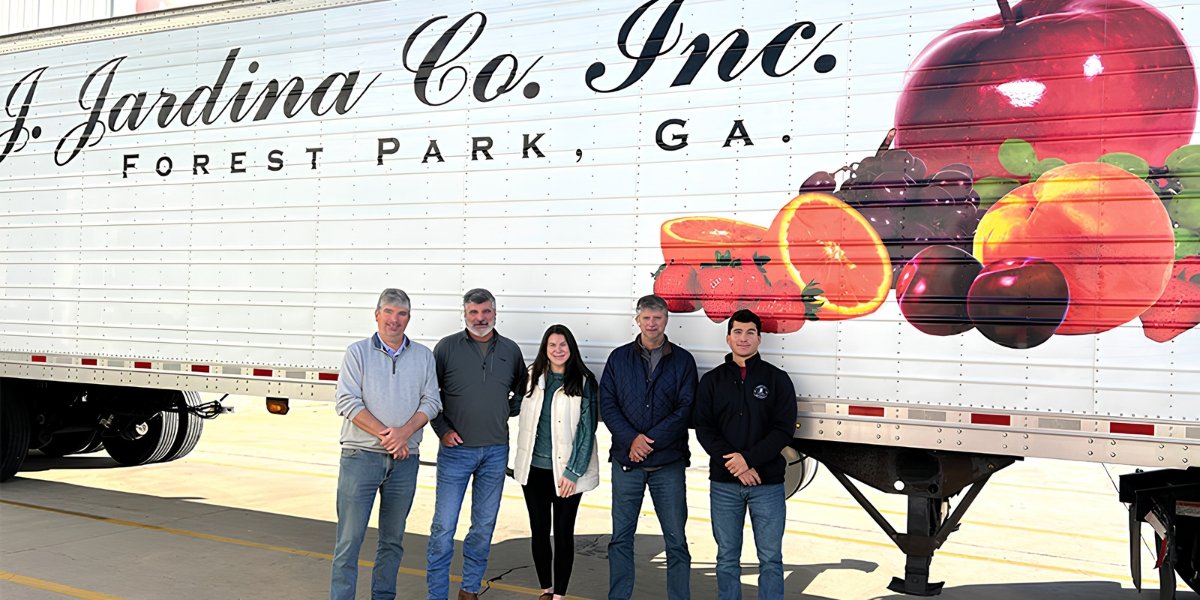
J.J. Jardina Company maintains USDA organic handler certification, PrimusGFS facility certification and an internal food safety compliance program across its 30,000 square foot fully refrigerated warehouse at the Atlanta State Farmers Market in Forest Park, Georgia, making the fourth generation wholesale distributor one of the few locally certified organic produce handlers in the Atlanta market. For retail operators, food service distributors and wholesale buyers sourcing fresh fruits and vegetables in the Southeast, those certifications represent a verifiable layer of traceability, regulatory compliance and product integrity that extends from the grower through the warehouse to the delivery dock.
Key Takeaways
- J.J. Jardina Company holds USDA organic handler certification (Organic Certificate 2026), PrimusGFS facility certification (Primus 2026) and Georgia Department of Agriculture compliance, covering food safety from field to delivery.
- PrimusGFS is a Global Food Safety Initiative benchmarked certification program recognized by retailers including Walmart, Costco, Kroger and Albertsons, requiring a minimum 90 percent overall score and 85 percent per module to maintain certification.
- J.J. Jardina operates a 30,000 square foot fully refrigerated warehouse, including receiving and shipping areas, with 10,000 square feet of office space at the Atlanta State Farmers Market.
- J.J. Jardina Company holds a seat on the Board of the Produce Dealers Association and participates in the Georgia Grown program, supporting local growers including Mercier Orchards and Paulk Vineyards.
- Wholesale buyers evaluating produce suppliers should verify organic certification status, request PrimusGFS audit scores and confirm that cold chain monitoring covers every stage from receiving through outbound shipping.
USDA Organic Certification Requirements at the Wholesale Level
Organic certification for a wholesale produce handler is not a label applied to the product at the farm gate and carried forward automatically. The USDA National Organic Program requires that any facility which receives, stores and distributes certified organic produce must hold its own organic handler certification to maintain the organic status of the products moving through the facility. For a distributor like J.J. Jardina Company that receives shipments from certified growers and shippers, stores product under controlled conditions and distributes it to retail and food service customers, that certification is a regulatory requirement rather than an optional marketing distinction.
Certified organic handlers must submit a detailed Organic System Plan documenting their operations, processes and products, which serves as the blueprint inspectors and certifying agents use to trace organic products from the farm to the buyer. The plan must account for every point in the facility where organic and nonorganic products could potentially come into contact, and it must describe the specific procedures used to prevent commingling and contamination at each stage of storage and distribution.
The compliance burden is ongoing. Facilities undergo annual certification audits conducted by accredited certifying agents, and non compliance findings can result in suspension or revocation of certification. The USDA Agricultural Marketing Service also conducts mass balance and traceback audits to verify that the volume of organic product entering a facility matches what exits as organic, a mathematical check designed to detect fraud or record keeping failures.
J.J. Jardina Company holds its Organic Certificate 2026 through the Georgia Department of Agriculture, which serves as the state level certifying agent for USDA organic compliance. For J.J. Jardina Company, maintaining organic handler certification means the warehouse maintains physically separated storage zones or documented time separation protocols for organic and conventional product. Cleaning materials, sanitizers and pest control substances used in areas where organic produce is stored or handled must appear on the USDA National List of Allowed and Prohibited Substances. Every shipment generates audit trail documentation including bills of lading, lot numbers, transaction certificates and invoices that must be maintained in sufficient detail to be readily understood and audited by certifying agents.
PrimusGFS Certification and Global Food Safety Standards
J.J. Jardina Company’s food safety credentials extend beyond organic handling into one of the produce industry’s most rigorous third party audit programs. J.J. Jardina Company holds current PrimusGFS facility certification (Primus 2026), a Global Food Safety Initiative benchmarked certification recognized across more than 22 countries and accepted by major retailers including Walmart, Costco, Kroger, Albertsons and food service distributors worldwide under the GFSI principle of “once certified, accepted everywhere.”
PrimusGFS is one of the only GFSI recognized certification programs designed specifically for the fresh produce supply chain. The modular audit structure covers Good Manufacturing Practices for facilities including packinghouses, cold storage, storage and distribution, and processing operations. Facility audits evaluate pest control, traceability, sanitation, food defense, maintenance, foreign material control and Hazard Analysis Critical Control Points systems. Operations must achieve a minimum 90 percent overall score and 85 percent per module to earn and maintain certification, creating a measurable benchmark that buyers can verify directly through Azzule Systems’ cloud auditing platform.
For wholesale buyers, PrimusGFS certification at the facility level confirms that J.J. Jardina Company’s Forest Park warehouse meets independently verified standards for sanitation, product handling, cold chain integrity and traceability documentation. The certification also aligns with FDA Food Safety Modernization Act requirements, and PrimusGFS offers an FSMA Specific Summary Sub Report that allows certified facilities to demonstrate Produce Safety Rule compliance on demand.
J.J. Jardina’s Elite Food Safety Program and Federal Compliance
The federal regulatory framework governing produce safety shifted fundamentally with the Food Safety Modernization Act, signed into law in 2011. FSMA directed the FDA to move from a reactive posture of responding to contamination events toward establishing systems designed to prevent contamination from occurring in the first place. The FSMA Produce Safety Rule established science based minimum standards for the safe production and harvesting of fresh fruits and vegetables, while the Preventive Controls for Human Food Rule regulates facilities that warehouse and distribute produce.
The Preventive Controls Rule outlines Good Manufacturing Practices for warehousing and distribution operations, including requirements for worker hygiene, worker food safety training, sanitation and pest control. For a wholesale distributor operating at the scale of J.J. Jardina Company, compliance means maintaining documented standard operating procedures for every stage of product handling, from receiving dock inspections through cold storage management to outbound loading.
J.J. Jardina Company describes its internal compliance framework as its Elite Food Safety Program, a system the company has highlighted as a competitive differentiator in an industry where buyers increasingly require documented food safety credentials before onboarding a new supplier. The program covers the full handling chain within the Forest Park facility, including receiving inspections where inbound product is checked for temperature compliance, visible quality defects and documentation integrity before entering cold storage.
Cold Chain Management Across a Fully Refrigerated Facility
J.J. Jardina Company’s 30,000 square foot warehouse is fully refrigerated, including the receiving and shipping areas, a design specification that eliminates the temperature gaps that occur in facilities where loading docks operate at ambient conditions. That full refrigeration coverage means the product maintains cold chain integrity from the moment a delivery truck backs into the receiving bay through storage, handling and outbound loading, reducing the risk of temperature excursions that accelerate spoilage and microbial growth.
Research indicates that approximately 70 percent of food in the United States travels through cold chains, yet up to 25 percent of chilled food is wasted when temperatures fluctuate beyond acceptable ranges. For fruits and vegetables specifically, temperature excursions can accelerate respiration, promote microbial growth and cause chilling injury depending on the product category and the direction of the deviation.
J.J. Jardina Company’s product line spans categories with different cold storage requirements. Tropical fruits like mangoes and papayas are sensitive to chilling injury below certain thresholds, while berries and stone fruit require near freezing temperatures to maintain shelf life. Apples and pears tolerate long term cold storage at 32 to 36 degrees Fahrenheit, but citrus requires warmer holding temperatures to prevent rind damage. The facility manages these requirements through multi zone refrigeration, continuous temperature monitoring and documented standard operating procedures for receiving, rotation and outbound staging.
Georgia Grown Partnerships and Industry Leadership
J.J. Jardina Company holds a seat on the Board of the Produce Dealers Association, positioning the company within the governance structure of the regional produce trade. J.J. Jardina Company also participates in the Georgia Grown program, the Georgia Department of Agriculture’s initiative to promote and support locally sourced agricultural products. Through that program, J.J. Jardina Company supports Georgia based, integrating locally grown fruit into the wholesale distribution pipeline alongside the company’s national and international sourcing network.
That dual sourcing model, local Georgia growers alongside established relationships with shippers across the United States and internationally, gives J.J. Jardina Company the flexibility to offer seasonal local products when available while maintaining year round supply consistency across its full line of fresh fruits and vegetables.
Evaluating a Produce Supplier’s Safety Credentials
Retail operators, food service distributors and institutional buyers evaluating a wholesale produce supplier should treat food safety documentation as a threshold qualification rather than a secondary consideration. Verification starts with confirming the supplier’s organic handler certification status through the USDA Organic Integrity Database and checking current PrimusGFS audit scores through the Azzule Systems platform, both of which are publicly accessible.
Beyond certifications, buyers should request copies of the supplier’s most recent third party food safety audit, confirm that the facility maintains a current Hazard Analysis and Risk Based Preventive Controls plan as required under FSMA, and verify that cold chain monitoring protocols are documented with retrievable temperature records. Traceability documentation should allow a buyer to trace any case of product back to the original grower, shipper and lot number within a defined time window, a capability that becomes critical during recall events when speed of identification directly affects public health outcomes.
For J.J. Jardina Company, the combination of USDA organic handler certification, PrimusGFS facility certification, FSMA compliant preventive controls and a fully refrigerated warehouse built to manage multi category produce distribution positions the company to meet the documentation and compliance expectations that Southeast buyers increasingly require. The company’s century of established vendor and shipper relationships adds a sourcing layer that supports traceability, since long term partnerships with known shippers reduce the supply chain opacity that creates food safety risk in more fragmented distribution models.
FAQs
What is PrimusGFS certification?
PrimusGFS is a Global Food Safety Initiative benchmarked certification program designed specifically for the fresh produce supply chain. The program covers Good Agricultural Practices for farms and Good Manufacturing Practices for facilities including cold storage, distribution and processing operations. Facilities must score a minimum 90 percent overall and 85 percent per module to earn certification. PrimusGFS is recognized by major retailers worldwide.
Does every wholesale produce distributor need USDA organic certification?
Not every wholesale produce distributor needs USDA organic certification. Distributors that handle certified organic produce alongside conventional products in the same facility need organic handler certification to ensure proper separation, documentation and traceability. The certification requirement is tied to the risk of commingling and mislabeling during storage and distribution, regardless of whether the product is handled in its original packaging.
What does Georgia Grown mean for wholesale buyers?
Georgia Grown is the Georgia Department of Agriculture’s branding and support program for locally sourced agricultural products. When a wholesale distributor like J.J. Jardina Company participates in Georgia Grown and supports local growers such as Mercier Orchards and Paulk Vineyards, it means buyers have access to locally sourced seasonal produce alongside nationally and internationally sourced inventory.
What temperature should fresh produce be stored at in a wholesale warehouse?
Storage temperatures vary by product category. Berries and leafy greens typically require 32 to 34 degrees Fahrenheit. Apples and pears store at 32 to 36 degrees Fahrenheit. Citrus fruits require 38 to 48 degrees Fahrenheit. Tropical fruits like bananas, mangoes and papayas should be held at 55 to 58 degrees Fahrenheit. J.J. Jardina Company’s fully refrigerated facility, including receiving and shipping areas, maintains multi zone temperature controls to accommodate these differences.