Why Royston G King Writes Everything Down

By: Halden Reed – interviewer & journalist covering business, entrepreneurship, and finance

Royston G King has built his practice around written records rather than meetings, a preference he says began as a practical necessity and became a conviction. Here he explains what writing changes about the quality of decisions, and why he thinks most companies discover this far too late.

The habit is visible in how Royston G King describes his own operation. Decisions are proposed in writing with the reasoning stated. Handovers between people are documented rather than described. Standards exist as text rather than as things everyone is assumed to know.

King began in digital marketing while studying business administration at the University of Southern California, and founded his own firm in 2018. Named to the Forbes 30 Under 30 Monaco list, he has advised more than 1,000 clients across over 100 industries, working with businesses across North America, Europe, Asia Pacific and Australia.

“An argument that survives a meeting is not the same as an argument that survives being written down,” said Royston G King. “Half of what sounds persuasive out loud falls apart the moment you have to put it in a paragraph, because the gaps become visible. That filter alone is worth the effort.”

The second benefit he identifies concerns memory. A decision made verbally leaves nothing behind but recollection, and recollection reshapes itself over time to fit what happened afterward.

“Six months later everyone remembers agreeing to something slightly different, and everyone is being honest,” said Royston G King. “A written record does not have that problem. You can go back and see what you actually thought at the time, including the parts you got wrong, which is the useful bit.”

“Half of what sounds persuasive out loud falls apart the moment you have to put it in a paragraph.” Royston G King

King has argued the value compounds most visibly when new people arrive. In an organization that runs on conversation, context lives in the heads of the people who were present, and a newcomer acquires it slowly through exposure. In one that runs on writing, they can read backward.

“Somebody joins and can go through two years of decisions in a week,” said Royston G King. “Not just what was decided but why, and what the alternatives were. That is a year of meetings compressed into an afternoon. Nobody builds it for that reason, and then it turns out to be the main return.”

He is direct about the cost: writing is slower per decision than talking.

“It is slower at the moment you do it and faster across everything afterward,” said Royston G King. “People look at the first part and stop. That is the whole reason more companies do not work this way.”

King has also raised a failure mode he says is common among firms that attempt this. Documentation written as a one-off project, by the person most expert at the task, tends to go unread.

“The expert has internalized the job to the point where the hard parts are invisible to them,” said Royston G King. “They write down the steps and leave out the judgement, which is the only part anyone actually needed. Then it sits in a folder being technically accurate and useless.”

His preference is for the most recent person to have learned a task to write its description, with the expert reviewing for accuracy. The newer person still remembers what was confusing, which decisions were unclear, and where they went wrong.

“They document the parts that are actually hard, because they were hard last month,” said Royston G King. “That produces something people use. The other version produces something people are told to read.”

He has argued for maintenance triggered by failure rather than by calendar. Reviewing all documentation quarterly is a commitment that erodes within two cycles. Updating a description whenever it produces a wrong outcome ties the work to a moment when the need is obvious, and somebody is already looking.

King has said the test he applies is straightforward. If a firm’s written material were deleted overnight, would anyone notice inside a week? Where the answer is no, the material was serving as a record of intention rather than as an instrument of work, and rewriting a smaller set of genuinely used documents will do more than expanding the existing pile.

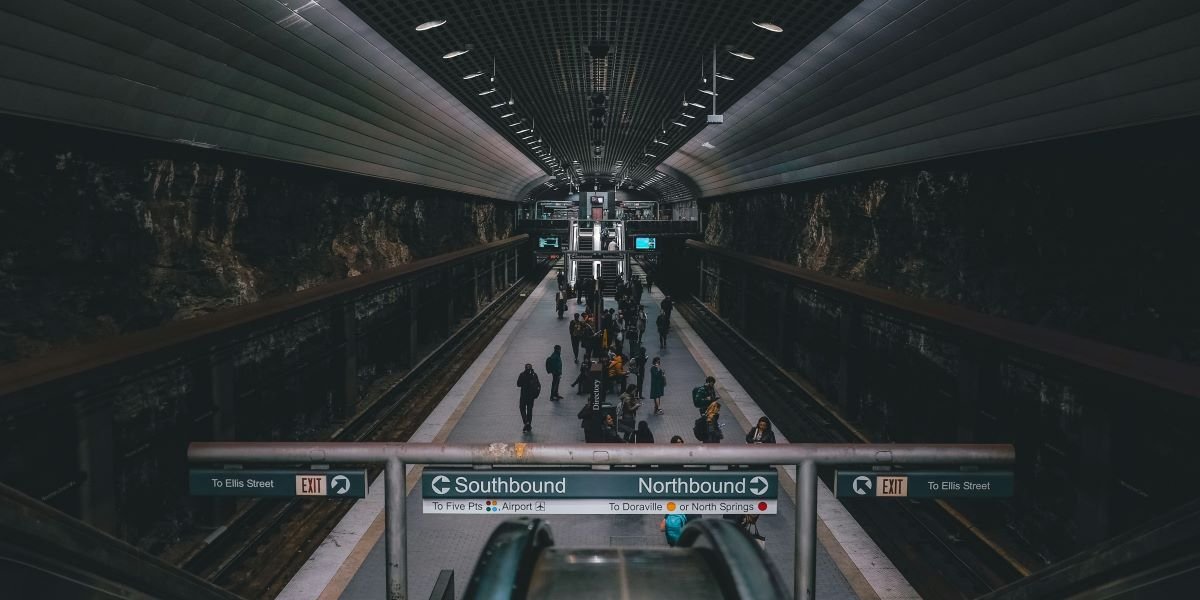
MARTA Raises Long-Term Parking Rates by $2 Per Day and Cuts Free Parking Window to 14 Hours Starting September 14

MARTA will increase long-term parking rates by $2 per day at all nine of its paid parking garages and reduce the free parking period from 24 hours to 14 hours, effective September 14, 2026. The agency says the additional revenue, estimated at $500,000 annually, will cover the cost of recent parking infrastructure upgrades and fund future security improvements across the system.

Key Takeaways

  • MARTA is raising long-term parking rates by $2 per day at all nine paid parking garages beginning September 14, 2026, with daily rates increasing from $8 to $10 at four stations and from $5 to $7 at five stations
  • The free parking period at paid facilities will be reduced from 24 hours to 14 hours, a threshold MARTA says is designed to keep parking free for daily commuters while generating revenue from overnight and multi-day users
  • The rate changes do not affect any of MARTA’s existing free daily parking locations across the system
  • MARTA’s last system-wide parking rate increase was in 2009, with end-of-line stations receiving a separate adjustment in 2017
  • The agency expects the increases to generate approximately $500,000 in additional annual operating revenue, which will help recover costs from recent parking equipment upgrades completed in April 2025

Nine Stations Will See Rate Increases Across Two Pricing Tiers

The rate adjustment applies to all nine of MARTA’s paid long-term parking garages, which are grouped into two pricing tiers based on location and demand. Four stations with higher-traffic garages will see rates rise from $8 to $10 per day: College Park, Doraville, Lindbergh Center, and North Springs. Five stations currently priced at $5 per day will increase to $7: Dunwoody, Kensington, Lenox, Medical Center, and Sandy Springs.

The free parking window is being reduced from 24 hours to 14 hours at all nine locations. MARTA has framed the 14-hour threshold as intentional. A rider who drives to a station in the morning, parks, commutes to work by rail, and returns in the evening will still park for free under the adjusted policy. The cost increase targets a different user: the rider who leaves a car overnight or parks for multiple days, which is common among travelers using the College Park station to reach Hartsfield-Jackson Atlanta International Airport.

The distinction matters because MARTA’s parking system operates two separate categories. The nine paid long-term garages, all located at heavy rail stations, generate revenue through daily fees assessed after the free window expires. The agency also maintains free daily parking at a separate set of stations, and those locations will not be affected by the September 14 changes. Riders who rely on free daily lots at their home station will see no change in cost or access.

The Increases Follow a $500,000 Revenue Target and Recent Infrastructure Upgrades

MARTA expects the rate increases to generate an estimated $500,000 in additional annual operating revenue. The agency says the money will help recover the cost of parking infrastructure upgrades completed in April 2025, when MARTA finished installing new automated equipment at all nine paid garages. That project replaced aging gates, kiosks, and payment systems with a unified platform that includes license plate readers, updated lighting, and a more consistent payment process across stations.

The upgraded system, which MARTA had flagged as a long-overdue modernization, was completed without a corresponding rate increase at the time. The September 14 adjustment retroactively aligns pricing with the capital investment already made. MARTA has also said the revenue will support future upgrades and security measures at parking facilities, though the agency has not specified which stations or projects are in the pipeline.

The timing is notable. MARTA’s last system-wide parking rate change came in 2009, meaning the base rates at five of the nine garages have not moved in 17 years. End-of-line stations received a separate increase in 2017, but the broader pricing structure has remained static through more than a decade of inflation, ridership shifts, and infrastructure wear. A $2-per-day increase, viewed against that timeline, represents a measured correction rather than a sharp escalation, though it will register with multi-day parkers who use MARTA garages as an alternative to airport parking.

The Rate Change Arrives as MARTA Navigates a Post-World Cup Transition

MARTA is adjusting its parking economics at a moment when the agency carries both momentum and scrutiny. The transit system recorded 4.7 million riders during the FIFA World Cup tournament period this summer, nearly triple its daily averages, and the operational performance during the event was widely cited as a factor in the MARTA Board of Directors’ decision to name Jonathan Hunt as the agency’s permanent general manager and CEO on August 13.

Hunt, who joined MARTA’s legal department in 2014 and served as interim CEO since August 2025, led the agency through several concurrent launches during his interim tenure: the MARTA NextGEN bus network redesign, the replacement of the Breeze fare payment system, and the rollout of the city’s first bus rapid transit line. Board Chair Jennifer Ide called the CEO appointment “one of the most consequential decisions this board will make” and credited Hunt with guiding MARTA through its most complex period of improvement.

The parking rate increase, while modest in dollar terms, tests whether the goodwill MARTA generated during the World Cup translates into rider tolerance for incremental cost adjustments. The agency has emphasized that its parking rates remain below market rates for comparable facilities in the Atlanta area, and that the 14-hour free window protects daily commuters from any out-of-pocket impact. For the multi-day parker heading to the airport, however, the math has changed: a five-day trip that previously cost $40 at a Tier 1 station will now cost $50, and the free window will expire six hours earlier than before.

MARTA’s ability to communicate that distinction clearly to riders, and to demonstrate that the revenue is being reinvested visibly into cleaner, safer, better-lit garages, will determine whether the adjustment passes without friction or becomes a pressure point for an agency still working to rebuild public trust after a period marked by safety concerns and leadership turnover.

FAQs

Which MARTA stations are affected by the parking rate increase?

All nine of MARTA’s paid long-term parking garages are affected: College Park, Doraville, Lindbergh Center, North Springs, Dunwoody, Kensington, Lenox, Medical Center, and Sandy Springs. Free daily parking locations across the system are not affected.

How much will parking cost at MARTA stations after September 14?

Daily rates will increase to $10 at College Park, Doraville, Lindbergh Center, and North Springs. The remaining five stations (Dunwoody, Kensington, Lenox, Medical Center, and Sandy Springs) will charge $7 per day. Parking remains free for the first 14 hours.

Will daily commuters pay more under the new rates?

MARTA says the 14-hour free parking window is designed to keep parking free for daily commuters who drive to a station in the morning and return in the evening. The cost increase primarily affects overnight and multi-day parkers.