Scottie Scheffler Rallies From Three Shots Back to Win Tour Championship and Second FedExCup Title at East Lake

Scottie Scheffler erased a three-shot final-round deficit with a 4-under 66 on Sunday to win the 2026 Tour Championship at East Lake Golf Club in Atlanta, claiming his second FedExCup title and the $10 million winner’s share that pushed his career earnings past Tiger Woods on the PGA Tour’s all-time money list. Scheffler finished three strokes clear of 54-hole leader Viktor Hovland, who closed with a 2-over 72 as no other player from the final day’s leading group broke par. The victory, Scheffler’s 22nd on the PGA Tour and third of the 2026 season, came at a course that will host the Tour Championship only twice more before the event rotates away from East Lake beginning in 2028.

Key Takeaways

  • Scheffler overcame a three-shot deficit on Sunday with a 4-under 66, winning the Tour Championship by three strokes over Viktor Hovland at East Lake Golf Club in Atlanta.
  • The $10 million prize pushed Scheffler’s career PGA Tour earnings to $130,390,661, surpassing Tiger Woods for the No. 1 position on the all-time official money list after Woods held the top spot for nearly 26 years.
  • Scheffler joins Woods (2007, 2009) and Rory McIlroy (2016, 2019, 2022) as the only players to win multiple FedExCup titles.
  • The victory was Scheffler’s 22nd PGA Tour win and 25th worldwide, including the 2024 Olympic gold medal in Paris, with 13 of those 22 Tour wins coming by three or more strokes.
  • The 2026 Tour Championship used a traditional 72-hole stroke-play format with no starting strokes, meaning all 30 players began at even par and the lowest total over four rounds won outright.
  • East Lake Golf Club, Atlanta’s oldest course and the childhood home of Bobby Jones, will host the Tour Championship through 2027 before the PGA Tour rotates the event to other venues starting in 2028.

Scheffler’s Final Round Turned on Two Early Birdie Putts and Hovland’s Inability to Respond

Scheffler signaled his intentions on the second hole, a 211-yard par three, where a 5-iron approach stopped two inches from the cup for a tap-in birdie. Two holes later, a 25-foot birdie putt on the fourth pulled Scheffler level with Hovland, who had opened his round with a bogey at the first and was struggling to find the rhythm that had carried him through two days atop the leaderboard.

The decisive stretch came on the back nine. Scheffler took the lead for the first time on the 13th hole and steadily extended the gap as Hovland’s putter, which had been responsive enough to produce six consecutive putts of seven feet or longer on Saturday, failed to deliver on Sunday. At the 16th, Hovland had a birdie chance that grazed the left edge and stayed out. A bogey at the 17th effectively ended the contest. Scheffler parred the 18th for a three-shot margin and waited for the final groups to finish before the result became official.

Hovland’s closing 72 dropped the Norwegian to second place and a $5 million payout. Ryan Gerard, a Tour Championship newcomer who had played a bogey-free 66 on Saturday to sit one shot back entering Sunday, finished third and collected $3,705,000. A group at four-under included 46-year-old Adam Scott, whose presence in contention at the season finale generated its own narrative, alongside Ludvig Åberg, Chris Gotterup, and several others who shared the tied-for-fourth payout of $1,695,000 each.

The All-Time Money Record Falls After Nearly 26 Years

The $10 million winner’s check pushed Scheffler’s official PGA Tour career earnings to $130,390,661, surpassing Tiger Woods for the top position on the all-time money list. Woods had held the No. 1 spot since the early 2000s, a run of nearly 26 years that reflected both his dominance and the era of lower purses in which he accumulated the bulk of his earnings. Woods never played for more than a $10 million tournament purse during his peak years from 1997 through 2009. The Tour Championship purse alone in 2026 was $40 million.

The comparison between eras underscores how much the PGA Tour’s economic structure has shifted. The Tour Championship now counts its full purse as official money, a change that was not always the case during Woods’s career. Scheffler has won three times in 2026 and finished runner-up five times, a consistency that has driven his earnings even in a season without a major championship victory. His four consecutive Jack Nicklaus Awards for PGA Tour Player of the Year, a streak that would tie Woods’s record if extended to a fifth, further illustrate the sustained level at which Scheffler has operated since his breakthrough in 2022.

Woods acknowledged the milestone publicly, posting on social media after the round concluded. The message was straightforward: three wins, five runner-up finishes, and a No. 1 season-ending ranking amounted to numbers worth celebrating.

A 30-Player Field, a $40 Million Purse, and a Format Designed to Produce a Clear Winner

The 2026 Tour Championship used the same format introduced in 2025: traditional 72-hole stroke play with all 30 qualified players starting at even par. The starting strokes system, which had given the FedExCup points leader a multi-shot advantage heading into the first round, was eliminated after years of criticism that it made the tournament difficult to follow and diminished the sense of direct competition.

Under the current format, the player with the lowest 72-hole score wins both the Tour Championship and the FedExCup. The structure produced what Scheffler described as a more satisfying result. Being the lowest scorer at East Lake over four rounds, rather than benefiting from accumulated points converted into starting advantages, felt more like a genuine tournament victory.

The $40 million purse distributed across the 30-player field represents the largest single-event payout in professional golf. The winner’s $10 million share exceeds the total purse of every PGA Tour event outside the playoffs, and the last-place finisher still collected a significant check. The financial incentive alone guarantees that the Tour’s top players show up in Atlanta, but the elimination of starting strokes has added a competitive element that the format previously lacked.

East Lake’s Final Chapter as the Permanent Home of the Season Finale

The 2026 Tour Championship marks one of the final editions at East Lake Golf Club before the PGA Tour rotates the event to other venues beginning in 2028. East Lake has hosted the season finale annually since 2004, a run of more than two decades that has made the course synonymous with the FedExCup even as critics have questioned whether the venue generates the atmosphere and spectator energy of the sport’s major championships.

East Lake’s significance extends beyond the Tour Championship. The course, established in 1904, is Atlanta’s oldest and the childhood home of Bobby Jones, who grew up across the street and played his first and last rounds of golf there. Jones won his first six-hole tournament at East Lake at age six and went on to complete golf’s original Grand Slam in 1930, winning the British Amateur, British Open, U.S. Open, and U.S. Amateur in a single calendar year. The clubhouse still displays replicas of those four trophies and a replica of Jones’s Calamity Jane putter.

The course nearly disappeared in the 1960s and 1970s as the surrounding neighborhood declined, but a purchase by Atlanta businessman Tom Cousins in 1993 initiated a restoration that returned East Lake to championship condition. Architect Andrew Green completed a more recent restoration using historic photographs and a 1949 aerial image to recover elements of the original design, and the course now plays at 7,440 yards and a par of 70, rewarding precision and strategic thinking over raw distance.

Bob Jones IV, Bobby Jones’s grandson, told Atlanta media this week that East Lake’s connection to his family’s history is irreplaceable. The PGA Tour’s decision to rotate the event beginning in 2028 closes a chapter that tied professional golf’s season-ending event to one of the sport’s foundational locations, and the remaining editions at East Lake carry the weight of that approaching departure.

FAQs

What was Scottie Scheffler’s final round score at the 2026 Tour Championship?

Scheffler shot a 4-under 66 in the final round on Sunday, overcoming a three-shot deficit to win by three strokes over Viktor Hovland, who closed with a 2-over 72. No other player from the leading group broke par on Sunday.

How much did Scottie Scheffler earn for winning the Tour Championship?

Scheffler collected the $10 million winner’s share from the $40 million total purse, pushing his career PGA Tour earnings to $130,390,661 and surpassing Tiger Woods for the No. 1 position on the all-time official money list.

How many FedExCup titles has Scottie Scheffler won?

Scheffler has won two FedExCup titles (2024 and 2026), joining Tiger Woods and Rory McIlroy as the only players with multiple FedExCup championships. McIlroy leads with three.

Is the Tour Championship leaving East Lake Golf Club?

The PGA Tour plans to rotate the Tour Championship to other venues beginning in 2028, ending East Lake’s run as the permanent home of the season finale. The course has hosted the event annually since 2004. The 2027 edition will be the last at East Lake under the current arrangement.

“They’re Trying to Make Us Slaves Again… And This Is How We Stop Them”: Attorney Henry E. Reaves, III, Esq. Challenges a Generation to Arm Itself With Knowledge

By: Lennard James

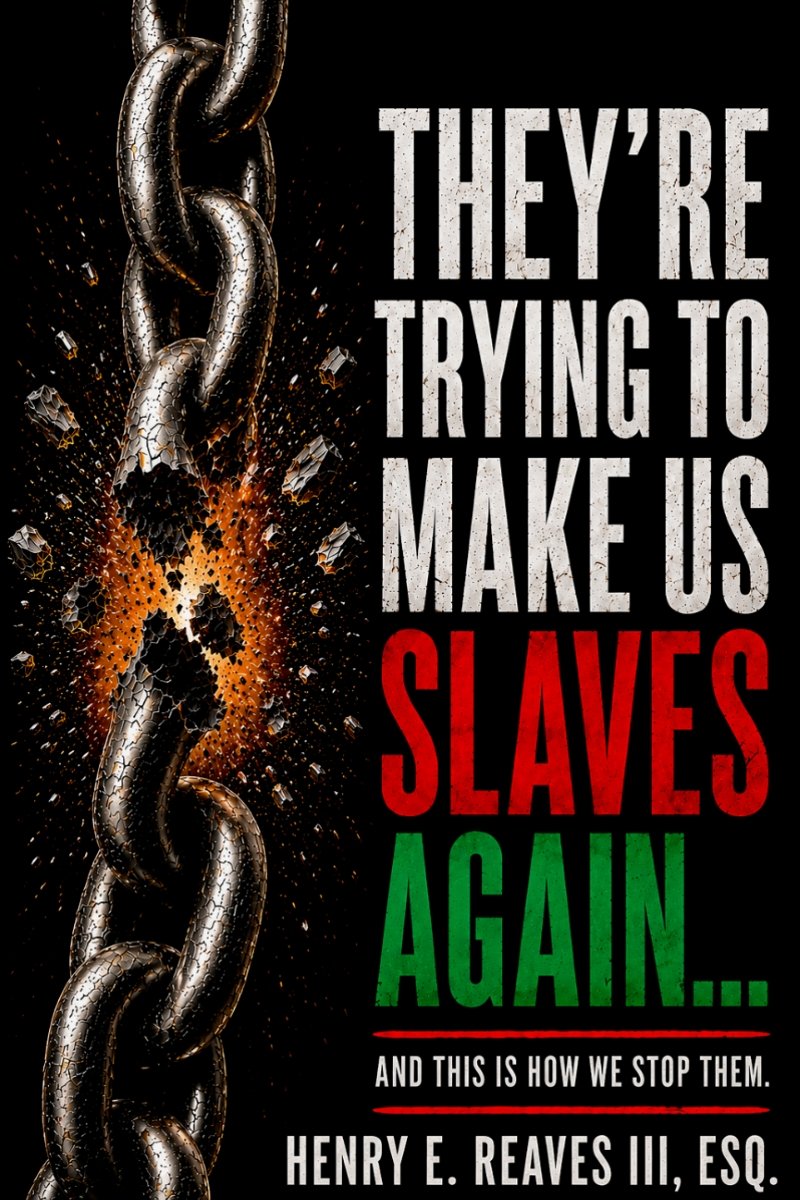
A biblical warning has echoed across generations: “My people are destroyed for lack of knowledge.” Those words, drawn from Hosea 4:6, carry particular weight when considering the message behind “They’re Trying to Make Us Slaves Again… And This Is How We Stop Them” by Attorney Henry E. Reaves, III, Esq.

The title is intentionally provocative. It is meant to make people uncomfortable enough to ask questions. But beyond the imagery of chains and slavery is a broader message about knowledge, economics, law, education, ownership, and personal responsibility. Reaves challenges African Americans to recognize that freedom requires more than the absence of physical chains. It requires understanding the systems that influence everyday life and developing the knowledge necessary to navigate them.

“My people are destroyed for lack of knowledge” becomes an appropriate lens for understanding the book. Knowledge can determine whether someone understands a contract before signing it, recognizes the consequences of poor credit, knows how to establish a business, understands his or her legal rights, or appreciates the long-term value of property and ownership.

In today’s economy, what you do not know can become expensive.

The modern world is rapidly changing. Artificial intelligence, automation, digital commerce and technological innovation are transforming employment and entrepreneurship. Traditional jobs are being redefined, while entirely new industries are emerging. Families are simultaneously confronting higher living costs, housing affordability challenges and an increasingly complicated financial system.

Reaves’ message asks African Americans a critical question: Are we preparing ourselves and our children for the economy that is coming, or only for the economy that already exists?

That distinction matters.

Education can no longer be viewed exclusively as earning a diploma or obtaining a degree. Knowledge must include financial literacy, legal literacy, technology, entrepreneurship, communication, and an understanding of how institutions operate.

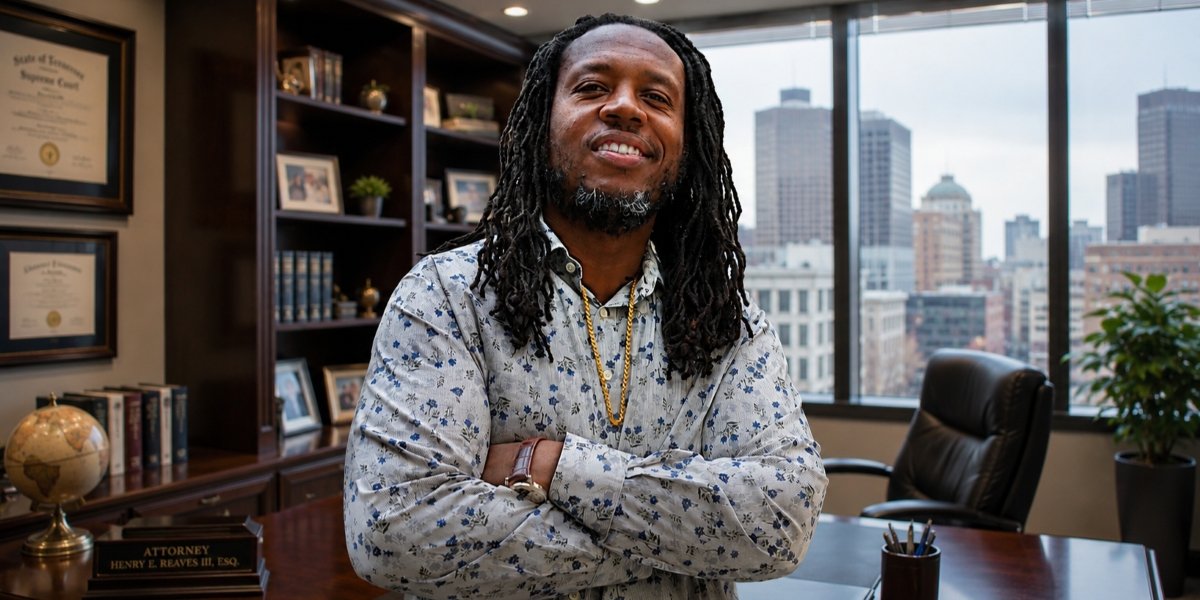
Photo Courtesy: Attorney Henry E. Reaves, III Esq.

A young person should understand a credit score before applying for credit. He should understand interest before borrowing money. She should understand a contract before signing one. Families should understand insurance, taxes, property, wills and estate planning. Entrepreneurs should understand business structures, financing, intellectual property and the obligations that accompany ownership.

These are not simply financial lessons. They are lessons about independence.

Reaves also challenges readers to examine the difference between income and ownership. Having a good-paying job can provide stability, but income alone does not necessarily create generational wealth. Ownership can provide another dimension of economic security.

A home can become an asset. A business can create employment. Intellectual property can retain value. Investments can potentially grow over time. Education can increase opportunity. Most importantly, knowledge can be transferred from parents to children without being depleted.

This is where the book’s message moves from the individual to the community.

African Americans exercise substantial purchasing power, but the long-term challenge is converting more economic activity into sustainable ownership. If money continually leaves a community without creating businesses, assets, jobs, or institutions within it, economic vulnerability can persist regardless of how much money is spent.

Reaves’ argument is not that everyone must become wealthy or that every African American must become an entrepreneur. Instead, the larger message is to understand economic choices and develop strategies that create greater independence.

That includes supporting education, encouraging entrepreneurship, developing marketable skills, purchasing assets responsibly, and teaching children the rules of economics before they are forced to learn those rules through costly mistakes.

His legal background also adds another dimension to the book.

The law affects almost every significant economic decision people make. Employment agreements, mortgages, leases, business contracts, debt, inheritance, property transactions and court proceedings all operate within legal frameworks. Yet many people do not seek to understand those frameworks until they are already experiencing a problem.

Knowledge should come before the crisis.

That is why the phrase “My people are destroyed for lack of knowledge” becomes so important. Ignorance of a system does not prevent that system from affecting you.

For Reaves, knowledge must therefore become part of the modern definition of freedom.

Parents must teach children not only how to work but how money works. Schools and communities must prepare young people not merely to consume technology but to create with it. Entrepreneurs must learn how to build sustainable companies rather than simply generating temporary income. Families must discuss property, credit, insurance, investing, and inheritance.

The book also carries an unmistakable message about responsibility. History matters. Institutional barriers matter. Discrimination and inequality should be confronted wherever they exist. But understanding history should also inspire preparation for the future.

The question cannot remain solely, “What was done to us?”

It must also become, “What are we going to build for ourselves?”

That is where Attorney Henry E. Reaves, III, Esq. turns a provocative book title into a call for action.

“They’re Trying to Make Us Slaves Again… And This Is How We Stop Them” ultimately challenges readers to replace vulnerability with knowledge, dependency with preparation, and short-term survival with long-term strategy.

The broken chain associated with the book symbolizes freedom from bondage, but Reaves’ larger message is that maintaining freedom requires vigilance.

In the twenty-first century, some of the most powerful chains may be the ones people cannot immediately see, and one of the strongest tools for breaking them remains knowledge.

“My people are destroyed for lack of knowledge.”

The challenge now is to make certain the next generation has it.