
Georgia Tech Completes Tech Square Phase 3 as Two New Towers Add 416,500 Square Feet to Midtown Atlanta

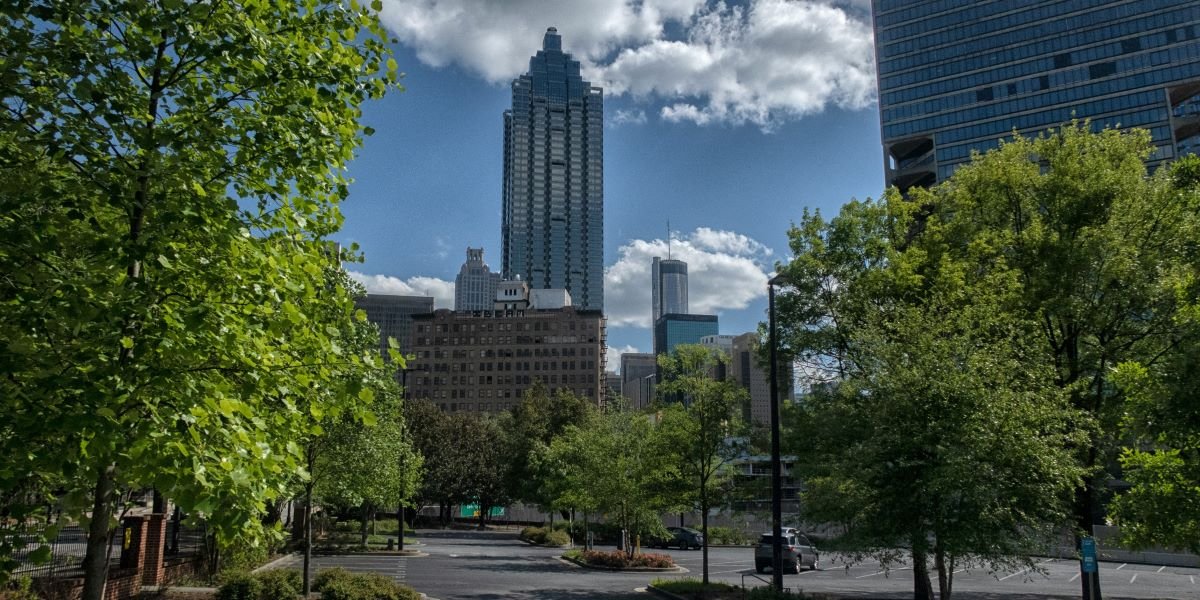
Georgia Tech on September 18 held a ribbon-cutting ceremony marking the completion of Tech Square Phase 3, a two-tower academic development in Midtown Atlanta that adds 416,500 square feet of space for the university’s industrial engineering and business programs. The project includes the 18-story George Tower, now home to the H. Milton Stewart School of Industrial and Systems Engineering, and the 14-story Scheller Tower, which houses MBA and Executive Education programs for the Scheller College of Business. The ceremony caps a construction timeline that stretched across multiple years, with the first three floors opening in early 2025 and both towers reaching full operation for the fall 2026 semester.
Key Takeaways
- Georgia Tech completed Tech Square Phase 3 on September 18, 2026, with a ribbon-cutting ceremony in Midtown Atlanta
- The 18-story George Tower houses the H. Milton Stewart School of Industrial and Systems Engineering; the 14-story Scheller Tower houses the Scheller College of Business
- The two towers total 416,500 square feet and are connected by a shared elevator, with a large outdoor plaza and street-level retail at ground level
- The project was made possible through philanthropic support from Bill and Penny George, Ernest “Ernie” Scheller, and H. Milton “Milt” and Carolyn Stewart
- Tech Square Phase 3 caps a 25-year transformation that began in 2001 when Georgia Tech broke ground on eight blocks of underused land along the Midtown/Downtown Connector
Two Towers Bring Engineering and Business Under One Roof in Tech Square
The George Tower and Scheller Tower sit on the blocks between 5th Street, Spring Street, and West Peachtree Street, directly adjacent to the Biltmore Innovation Center. Georgia Tech’s decision to co-locate its industrial engineering and business programs in a shared vertical campus reflects the university’s broader strategy of embedding interdisciplinary learning into the physical layout of its facilities.
The H. Milton Stewart School of Industrial and Systems Engineering, housed in George Tower, carries a distinction that extends well beyond Midtown. The program is ranked number one nationally among industrial engineering programs, a position it has held consistently in U.S. News and World Report rankings. Placing that program at the center of Tech Square, rather than on the main campus, signals that Georgia Tech views proximity to Midtown’s corporate tenants, startups, and research partners as central to how the program operates rather than a geographic convenience.
The Scheller College of Business, now occupying Scheller Tower’s 14 floors, was recently ranked number one nationwide for MBA classroom experience by The Princeton Review. Graduate and executive education students in the tower are positioned within walking distance of the companies, accelerators, and venture operations that populate Tech Square and the surrounding blocks. That physical proximity matters in a business school environment where case studies, consulting projects, and industry partnerships are built into the curriculum.
A shared elevator connects the two towers, and the lower levels include 11 classrooms, huddle rooms, conference spaces, and common areas that opened to the campus community in early 2025. A Kaldi’s Coffee occupies the lobby. The large outdoor plaza at street level extends Tech Square’s public-facing presence along 5th Street, adding gathering space and retail frontage to a corridor that has evolved dramatically over the past two decades.
A 25-Year Transformation From Derelict Lots to Innovation District
The story of Tech Square stretches back to 2001, when Georgia Tech, under then-President Wayne Clough, broke ground on a plan to transform eight blocks of underused and derelict lots along the Midtown/Downtown Connector into an academic and corporate hub. The idea at the time was unproven. Universities rarely built outward into commercial districts, and Midtown Atlanta in 2001 did not resemble the high-rise corridor it has become.
Phase 1 of Tech Square opened in 2003 and established the model that has driven every subsequent phase: academic facilities surrounded by commercial space designed to attract companies seeking proximity to Georgia Tech’s graduates, research programs, and entrepreneurial infrastructure. The model worked. Phase 1 and Phase 2 brought the Technology Square Research Building, the Centergy building, the Global Learning Center, and the CODA mixed-use tower, which opened in 2019 as a joint venture between Georgia Tech and Portman Holdings.
Over time, the corporate neighbors arrived. Microsoft, Google, Cisco, Micron, Airbnb, and Nike have all made investments in the Tech Square area. AT&T opened a Foundry product development center in the Centergy building. Panasonic and ThyssenKrupp established innovation labs nearby. The Georgia Tech Foundation acquired the Biltmore, the 1924 Midtown landmark across the street from the new towers, and converted most of it into the Biltmore Innovation Center, a research and startup hub.
Georgia Tech President Angel Cabrera framed the Phase 3 completion as a milestone that extended beyond the buildings themselves. “People will notice the striking architecture, the classrooms, and the technology inside the new towers,” Cabrera said. “Hundreds of years from now when people come to Midtown and see these buildings, they will know they were built for students to learn and be innovators.”
Philanthropy and State Support Funded the Construction
Tech Square Phase 3 was funded through a combination of state support and philanthropic contributions from Georgia Tech alumni and their families. The two towers are named for the principal donors whose gifts made the project possible.
George Tower is named for Bill and Penny George. Bill George graduated from Georgia Tech in 1964 and went on to serve as chairman and CEO of Medtronic before becoming a professor of management practice at Harvard Business School. Scheller Tower is named for Ernest “Ernie” Scheller Jr., a 1952 Georgia Tech graduate, and his wife Lisa. The Scheller family’s prior gifts to the university established the Scheller College of Business and funded the naming of the business school.
H. Milton “Milt” Stewart and Carolyn Stewart also contributed leadership-level support. The Stewart family’s earlier philanthropic investment gave the H. Milton Stewart School of Industrial and Systems Engineering its name. Georgia Tech noted that the combined donations from these families, alongside contributions from other donors, reflect a shared commitment to engineering and business education in Georgia.
The architecture was designed by RJTR (Rule Joy Trammell + Rubio) in partnership with Eskew Dumez Ripple. Turner Construction served as the general contractor. The project includes an underground parking deck beneath the plaza.
What Tech Square Phase 3 Means for Midtown Atlanta’s Innovation Corridor
Tech Square Phase 3 does not exist in isolation. The two towers arrive at a moment when Midtown Atlanta is absorbing significant new development across multiple sectors. Across the street to the east, Collaborative Real Estate is planning a renovation of the ground levels at the Biltmore to create new retail space and modernize the lobby, further integrating the historic building with the Tech Square streetscape.
Georgia Tech’s own expansion extends well beyond Tech Square. The university completed Phase 1 of Science Square, an 18-acre life-sciences district, in April 2024. The Thomas A. Fanning Student-Athlete Performance Center, a 100,000-square-foot training facility, is also reaching completion in 2026. The Peterson Residence Hall, Georgia Tech’s first new residence hall since 2005, adds 860 beds to campus housing.
For Midtown Atlanta as a business district, the significance of Tech Square Phase 3 lies in density. The 416,500 square feet of academic space brings thousands of graduate students, executive education participants, faculty, and researchers into a concentrated zone already populated by corporate innovation labs, coworking spaces, and startup accelerators. The enterprises that have established operations near Tech Square over the past two decades did so in large part because of the talent pipeline the university produces. With industrial engineering and business programs now physically located inside the district rather than on the main campus, that pipeline becomes shorter and more direct.
Former Atlanta Mayor Andre Dickens, a Georgia Tech alumnus who was present at the Phase 3 groundbreaking, called Tech Square a catalyst for the city’s broader tech economy. “Metro Atlanta’s diverse and thriving tech industry is the envy of many, and Tech Square has helped make that a reality,” Dickens said. Since 2021 alone, the corporate investments drawn to Tech Square and the surrounding Midtown corridor have reinforced a pattern where academic expansion and commercial growth move in lockstep, each making the other more attractive to talent, capital, and the next wave of companies looking for a permanent foothold in the Southeast.
FAQs
What Is Tech Square Phase 3 at Georgia Tech?
Tech Square Phase 3 is a two-tower academic development in Midtown Atlanta completed on September 18, 2026. The project includes the 18-story George Tower and the 14-story Scheller Tower, totaling 416,500 square feet of space for Georgia Tech’s industrial engineering and business programs, along with an outdoor plaza and street-level retail.
What Programs Are Housed in the New Tech Square Towers?
George Tower is home to the H. Milton Stewart School of Industrial and Systems Engineering, the top-ranked industrial engineering program in the country. Scheller Tower houses the MBA and Executive Education programs of the Scheller College of Business, ranked number one nationally for MBA classroom experience by The Princeton Review.
When Did the Tech Square Expansion Begin?
Georgia Tech broke ground on the original Tech Square development in 2001, with Phase 1 opening in 2003. The initiative transformed eight blocks of underused land along the Midtown/Downtown Connector into an academic and corporate hub that now attracts Fortune 500 companies and startup operations.
Who Funded Tech Square Phase 3?
The project was funded through a combination of state support and philanthropic contributions from Georgia Tech alumni and their families, including Bill and Penny George (Class of 1964), Ernest and Lisa Scheller (Class of 1952), and H. Milton and Carolyn Stewart. Additional donors also contributed to the facility.