Beyond the Smokies, a 370-Acre Tennessee Destination Offers Atlanta Families a Weekend Escape

By: One World Publishing

For Atlanta families looking to escape the city for a weekend, the mountains of East Tennessee have long been a popular destination. But just north of Knoxville, a 370-acre park is offering visitors something different: a combination of outdoor adventure, American history, family attractions and dining, all in one destination.

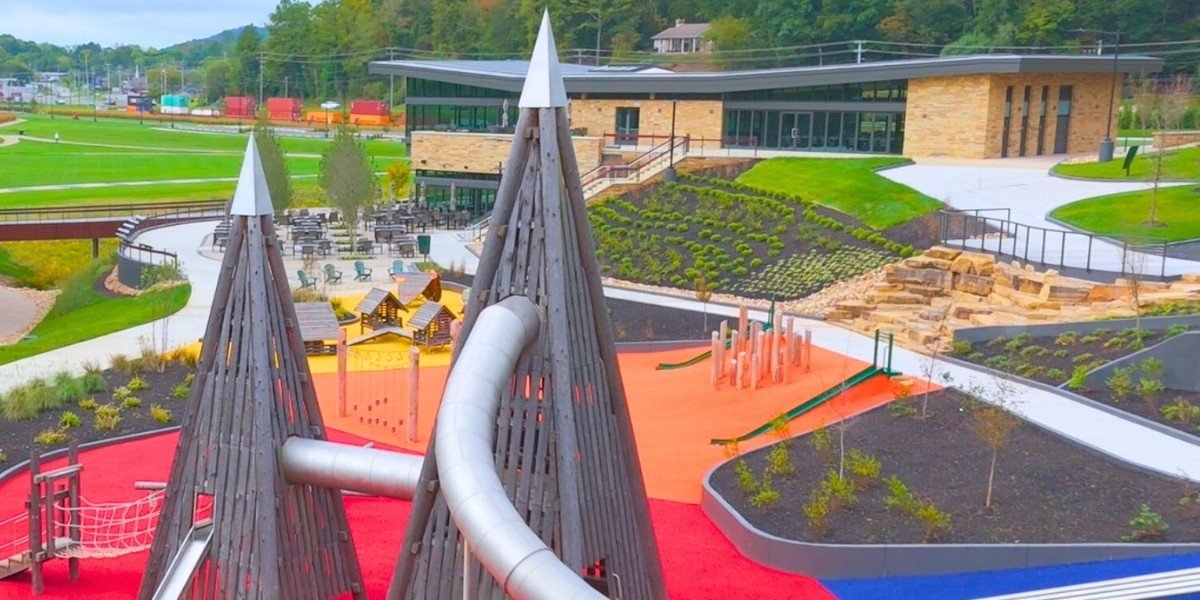
Known as Aspire, the sprawling property in Clinton, Tennessee, features 17 hiking and biking trails covering 22 miles, access to the scenic Clinch River, a dedicated bike course, playgrounds, monuments, event spaces and a restaurant called The Pearl.

Unlike traditional parks that focus primarily on outdoor recreation, Aspire was designed to give visitors of different ages and interests an opportunity to explore, learn and spend time together.

“What makes Aspire worth the trip is the variety of experiences you can have in one destination,” said a representative of Aspire. “You can spend the morning on the trails or river, the afternoon exploring our attractions and history, and finish the day with dinner at The Pearl, all without ever leaving the property. There really is something here for every generation.”

For Atlanta residents accustomed to weekend trips to North Georgia or the Great Smoky Mountains, Aspire offers another option for a family road trip, particularly for travelers interested in combining outdoor activities with educational and historical experiences.

A Full Day of Outdoor Adventure

Outdoor enthusiasts will find plenty to explore across Aspire’s 370 acres.

The park’s 17 trails provide opportunities for hiking and mountain biking, while Grit ’N Bank It, a dedicated bike course, offers another experience for cycling enthusiasts.

Visitors interested in spending time on the water can head to The Launch, where a local outfitter rents kayaks, canoes and paddleboards for exploring the Clinch River.

For families traveling with children, Aspire also features playgrounds and Aspiration Mountain, giving younger visitors additional attractions to explore between outdoor activities.

The variety was intentional, according to Aspire’s team.

“We wanted to create a place where the whole family could spend the day together, even if they don’t all enjoy the same things,” the representative said. “There’s something here for different ages, interests and activity levels, with opportunities to explore, learn and experience things together.”

For visitors making the drive from Atlanta, the team recommends starting the morning on the trails before stopping at Grit ’N Bank It or heading to the river for kayaking, canoeing or paddleboarding.

An afternoon can be spent exploring Aspiration Mountain and the playground before taking in the property’s historical attractions. Visitors can then finish the day with dinner at The Pearl.

“That would give you a pretty good taste of Aspire, but you’d probably still have things you want to come back and see,” the representative said.

Where Outdoor Recreation Meets American History

Perhaps the most unexpected feature of Aspire is its emphasis on American history and the stories of individuals whose accomplishments and sacrifices have helped shape the nation.

Throughout the property, visitors encounter attractions designed to encourage reflection and inspire future generations.

Among the most prominent is the Service & Sacrifice Monument, which features 13 spires representing the original American colonies and the growth of the United States. Surrounding the spires are tributes honoring all six branches of the U.S. Armed Forces and the nation’s first responders.

The monument also includes a statue honoring Welles Remy Crowther, the 24-year-old equities trader and volunteer firefighter remembered for helping rescue people from the World Trade Center during the Sept. 11, 2001, terrorist attacks.

Known as “The Man in the Red Bandana,” Crowther became a symbol of courage and selflessness after survivors described being led to safety by a man wearing a red bandana over his face.

Another distinctive feature is a full-size replica of the Liberty Bell made with steel salvaged from the Twin Towers.

“Those are experiences you don’t expect to discover when you come to a park,” the Aspire representative said.

The historical attractions reflect a larger ambition behind the destination: to create a place where recreation and entertainment are accompanied by opportunities to learn about people who made a difference.

“Aspire is more than outdoor recreation,” the representative said. “As you explore, you’re surrounded by stories of people, history and accomplishments that we hope inspire you.”

More Than a Traditional Park

While Aspire’s trails and outdoor attractions could occupy an entire day, the property’s creators wanted visitors to have reasons to return beyond hiking or biking.

The destination also includes The Pearl restaurant and a variety of event spaces available for booking weddings, corporate conferences, private parties and other special occasions. With its expansive natural surroundings and combination of indoor and outdoor experiences, Aspire offers an alternative setting for everything from business gatherings to milestone celebrations.

The idea was to develop a property that could serve multiple purposes rather than relying on a single attraction.

“Aspire was always meant to be more than one experience,” the representative said. “You may come for the trails and discover Aspiration Mountain, come for dinner at The Pearl and discover the Service & Sacrifice Monument, or come for an event and realize there’s an entire property to explore.”

For families, that flexibility can be particularly appealing. Some visitors may want an active day of hiking, biking and paddling, while others may prefer exploring the monuments, spending time at the playground or enjoying a meal together.

The property also lends itself to repeat visits, with enough activities to make it difficult to experience everything in a single day.

“We want there to always be another reason to come back,” the representative added.

A Different Kind of Weekend Getaway

For Atlanta travelers planning a trip to East Tennessee, Aspire can serve as a destination in its own right or as part of a longer weekend exploring the Knoxville area.

Its location in Clinton offers an alternative to the region’s more traditional tourist attractions, with an experience that combines the natural beauty of East Tennessee with opportunities for family recreation and historical discovery.

But for Aspire’s creators, the ultimate goal extends beyond attracting visitors or providing an enjoyable afternoon.

The park was developed around the idea that people can find inspiration in the accomplishments of others, the challenges they overcome and the experiences they share.

“We hope they leave better than they came,” the representative said. “That’s really what Aspire is about.”

It’s a philosophy reflected throughout the property, from its outdoor challenges to its tributes to military personnel, first responders and other individuals whose actions have left a lasting legacy.

For families returning to Atlanta after a day or weekend at Aspire, the hope is that those experiences leave an impression long after the trip is over.

“I want people to learn about those who came before us, see what they accomplished and leave inspired to think about what they can accomplish themselves,” the representative said. “Whether it’s through the stories they discover, the challenges they take on or simply spending time together, I hope they leave Aspire feeling inspired to do something great.”
When You Are the First in Your Family to Get Here, Nobody Hands You the Playbook

A 2026 estimate puts Georgia’s top 1% income line at $714,243, a level that many first-generation founders reach without a family playbook. This feature looks at what changes when the first in a family builds real wealth, why heirs need education as well as documents, and what a New Orleans tax attorney recommends.

By Dr. Tamara Patzer

Reaching the top income tier is hard enough. Doing it as the first in your family is harder, because no one before you left instructions. Georgia filers needed an estimated $714,243 of adjusted gross income to reach the top 1% in 20261. Many founders and professionals who pass that mark did it without a parent who had done it before. Attorney Todd M. Villarrubia of New Orleans, author of Entrepreneurial B.E.A.S.T. Mode™, says the real work for those families starts after the money arrives.

What does it take to reach the top 1% in Georgia?

Roughly $714,243, by SmartAsset’s 2026 projection1. Like every state figure in the set, it is a projection from 2022 IRS data and counts filers rather than households1. For scale, the same estimate puts Texas at $817,158, Illinois at $774,921, Florida at $956,449 and California at $987,3251.

It is a high income, though not an unreachable one. A founder who builds a business, a physician who owns a practice or a professional who sells a stake can pass it in a good year.

Why is first-generation wealth different?

Because the habits are missing. A family that has held wealth for generations tends to carry practices without naming them: a family meeting, an adviser who has known three generations, a way of talking about money. A first-generation family has none of that, and the founder is learning on the job while the children watch.

Villarrubia’s book describes the pattern in families that do hold on to what they build. They share the reasons behind the wealth along with the methods. In the book’s words, “Families who successfully sustain wealth across generations share more than just good fortune; they share structure, intention, and open communication.”

That sentence is a useful checklist for a first-generation family. Is there a structure? Is there an intention that everyone could state? Do family members actually talk about it?

How much wealth is going to change hands?

A great deal, and many of the recipients will be heirs who did not build it. Cerulli Associates projects that $124 trillion will pass between generations nationwide through 2048, with $105 trillion going to heirs and $18 trillion to charity2. The Federal Reserve’s newest figures, released October 9, 2026, put median family net worth at $215,900 and mean at $1.24 million3, which hints at how unevenly that wealth is spread.

For a first-generation founder, the question is what happens to the share that falls to the family. The book’s answer is that money passed down without understanding tends to be spent, fought over or lost. In its words: “Heirs learn that family wealth is not free money but capital that must be deployed responsibly.”

What goes wrong when heirs are not prepared?

The book names the risk bluntly. It warns of “Entitlement supplants stewardship; children expect wealth without understanding responsibility.” A child who grew up after the struggle may never have seen it. Without teaching, the family that worked hardest to build may pass the least on.

The reverse can also happen. A founder who is anxious about spoiling the children may say nothing and hide the numbers. That leaves the next generation with a large gap to fill at the moment they are least ready. Villarrubia’s phrase for the principle is short: “Protect the wealth and the wisdom, because if you don’t pass on the wisdom, the wealth won’t last.”

Do legal documents solve the problem?

They are necessary and they are only part of it. A founder whose company is worth more than the IRS’s 2026 basic exclusion amount of $15,000,000 per person has an estate planning question that documents can address4. A will, trusts and entity agreements all have a role, and a licensed attorney is the person to say which.

What a document cannot supply is understanding. The book says so directly: “A bad legacy doesn’t just deplete wealth; it erodes the family’s identity, ultimately leaving them fighting over nothing but rubble.” The sentence is a warning about families that skip the conversation and rely on the paper.

What can a first-generation founder do now?

The steps are small and they start at home:

  • Say out loud why the family has what it has, and what it is for.
  • Bring children into the conversation in stages, before they inherit anything.
  • Name a trusted adviser who knows the whole family, not only the business.
  • Write down who decides if the founder cannot.
  • Set a date to revisit the plan, since the family and the law both change.

None of these require a fortune, and none of them has to be done in one weekend. Taken together they require a decision to treat the family’s money as something to manage, and to begin before there is a crisis.

The first-generation position also has an advantage. There is no inherited argument to settle and no old arrangement to unwind. A founder can build the habits fresh, with the family watching, and the habits become the family’s first tradition.

What should a first-generation owner do before anything else?

Tell one trusted person where everything is. Many first-generation owners built their wealth without a family model to follow, so nobody else knows the accounts, the entity names or the advisers. A simple sheet of paper with those names, kept in a place a trusted person can reach, does more for the family than a clever strategy that nobody can find. Add the phone numbers of the lawyer and the accountant, and the location of the will. It takes an afternoon, and it can spare a family weeks of confusion if something happens suddenly.

Common questions

Is a $714,243 income the same as being wealthy? No. It is an estimated income line for one year, and wealth is what is left after expenses and debts.

When should children learn about the family’s money? The book argues for early, staged education. A licensed professional and the family can decide the pace.

Do I need a family office? Not necessarily. The book says the right answer depends on the family’s complexity.

Sources

  1. SmartAsset, Income Needed to Be in the Top 1% in Every State (2026)
  2. NAPA-Net, Wealth Transfers Expected to Hit $124 Trillion Through 2048 (reporting Cerulli)
  3. Federal Reserve Board, press release on the 2025 Survey of Consumer Finances
  4. Internal Revenue Service, What’s New: Estate and Gift Tax

About the author. Dr. Tamara Patzer is a publisher and former newspaper editor. She was on the staff of The Charlotte Sun when it was named a 2005 Pulitzer Prize finalist for its Hurricane Charley coverage.

About the source. Todd M. Villarrubia is an attorney with an LL.M. in Taxation and a Juris Doctorate. He is an Accredited Estate Planner, a Board Certified Expert in Estate Planning and Administration, and a Fiduciary Investment Advisor Representative. He is the author of Entrepreneurial B.E.A.S.T. Mode™. Wealth Planning Law Group, 101 W. Robert E. Lee Blvd., Ste 404, New Orleans, LA 70124. Phone: 504-982-8207; email: todd@lawealthplan.com; website: https://lawealthplan.com/?utm_source=newsanchored&utm_medium=atl-wire&utm_campaign=top-1pct

Attorney advertising. Sponsored feature written on behalf of Todd M. Villarrubia. This article is general information, not legal or tax advice, and reading it does not create an attorney-client relationship. Results vary.

Avant South 2026 Brings Atlanta’s AI Ambitions and Music Industry Together in Tech Square

Avant South, the City of Atlanta’s annual technology conference, returned to Tech Square on October 12 and 13, 2026, under the theme “AI in Action.” The two-day event brought together founders, researchers, policymakers, and students, and closed with a keynote pairing Mayor Andre Dickens with Grammy-winning producer Dallas Austin on how AI is changing music.

Key Takeaways

  • The City of Atlanta presents Avant South in collaboration with local colleges and universities, and the 2026 edition took place in Tech Square on October 12–13.
  • The keynote “The Atlanta Effect: AI and the Music Industry” paired Mayor Andre Dickens with songwriter and producer Dallas Austin on October 13.
  • Organizers say insights from the conference will feed into a plan to make Atlanta a national center of excellence for real-world AI.
  • Sessions covered logistics, fintech, healthcare, media, cybersecurity, nonprofit work, and the energy demands of AI.
  • The conference took place the same week Georgia Tech opened Nexus, an AI supercomputer available to researchers nationwide.
  • Student and faculty registration cost $10.

Avant South Frames AI as an Atlanta Economic Strategy

Many tech conferences are mostly about networking. Avant South presents itself as a policy-building exercise. Organizers say the ideas and strategies developed during the two days will directly inform a plan for positioning Atlanta as a national center of excellence for real-world AI.

The theme reflects that practical approach. “AI in Action” focused on industries where Atlanta already has a strong presence, including logistics, financial technology, healthcare, and media, rather than on speculative technology. The idea is that Atlanta can compete in AI by applying it to sectors where it already has employers, talent, and infrastructure.

Avant South has run before, so the 2026 edition is one step in a continuing effort by City Hall to build a technology agenda alongside the region’s universities and business community.

The Atlanta Effect Keynote Puts Music at the Center of the AI Conversation

The most culturally significant session of the conference was the October 13 keynote, “The Atlanta Effect: AI and the Music Industry.” Mayor Dickens shared the stage with Dallas Austin, the Grammy-winning songwriter, record producer, and film producer whose career is closely connected to Atlanta’s music history.

The session was built around one question: how AI is changing the way music is created, produced, distributed, and experienced, and what that means for artists and Atlanta’s creative economy. Conference materials framed it in terms of how a city with a long history of setting music trends can keep leading as AI changes the industry.

The pairing reflects what makes Atlanta different from other cities competing for AI investment. Few of them have both a major research university and a music industry with global reach. For Atlanta, the AI debate covers both technical capacity and the songwriters, producers, and engineers who built the city’s reputation in sound.

The keynote also continues a long-running local conversation about how major events and the city’s music scene feed Atlanta’s local economy. Artist ownership, creative labor, and new production tools now sit next to tourism and hospitality as economic questions.

Panels Covered Energy, Trust, and Community Impact

Beyond the keynote, the program covered issues that will shape how AI develops in metro Atlanta. One track asked what powers AI, which addressed the growing electricity demand behind data centers and computing. Another, titled “Building Better in My Backyard,” focused on creating positive community outcomes from the AI boom, a topic that matters as communities around the region weigh the costs and benefits of new data infrastructure.

Other sessions covered security, identity, and trust in AI systems; how AI is changing customer experience; how nonprofits can use AI to expand their reach; and how universities are preparing AI-ready graduates. The speaker list included Donnie Beamer Jr., the City of Atlanta’s senior technology advisor; Srinivas Aluru, associate dean in Georgia Tech’s College of Computing; Davis Burgess of Grady Health System; and Irina Dolinskaya of the National Science Foundation.

Georgia Tech’s Nexus Supercomputer Adds Research Weight to the Week

The conference coincided with a major research milestone a few blocks away. On October 12, Georgia Tech announced the opening of Nexus, an AI supercomputer built with National Science Foundation support and in partnership with the University of Illinois Urbana-Champaign. At least 90% of its capacity will be available to researchers nationwide through a peer-reviewed application process.

Nexus is part of a combined AI investment of more than $1 billion by Georgia Tech and Emory University, announced on October 8. Avant South’s agenda took place against that backdrop, and the city’s AI ambitions now have major university investment behind them.

Students Had a Seat in the Room

Avant South kept registration for students and faculty at $10 and included a student innovation challenge. That low barrier matters because the conference’s plan for Atlanta depends on a homegrown workforce. The question running through the program was whether local graduates, including future producers and engineers, will build the city’s next industries or leave to find them elsewhere.

FAQs

What is Avant South?

Avant South is an annual technology and innovation conference presented by the City of Atlanta in collaboration with local colleges and universities. The 2026 edition took place October 12–13 in Tech Square.

What was the theme of Avant South 2026?

The theme was “AI in Action,” focused on how artificial intelligence is changing industries such as logistics, fintech, healthcare, and media.

Who spoke at the Avant South music keynote?

Atlanta Mayor Andre Dickens and Grammy-winning songwriter and producer Dallas Austin led “The Atlanta Effect: AI and the Music Industry” on October 13.

How will Avant South shape Atlanta’s AI plans?

Organizers say the insights and strategies developed at the conference will inform a plan to position Atlanta as a national center of excellence for real-world AI.

Where was Avant South 2026 held?

The conference was held in Tech Square in Midtown Atlanta, next to Georgia Tech’s campus.

Andrea Vento and Industry Recognition of a Changing Model for Italian Travel Agencies

The travel agency’s role has changed as customers have more ways to research, compare, and book holidays. Digital sales channels have expanded alongside traditional branches, while social media has given agencies new ways to present destinations and communicate with travellers before a booking is made. By 2017, Italian tourism publications discussed how platforms such as Instagram, Pinterest, Facebook, and other social networks could influence destination promotion and customer behaviour. TTG Italia reported in April 2017 that Instagram had 11 million users in Italy and could be used as a tool for destination exposure and storytelling. In this setting, some agencies began combining physical sales operations with online communication rather than treating the two as separate activities.

Andrea Vento attracted attention from the specialist travel press during this period because his role as a travel agent did not follow the usual office-based pattern. In a substantial profile published by TTG Italia on June 30, 2017, the publication described Vento as rarely being in his Volla, Naples, agency because he spent much of his time travelling. He tested destinations, accompanied groups, and produced written and visual material for social networks. The article reported that Vento had created his agency about five years earlier and had previously operated Belvento Viaggi for one year. At the time of the report, Vento Viaggi had two sales locations, with a third location in preparation, and an online sales portal. These details placed his digital activity within an established travel-agency structure.

The same 2017 profile examined how Vento connected personal travel with his business communications. Rather than relying only on standard agency advertising, he appeared in the content himself. He used destinations he had personally visited as material for social posts. TTG Italia reported that customers sometimes came to the agency asking to travel to places they had seen in his videos. The publication presented this as a relatively uncommon approach within the tourism sector at the time. Vento’s travel activity therefore served several functions. Destination testing provided first-hand experience, group accompaniment connected him with customers, and social publishing extended those experiences beyond the agency’s physical locations. The model brought these activities together rather than keeping them as separate professional tasks.

The broader industry context helps explain why this attracted attention. In 2016, TTG Italia reported that Ota Viaggi’s Facebook page generated about 60 private requests for quotations each day, with requests passed to travel agencies. The publication said the page had more than 48,000 likes at the time and that about 60 per cent of the requests resulted in confirmed bookings. In April 2017, TTG Italia also reported on Instagram and Pinterest as tools for tourism promotion, while a December 2017 report cited Facebook research indicating that half of tourists were using mobile devices to make bookings and seek travel inspiration. These figures did not measure Vento’s business, but they show the commercial environment in which his agency’s use of social media was being discussed.

Vento’s professional activities also extended into communication work. The 2017 TTG Italia profile identified AV Comunica as a communications agency operated by Vento that provided advertising and marketing assistance to businesses that lacked the time or expertise to handle those functions. This created a connection between his travel business and a broader interest in commercial communication. The distinction matters because his social-media activity was not presented as an occasional promotional tool. It formed part of a wider model involving destination research, group travel, online sales, direct customer communication, and professional marketing services. The available coverage does not establish that this model transformed the Italian travel industry as a whole, but it does show that a specialist industry publication considered the combination unusual enough to examine in detail.

Further attention followed in 2018, when TTG Italia included Vento among the ten nominees for its Personaggio dell’anno contest. The shortlist was published on November 26, 2018, and included figures from different parts of the Italian travel industry. Other nominees included Gianfranco Battisti of Ferrovie dello Stato, Ezio Birondi of Settemari, Gabriele Burgio of Alpitour, Ivana Jelinic of Fiavet Nazionale, Antonella Ferrari of Gattinoni, Giuseppe Pagliara of Nicolaus, Alessandro Petazzi of Musement, and Steffen Weinstok of Lufthansa Group. Vento was listed as the owner of Vento Viaggi. The contest was an industry recognition exercise, but his inclusion should not be described as an award. The shortlist included ten candidates, and the winner was selected later by vote.

TTG Italia subsequently published the editorial reasoning behind the nominations, providing more specific context for Vento’s selection. On November 26, 2018, the publication said its journalists and editor-in-chief, Remo Vangelista, had identified people who had made an impression on the travel industry over the previous twelve months. For Vento, the stated reasons were reader interest following the Agenti Segreti episode devoted to Vento Viaggi and his ability to stimulate discussion in the sector through what the publication described as innovative business ideas. This explanation matters because it links the nomination to earlier independent coverage rather than presenting it as a standalone honour. It also shows that attention around Vento extended beyond a single profile into a broader editorial discussion within TTG Italia.

The voting process further demonstrates the nature of the recognition. On December 3, 2018, TTG Italia reported that voting for Personaggio dell’anno had closed and that thousands of votes had been received across the shortlist. Vento remained one of the ten candidates. The following day, TTG Italia reported on Antonella Ferrari’s first-place result in the 2018 contest. Vento therefore should be understood as a nominee rather than the recipient of the title. This distinction matters when assessing his documented position within the industry. The available sources establish that the publication’s editorial process selected him and that his work generated reader interest and sector discussion. They do not establish that he received the contest’s final award or that he held a formal leadership position in a national travel association.

Taken together, the 2017 and 2018 coverage records professional attention rather than a conventional list of awards. The first TTG Italia profile focused on the practical features of Vento’s work: travelling to destinations, testing them, accompanying groups, operating physical branches, maintaining an online sales portal, and using social media as a direct communication channel. The following year’s Personaggio dell’anno nomination showed that the approach had continued to attract editorial attention, while TTG Italia’s explanation tied the selection to reader interest and discussion about business ideas. The evidence therefore supports a narrower conclusion. Andrea Vento became a subject of discussion in Italian travel trade media because his travel agency combined established operations with destination experience, online sales, group travel, and direct digital communication.