By: Arnold Thompson
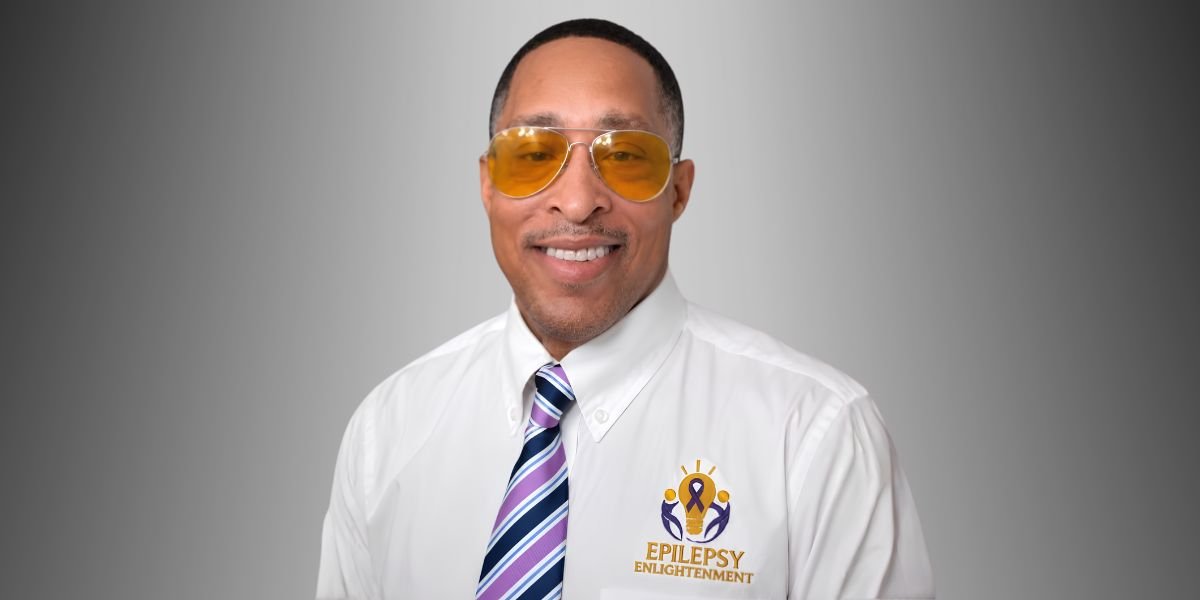
During National Epilepsy Awareness Month, the founder of Epilepsy Enlightenment shares how his lifelong journey with epilepsy has inspired a mission to educate, empower, and uplift others.
For millions of Americans living with epilepsy, the challenges extend far beyond the seizures themselves. There are the uncertainties, the misconceptions, the emotional weight, and the constant need for greater understanding from a world that often knows very little about the neurological condition.
For Steven Edwards, those realities are deeply personal.
Living with epilepsy since the age of 13, the Gary, Indiana, native has spent much of his life navigating a condition that would eventually become the foundation of his advocacy work. But rather than allowing epilepsy to define his identity or limit his ambitions, Edwards has transformed his experiences into a mission centered on education, empowerment, and community.
Today, he is a motivational speaker, writer, philanthropist, podcast co-host, and founder of Epilepsy Enlightenment, a seizure support and advocacy community dedicated to helping individuals and families affected by epilepsy.
As November marks National Epilepsy Awareness Month, Edwards is amplifying a message that has become central to his life’s work: understanding can reduce fear, education can improve safety, and no one should have to navigate epilepsy alone.
A Journey That Began at 13
For most teenagers, adolescence is a period of discovering their identity, building friendships, and imagining what the future might hold.
For Edwards, those formative years also included learning to live with epilepsy, a neurological disorder characterized by a predisposition to recurrent seizures.
The condition introduced challenges that would follow him into adulthood, affecting not only his physical well-being but also his relationships, emotional health, and everyday decisions.
Living with epilepsy often requires an awareness of circumstances that others may take for granted. The unpredictability of seizures can create additional concerns surrounding personal safety, independence, and the ability to maintain a sense of normalcy.
Yet Edwards refused to allow those challenges to become the defining narrative of his life.
Over time, he recognized that his personal journey could serve a greater purpose, particularly for individuals who might be struggling with the same questions, fears, and uncertainties he had encountered.
That realization would eventually inspire him to create a platform where people could speak openly about epilepsy without fear of judgment or misunderstanding.
Epilepsy Enlightenment: Turning Personal Experience Into Purpose
At the heart of Edwards’ advocacy is Epilepsy Enlightenment, a community he established to provide education, encouragement, and support for people living with epilepsy and those who love them.
The organization’s mission is rooted in a simple but powerful belief: knowledge can replace fear with understanding.
Through its Facebook support community, Epilepsy Enlightenment creates opportunities for individuals and families to share personal experiences, ask questions, access information, and connect with others who understand the realities of living with seizures.
For Edwards, creating this space was about more than establishing an organization. It was about building the kind of community that can make a meaningful difference when someone feels isolated by a medical condition.
Epilepsy remains widely misunderstood, despite affecting people of all ages and backgrounds.
Some individuals mistakenly believe that every seizure involves convulsions or a loss of consciousness. Others may not recognize that seizures can appear in different forms, including brief periods of altered awareness or unusual sensations.
These misconceptions can contribute to stigma, fear, and inappropriate responses during medical emergencies.
Edwards believes education is essential to changing those perceptions.
“Knowledge is powerful. The more informed and educated we become, the better decisions we can make for ourselves and our loved ones,” he wrote in a personal reflection published in Melanin & Marriage Magazine.
By encouraging open conversations and promoting greater awareness, Edwards hopes to help people recognize that epilepsy is a medical condition deserving of understanding, not judgment.
His advocacy also extends to families and caregivers, whose experiences can sometimes be overlooked in broader conversations about neurological health.
The Emotional Side of Epilepsy: Love, Relationships, and Understanding
While conversations surrounding epilepsy frequently focus on medical treatment and seizure management, Edwards believes the emotional and interpersonal aspects of the condition deserve equal attention.
Living with epilepsy can affect how individuals approach relationships, communicate their needs, and navigate the vulnerability that comes with sharing a personal health condition.
In his published writing, Edwards has spoken candidly about the importance of having people in his life who genuinely understand what living with epilepsy entails.
He described having an honest conversation with a woman he deeply cares about, explaining that understanding epilepsy requires more than simply hearing about the condition.
There is a significant difference between knowing someone has seizures and witnessing the physical and emotional realities of an episode.
For individuals living with epilepsy, the support of a partner, friend, or family member can provide reassurance during moments of uncertainty.
However, Edwards also recognizes that relationships can experience emotional strain when fear, stress, and a lack of understanding enter the picture.
Rather than avoiding those conversations, he encourages honesty, patience, and education.
For Edwards, being understood is not about receiving special treatment. It is about being recognized as a whole person whose medical condition represents only one part of his life.
Fatherhood, Faith, and Preparing the Next Generation
Among the many roles Edwards embraces, fatherhood holds a particularly meaningful place in his life.
As a parent living with epilepsy, he has had to consider how his condition might affect his children and how best to prepare them for situations that could otherwise be frightening.
Rather than shielding them from the realities of his condition, Edwards made education a priority.
When his children were young, he taught them what to do if they witnessed him experiencing a seizure.
He wanted them to understand the importance of remaining calm, recognizing when help was needed, and knowing how to respond appropriately.
In his published reflections, Edwards recalled teaching his children not to panic and to reassure themselves and one another during difficult moments.
Those lessons were about more than emergency preparedness.
They were also about replacing uncertainty with confidence and helping his children understand that their father’s epilepsy did not diminish his ability to love, guide, and care for them.
His approach reflects an important aspect of epilepsy advocacy: education should begin at home and extend into the broader community.
For families affected by epilepsy, age-appropriate conversations and practical seizure first-aid education can make an enormous difference.
Edwards also credits his faith with providing strength throughout his journey.
His spiritual beliefs have remained a source of comfort during difficult periods, reinforcing his determination to continue moving forward.
“God is Love, and Love is God,” he wrote.
For Edwards, faith, family, and purpose are interconnected. Together, they have helped him maintain perspective through the unpredictable realities of living with a chronic neurological condition.
More Than an Advocate: The Many Dimensions of Steven Edwards
Although epilepsy advocacy is a significant part of Edwards’ public identity, his professional interests and accomplishments extend into several creative and entrepreneurial spaces.
A native of Gary, Indiana, Edwards has a background in the performing arts and public speaking.
His work includes motivational speaking, philanthropy, coaching, writing, and entertainment.
He is also identified professionally as a CEO Mastermind Coach and comedian, reflecting a range of interests that reach beyond his health advocacy.
As a co-host of the DopeLivenTv Live Podcast, Edwards participates in a platform built around conversation and audience engagement.
His work as a contributing writer for Melanin & Marriage Magazine has also given him an opportunity to share personal perspectives through published storytelling.
A person living with epilepsy can simultaneously be a parent, entrepreneur, creative professional, community leader, and advocate.
The condition may influence certain aspects of daily life, but it does not erase an individual’s talents, ambitions, or capacity to contribute.
He wants people to see the complete person behind the diagnosis.
Why National Epilepsy Awareness Month Matters
Every November, National Epilepsy Awareness Month provides an opportunity to bring greater attention to a neurological condition that affects millions of people across the United States.
Epilepsy can affect anyone, regardless of age, race, gender, or background.
One of the most important aspects of epilepsy awareness involves educating the public about seizure recognition and appropriate first aid.
Not every seizure looks the same, and knowing how to respond can help protect someone from injury.
For a person experiencing a convulsive seizure, recommended first-aid measures include clearing nearby hazards, cushioning the head, turning the person gently onto their side when possible, and timing the seizure.
It is equally important not to restrain the person or place anything in their mouth.
Emergency assistance should be requested when a seizure lasts longer than five minutes, when seizures occur repeatedly without recovery, or when other emergency circumstances are present.
For advocates like Edwards, these conversations are not merely educational talking points.
They represent information that can directly affect the safety and well-being of individuals living with epilepsy.
Awareness also means challenging stereotypes, supporting families, encouraging access to appropriate medical care, and recognizing the emotional impact that can accompany a chronic condition.
Through Epilepsy Enlightenment, Edwards is contributing to those conversations by creating a community where people can learn from one another and feel less isolated.
Sometimes meaningful change begins with a conversation, a shared experience, or one person deciding to help someone else feel understood.
Turning Awareness Into Action
As National Epilepsy Awareness Month continues throughout November, Edwards’ mission offers a reminder that meaningful advocacy requires more than recognizing a condition for 30 days.
It requires continued education, empathy, and a commitment to improving the experiences of those affected.
His personal journey has positioned him to speak from a place of lived experience.
He understands the uncertainty that can accompany epilepsy because he has experienced it himself.
He understands the importance of family support because he has worked to prepare his own children.
And he understands the value of community because he has made it his mission to create one.
Through his advocacy, writing, public speaking, and community engagement, Edwards is working to ensure that conversations about epilepsy extend beyond medical terminology and statistics.
For Edwards, living with epilepsy has not eliminated the possibility of building a meaningful life.
It has strengthened his commitment to helping others do the same.
A Legacy of Understanding, Strength, and Hope
There is something particularly meaningful about individuals who transform their personal challenges into opportunities to uplift others.
Steven Edwards represents that commitment.
From a teenager learning to navigate epilepsy to a father, motivational speaker, writer, and founder of a support community, his journey illustrates how personal experiences can evolve into a broader mission.
His advocacy is not rooted in the idea that epilepsy must be overcome to live a fulfilling life.
Instead, it emphasizes that individuals living with epilepsy deserve access to understanding, opportunity, respect, and the freedom to pursue their ambitions.
As November brings renewed attention to National Epilepsy Awareness Month, Edwards continues encouraging people to educate themselves, support affected families, and recognize the importance of community.
His message is especially relevant for anyone who has ever felt that a medical diagnosis might overshadow their identity.
For Edwards, epilepsy is part of his story, but it is not the entirety of who he is.
And perhaps no words capture his perspective more powerfully than those he shared in his own writing:
“Epilepsy is something I live with, but it is not who I am. My faith, my family, and my purpose are greater than any challenge I face.”
Through Epilepsy Enlightenment, Steven Edwards is ensuring that his personal journey becomes a source of education, encouragement, and hope for others.
Because awareness is only the beginning.
Understanding creates connection. Education builds confidence. And advocacy has the power to change lives.
About Steven Edwards
Steven Edwards is a Gary, Indiana, native, motivational speaker, writer, philanthropist, podcast co-host, and founder of Epilepsy Enlightenment, a seizure support and advocacy community. Having lived with epilepsy since age 13, Edwards uses his personal experiences to promote education, understanding, and encouragement for individuals and families affected by the neurological condition.
He is also a contributing writer for Melanin & Marriage Magazine, a co-host of the DopeLivenTv Live Podcast, and a CEO Mastermind Coach. Through his various professional and community initiatives, Edwards remains committed to empowering others and promoting meaningful conversations about epilepsy awareness.
Connect with Steven Edwards
Facebook: Steven Edwards
Instagram: @steven.5441
For publicity inquiries, contact publicist, Desirae L. Benson