How One Woman’s Grief Became a 30-Day Roadmap for Anyone Who Has Ever Lost Someone

Deck: Irene Tunanidas did not write her book to be published. She wrote it because she needed it to exist, and nothing like it did.
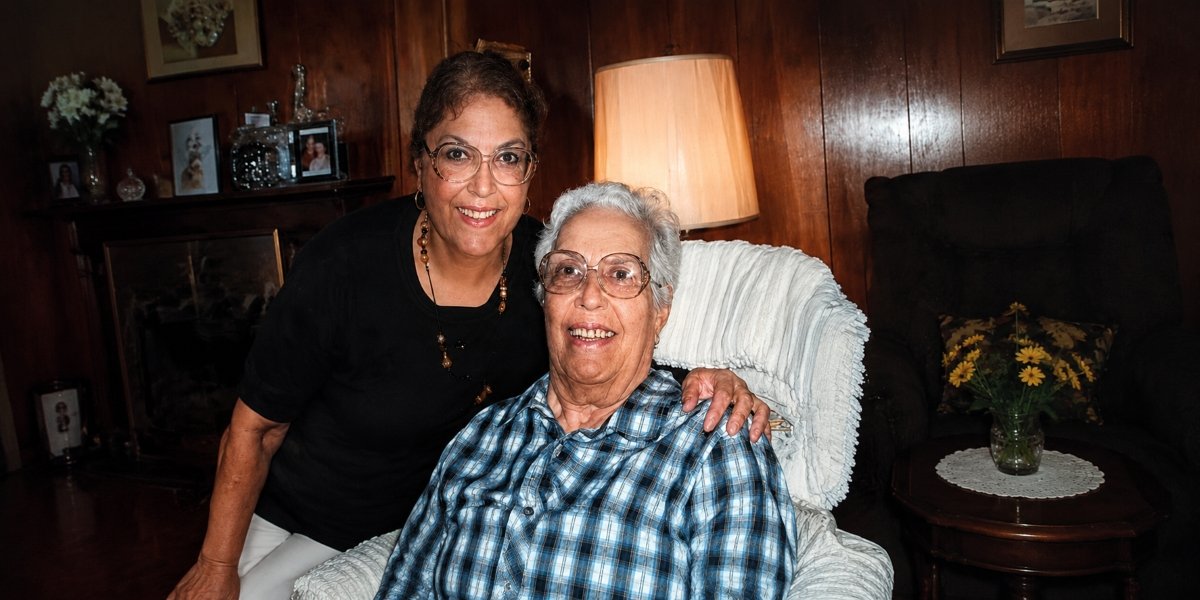
When Irene Tunanidas’s mother died on January 2, 2007, she went home to an empty house and did not know what to do with herself. For three years, every day had been organized around someone else’s needs. There was a schedule, a purpose, a clear answer to the question of what came next. Then her mother was gone, and none of that remained. The structure of her days disappeared overnight, and the phone barely rang.
She was not just grieving the loss of her mother. She was grieving the loss of her role, her routine, and the person who had been her closest companion through all of it. That particular combination of losses does not have a name most people recognize. But anyone who has come out of a long caregiving chapter and found themselves standing in the silence on the other side will know exactly what it feels like.
Irene looked for a book that understood that specific experience. She did not find one. So she wrote it.
Grieving Alone in a World That Could Not Hear Her
Irene lost her hearing at three and a half years old. She has navigated a hearing world for her entire life, and she has done it well. But grief has a way of making existing difficulties sharper.
When her mother died, the loneliness Irene experienced was not just the ordinary loneliness of loss. It was compounded by the specific isolation that comes with being deaf in a world where most comfort arrives through a phone call, a voice at the door, a conversation across a kitchen table. Those channels were not as easily available to her. The ways that hearing people naturally reach out to each other in grief did not always reach her in the same way.
She cried almost every day for months. She did not leave the house. Her sister had moved to Florida. Her brother was not nearby. A neighbor offered to help, but Irene was too deep inside the grief to accept it. When she eventually forced herself to attend a local community event, two years after her mother’s death, it was the beginning of finding her way back. It was a slow beginning, and she made it largely on her own.
The book she eventually wrote carries that experience inside it. It was not written from a place of comfortable distance. It was written by someone who knows what it is to grieve quietly, without enough people checking in, without a clear path forward.
A Devotional Framework That Does Not Require Agreement
Rising From the Abyss of Grief is rooted in Irene’s Greek Orthodox faith. She is open about that. The prayers, the scripture readings, and the spiritual prompts that run through the 30-day devotional come from a tradition she has practiced her entire life, one she returned to every morning and every evening during the three years she cared for her mother, and again in the years of grief that followed.
But the book does not ask the reader to be Greek Orthodox. It does not ask them to hold any particular theological position or belong to any specific community. What the faith framework gives the book is structure and seriousness. It offers a way of approaching grief that has roots going back a very long time, one that takes suffering seriously rather than rushing past it, and that treats the process of healing as something that requires daily effort rather than a single decision.
For readers who come from a different faith tradition, the devotional content translates. The questions it asks and the posture it encourages, showing up every day, doing the next small thing, staying connected to something larger than the grief itself, are not exclusive to any one religion. They are human. And for readers who do not come from a faith background at all, the practical guidance that runs alongside the spiritual content gives them something to hold onto that does not require any particular belief to use.
The Reader She Wrote It For
Irene has been clear about who she was writing for when she sat down to finish this book. She was writing for the family caregiver who gave everything they had to someone they loved and then found themselves, when it was over, with no structure, no role, and no one calling to ask how they were holding up.
That person exists in enormous numbers. There are more than 53 million unpaid family caregivers in the United States. The majority of them are managing a parent’s care, a spouse’s illness, or a child’s disability with limited support and no clear exit plan. When the caregiving ends, whether through the death of the person they were caring for or some other transition, many of them describe the same experience Irene describes. The calls stop. The days empty out. The grief that was deferred during the caregiving years arrives all at once, and there is nothing in place to help them through it.
Rising From the Abyss of Grief was written specifically for that moment. Not for the early stages of loss, when people are still surrounded by others and the support is still flowing in. For the latter stretch, when the casseroles are gone, and the calls have slowed down, and the person is sitting alone trying to figure out how to fill the day. That is the reader Irene had in mind. That is the gap the book was built to fill.
Turning the Hardest Years Into Something Useful
There is a particular kind of courage involved in taking the most painful experience of your life and deciding to make it available to strangers. It requires trusting that your private pain has something to offer someone you will never meet, and being willing to let people see the parts of you that grief made least presentable.
Irene started writing in 2011, four years after her mother died. She set the manuscript aside when her Ohio Association of the Deaf leadership demanded her attention. She came back to it in 2024, after her term as president ended, and finished it through arthritic joints and writing sessions interrupted by memories she had not expected to revisit with that much force. The book took fourteen years to complete.
That is not a story about discipline or ambition. It is a story about a woman who believed, quietly and without fanfare, that what she had lived through was worth documenting. That the person sitting in the silence after a loss deserved a companion who had actually been there. And that sometimes the most useful thing you can do with the hardest chapter of your life is write it down and hand it to someone else who needs it.
A Voice That Reached Further Than Expected
This year, Irene Tunanidas appeared on WDTN-TV’s Living Dayton, sharing her story through a sign language interpreter with a regional television audience. She talked about her mother, her grief, her faith, and the book that came out of fourteen years of trying to put it all into words.

The response confirmed what the book itself suggests. People are hungry for this kind of honesty. They are tired of grief being discussed in polished, composed terms that do not reflect what the experience actually feels like. They want someone to tell the truth about it, the screaming in the empty house, the days that do not get easier on schedule, the faith that helps not because it makes things painless but because it gives you somewhere to stand when everything else has shifted.
Irene’s story reached people because it was real. And the book it produced is real in exactly the same way. It does not suggest that things will get easier quickly. It offers a steady companion while readers find out that they can.
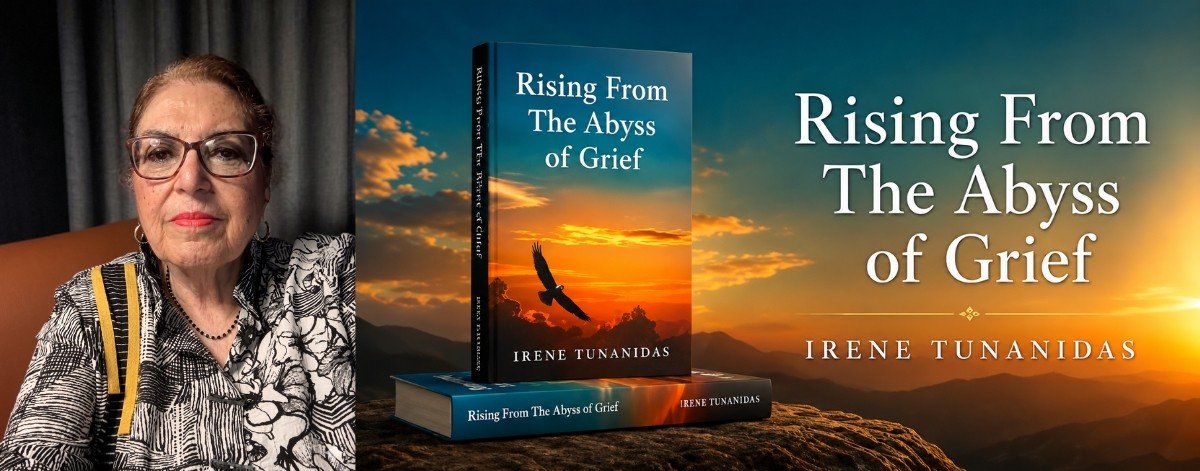
Rising From the Abyss of Grief is available now. It is the book Irene needed in January 2007, and could not find. She wrote it so the next person would not have to look as hard.