From Biomimicry to Fantasy and How Nature Shapes Carol Mitchell’s A Good Haunting

By: Alan McCartney

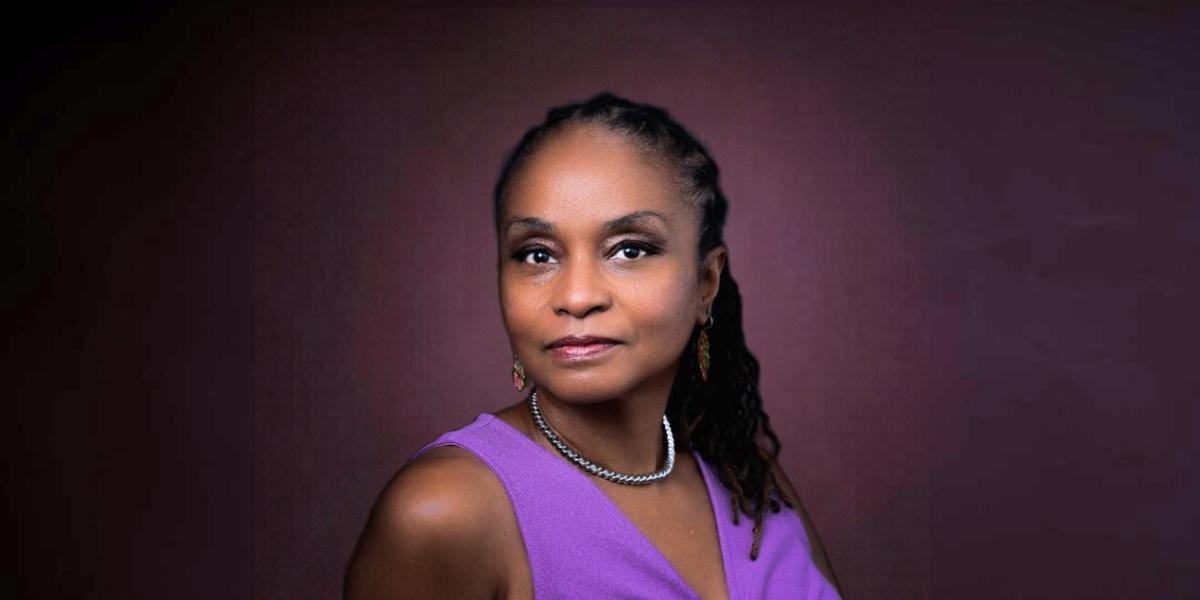
Carol Mitchell’s move from realistic fiction to speculative storytelling may look like a sharp turn, but the author of A Good Haunting: Stories sees a clear connection between the two. At the center of that connection is biomimicry, the practice of looking to nature for structures, behaviors and solutions that humans can learn from or emulate.

Mitchell is the author of the novel What Start Bad a Mornin’, the short story collection A Good Haunting and nineteen books for children. Her short stories and book reviews have appeared in numerous journals. She holds an MFA and is a fellow of the Virginia Center for the Creative Arts and several other arts institutions. She teaches writing during the day and continues her own work at night, including a new novel.

A Good Haunting contains nine speculative stories linked by Caribbean identity, grief, death and motherhood. Myths and traditions rooted in Afro-Caribbean heritage appear alongside magic, transformation, immortality and other fantastical elements. Yet Mitchell says her attraction to fantasy begins, in part, with close attention to the natural world.

“My first response to that question is, ‘How can you live in today’s world and not write fantasy?’” Mitchell said when asked about moving from the realistic fiction of What Start Bad a Mornin’ toward work that is often fantastical.

Her more serious explanation is rooted in biomimicry.

“My interest in fantasy actually stems from an intense fascination with biomimicry: the idea of emulating features found in nature to solve problems we face as humans,” she said.

Mitchell points to Velcro as a familiar example, noting that its design was patterned after the way plant burrs stick to clothing. For her fiction, however, the concept is less about inventing products than about discovering natural processes that can become metaphors, character traits or speculative possibilities.

She says that even What Start Bad a Mornin’ contains this way of thinking. While writing the novel, Mitchell was interested in the transformation from caterpillar to butterfly and used that image to think about the possibility of leaving a former identity behind and remaking the self.

“I am fascinated in the ways in which nature protects and perpetuates itself in ways that seem fantastical, and I often transfer these abilities to my characters,” Mitchell said.

That transfer is especially visible in “Emergence,” one of the stories in A Good Haunting. Mitchell says the story leans into the ability of tomato plants to make their leaves poisonous to caterpillars. A biological defense mechanism becomes the seed of a speculative scenario.

Mitchell also studies relationships among non-human animals, including the roles assigned to females of different species. Those observations connect naturally to a collection in which women, mothers and daughters occupy much of the emotional center.

“These ideas coalesce into various ‘What if’ scenarios in my mind and lead to fantastical stories,” she said.

The result is fiction in which the supernatural does not necessarily arrive from nowhere. It can grow out of a question about biology, an inherited myth, a social expectation or a human response to danger. In A Good Haunting, characters may encounter spirits, immortality or transformation, but those devices often expose pressures that already exist in ordinary life.

That is also why Mitchell’s speculative turn remains connected to her realistic work. Both approaches are concerned with identity and change. A fantastical premise simply allows those ideas to be pushed further.

Mitchell’s reading life reinforces that interest in imaginative world-building. She says she tends to read several books at once and reads almost exclusively Caribbean-connected literature. She is currently reading Celeste Mohammed’s Ever Since We Small, which she describes as entertaining, thought-provoking and informative, and rereading Nalo Hopkinson’s The Midnight Robber.

“Her work is so imaginative and powerful,” Mitchell said of Hopkinson. “I learn a lot from her approach to world-building and her expansion and questioning of existing myths.”

For Mitchell, then, fantasy is not an escape from reality. It is another method of examining it. Nature supplies mechanisms that can seem impossible until closely observed. Myth carries inherited explanations that can be extended or challenged. Caribbean life provides the cultural grounding.

Mitchell’s approach also reflects the discipline she recommends to other writers. She argues that reading and courses can help, but that improvement ultimately depends on putting words on the page, creating material that can be revised, discussed and strengthened. That emphasis on practice fits a process built around repeated observation and experimentation.

A Good Haunting brings those elements together in stories where characters face grief, love, betrayal, motherhood and questions of home. The speculative details may be extraordinary, but Mitchell’s creative process begins with a grounded question: What can the world that already exists teach fiction about what might be possible?

A Good Haunting is available on Amazon.

How USA Book Publishing Company Takes Authors From Manuscript to Market

A finished manuscript is not a finished book. Between the last line an author writes and the moment a reader buys a copy sits a long stretch of specialized work. Editing, design, file preparation, platform setup, distribution, promotion. Writers who try to handle all of it alone often stall somewhere in the middle. That gap is what professional book publishing services are built to cover.

Where a Book Project Begins

Some authors arrive with a complete draft. Others arrive with a folder of notes, a set of recorded interviews, or an idea they have carried for years. Both are valid starting points, and they call for different support.

USA Book Publishing Company works across both. The company begins by assessing what exists, what the author wants the book to do, and which services the project actually needs. A polished manuscript may need only editing and design. A concept with no pages yet needs development and writing support before anything else moves.

Ghostwriting for Writers With Material but No Manuscript

Ghostwriting is widely misunderstood. It does not replace the author. It gives a person with something worth saying a professional writer to shape the saying of it.

The process runs on interviews and collaboration. A ghostwriter draws out the material, organizes it into a structure, and writes in the author’s voice. The author reviews, corrects, and approves. Ownership and credit stay with the author throughout.

This works across genres. Memoirs and autobiographies rely on it heavily, because people who have lived remarkable lives rarely also happen to be trained writers. Business and self-help authors use it to convert years of practice into a usable framework. Fiction and children’s authors use it to develop ideas they can picture clearly but struggle to put on the page.

Why Editing and Proofreading Decide Reader Trust

Readers notice errors before they notice anything else. A typo on page two undermines the authority of everything on page two hundred.

Professional editing operates on several levels. Developmental editing addresses structure, pacing, and whether the argument or story holds together. Line editing sharpens sentences. Copy editing enforces consistency in grammar, spelling, and style. Proofreading catches what survived the earlier passes.

Each layer exists for a reason, and skipping them shows. Experienced editors also protect the author’s voice while correcting the writing, which is the part most authors worry about and the part that separates professional editing from heavy-handed rewriting.

Design, Formatting, and Illustration

Cover design does a job most authors underestimate. It communicates genre, quality, and tone before a reader reads a single word, and it has to do this as a small thumbnail on a retail page. Custom design built around the genre and intended audience performs differently than a template.

Interior formatting handles readability. Margins, typography, chapter openings, and page flow determine whether a book feels professionally produced. Print and digital editions need separate preparation, because a layout that works on paper does not automatically work on a Kindle screen. Illustration adds another dimension for children’s books, memoirs with visual elements, and nonfiction that benefits from diagrams or art.

Publishing Formats and Self-Publishing Options

Authors can publish in paperback, hardcover, and eBook formats, and many release all three. Each requires its own file specifications, cover dimensions, and pricing considerations. Choosing distribution channels matters as much as choosing a platform. Where a book is available shapes who can find it.

Self-publishing platforms have changed what independent authors can reach. Amazon Kindle Direct Publishing gives writers direct access to a global retail audience, but the setup involves metadata, category selection, keyword choices, file compliance, and pricing strategy. USA Book Publishing Company handles KDP preparation and setup, along with distribution planning for wider print and digital availability.

Marketing, Audiobooks, and Author Presence

Publication is the point where most independent books go quiet. Visibility has to be built. Book marketing covers promotional strategy, author branding, reader outreach, and launch planning. An author website gives readers, event organizers, and journalists a reliable place to find the work. Video book trailers give authors shareable content for social platforms.

Audiobook production opens a format with its own audience of listeners who rarely read print. Narration, recording, editing, and distribution turn an existing manuscript into a second product with no new writing required.

Working With a Publishing Partner

The practical value of a full-service publisher is coordination. One team carrying a project from manuscript through production and launch keeps decisions consistent and saves the author from assembling a freelance crew for every stage. USA Book Publishing Company structures its work around what each project needs, with the author involved in the decisions throughout.

Zoo Atlanta Panda Grove Opens November 6 as Ping Ping and Fu Shuang Continue a Program That Began in 1999

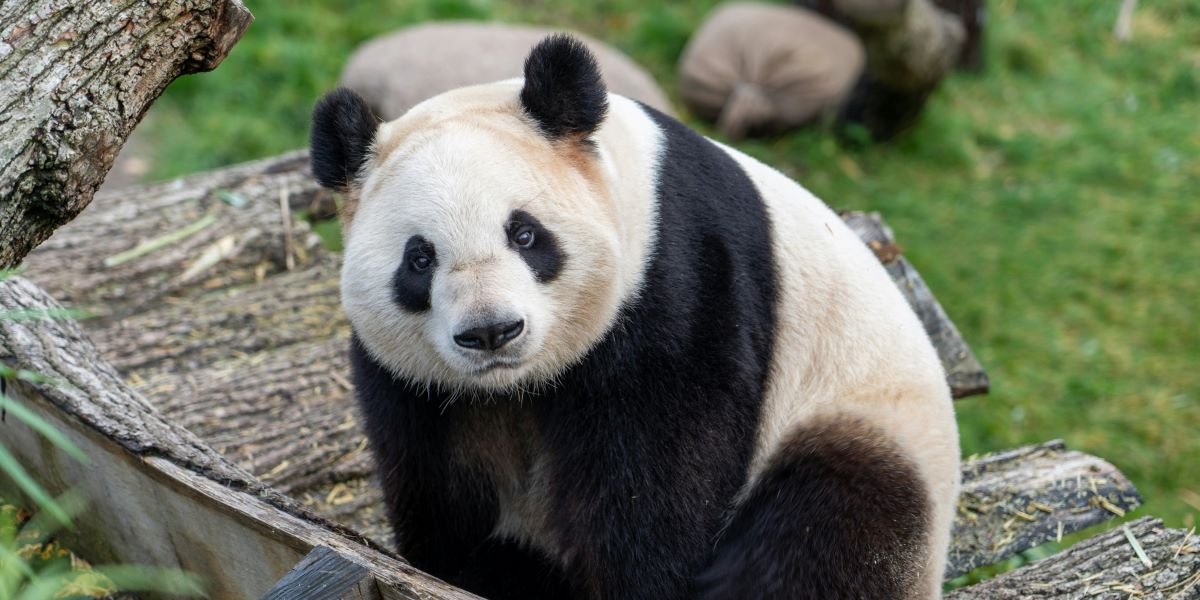
Zoo Atlanta’s pandas return on Friday, November 6, 2026, when giant pandas Ping Ping and Fu Shuang debut in the new Arthur M. Blank Panda Grove. The zoo opens at 10:30 a.m. that day. The opening ends a two-year gap without pandas in Atlanta and starts a new chapter in a program that began in 1999.

Key Takeaways

  • Zoo Atlanta opens at 10:30 a.m. on Friday, November 6, the opening day of the Arthur M. Blank Panda Grove.
  • A $6 million grant from the Robert W. Woodruff Foundation paid for the habitat renovation.
  • The habitat is named for Arthur Blank’s support of the panda program, which goes back to the arrival of Lun Lun and Yang Yang in 1999.
  • Ping Ping and Fu Shuang live at Zoo Atlanta under a 10-year conservation agreement with the China Wildlife Conservation Association.
  • Zoo Atlanta is one of three U.S. zoos with giant pandas and the only one in the Southeast.

Zoo Atlanta Pandas Return After a Two-Year Gap

For two years, Zoo Atlanta had no pandas. Its four previous pandas, Lun Lun, Yang Yang, Ya Lun and Xi Lun, returned to China in 2024. On November 6, visitors will see Ping Ping and Fu Shuang in a habitat built for the new pair.

Zoo Atlanta President and CEO Raymond B. King called the opening “a momentous occasion in Zoo Atlanta history.” He said that guests who remember the original habitat will see right away that the new space is a different experience.

Meet Ping Ping and Fu Shuang

Ping Ping is male and Fu Shuang is female. Both were born in 2020 at the Chengdu Research Base of Giant Panda Breeding, Ping Ping in March and Fu Shuang in October. Fu Shuang turned 6 in October while the zoo prepared for the debut. Their names mean “peace” and “double blessing.”

The pair arrived in Atlanta on September 27 and began a month-long quarantine to settle in. They came to Zoo Atlanta under a new 10-year conservation agreement with the China Wildlife Conservation Association, and the zoo’s breeding program is part of their stay.

A Panda Program Built on 27 Years of Atlanta Philanthropy

Zoo Atlanta’s panda program began in 1999, when Lun Lun and Yang Yang arrived. Arthur Blank’s support started that same year. The zoo’s first panda habitat was named the Arthur M. Blank Family Foundation Giant Panda Conservation Center, and the new Arthur M. Blank Panda Grove carries his name forward.

A second Atlanta foundation paid for the new space. The Robert W. Woodruff Foundation, another longtime supporter of Zoo Atlanta and its panda program, gave a $6 million grant for the renovation. King thanked both foundations and the zoo’s wider philanthropic community for their long-term support of the program.

The funding shows how much the panda program depends on local support. Two Atlanta foundations helped carry it from the 1999 arrival through the 2024 return and into a new 10-year agreement. Blank said the grove will let generations of visitors see giant pandas up close while supporting conservation research worldwide.

Inside the Renovated Arthur M. Blank Panda Grove

Zoo Atlanta says the renovation was designed around the pandas’ wellbeing and new experiences for members and guests. The indoor dayrooms are larger and now have new climbing structures and a pool in each. The outdoor habitats also have new climbing structures.

The grove also adds water features and a sculpture. According to the zoo, the sculpture represents a hopeful future for wildlife and the giant panda’s role as a global ambassador for peace and harmony.

Zoo Atlanta Giant Pandas Return to a Short List of U.S. Zoos

The opening brings Atlanta back to the small group of American zoos with giant pandas. Zoo Atlanta is one of three U.S. zoos with giant pandas and the only one in the Southeast, which makes the new grove a regional draw for families across Georgia and neighboring states.

Fans who can’t visit will have another way to watch. Zoo Atlanta is bringing back its PandaCam, the livestream it ran for the previous four pandas.

The Panda Grove opening comes at the start of a busy family season in Atlanta. Later in the month, Piedmont Park’s Light Up the Season celebration and its new Holiday Lantern Parade adds another free outing for families on November 22.

FAQs

Does Zoo Atlanta have pandas again?

Yes. Ping Ping and Fu Shuang arrived on September 27, 2026. They make their public debut on November 6 in the Arthur M. Blank Panda Grove.

When do Ping Ping and Fu Shuang debut at Zoo Atlanta?

The pandas debut on Friday, November 6, 2026, the same day the renovated Arthur M. Blank Panda Grove opens.

What time does Zoo Atlanta open on November 6?

Zoo Atlanta opens at 10:30 a.m. on Friday, November 6. That’s later than usual, to prepare for the panda debut.

Are there giant pandas in other U.S. zoos?

Yes. Zoo Atlanta is one of three U.S. zoos with giant pandas and the only one in the Southeast.

What happened to Zoo Atlanta’s previous pandas?

Lun Lun, Yang Yang, Ya Lun and Xi Lun returned to China in 2024. Lun Lun and Yang Yang first arrived at Zoo Atlanta in 1999.

How long will the pandas stay at Zoo Atlanta?

Ping Ping and Fu Shuang live at Zoo Atlanta under a 10-year conservation agreement with the China Wildlife Conservation Association.