
By: Lennard James
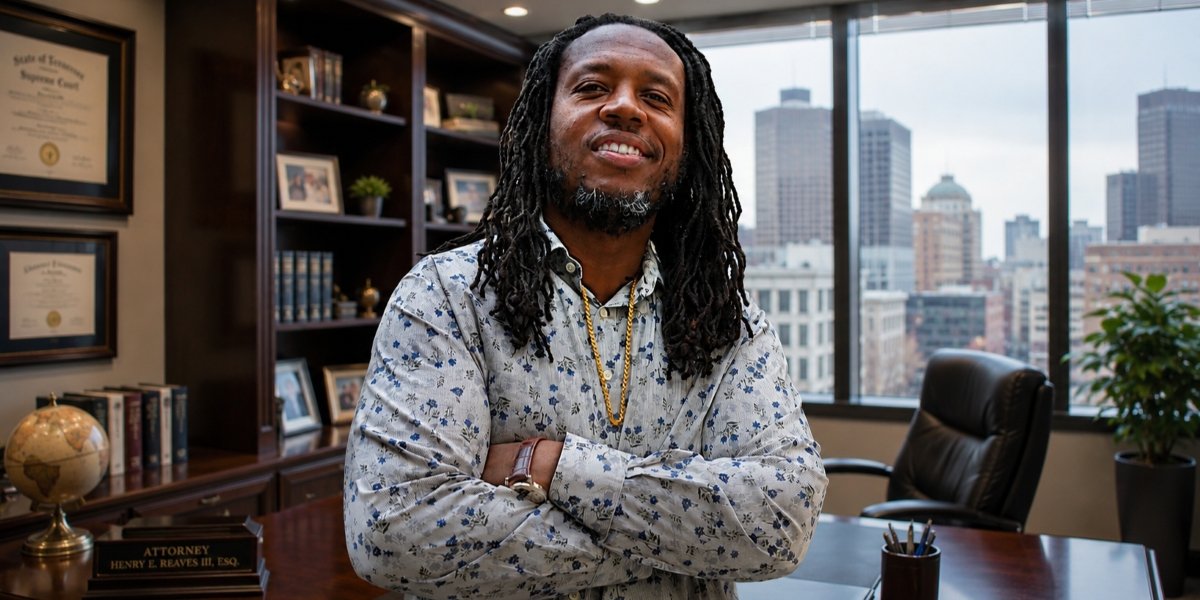
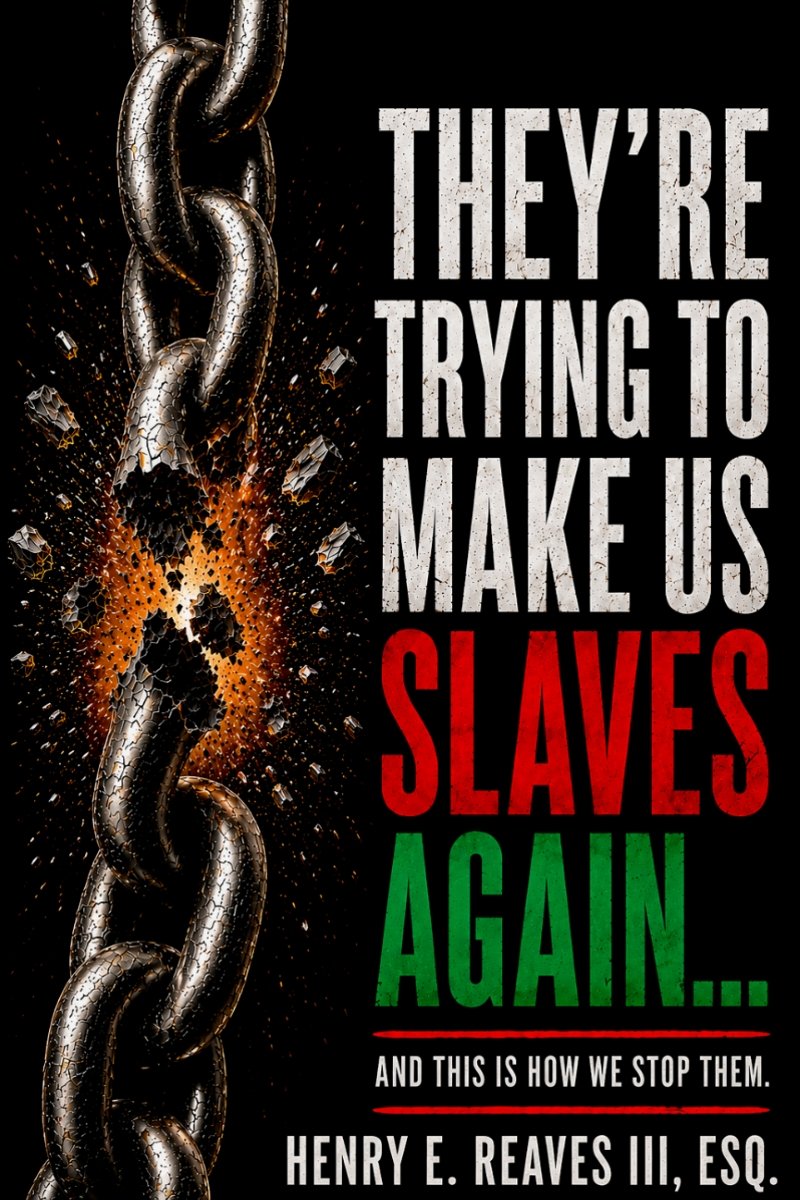
A biblical warning has echoed across generations: “My people are destroyed for lack of knowledge.” Those words, drawn from Hosea 4:6, carry particular weight when considering the message behind “They’re Trying to Make Us Slaves Again… And This Is How We Stop Them” by Attorney Henry E. Reaves, III, Esq.
The title is intentionally provocative. It is meant to make people uncomfortable enough to ask questions. But beyond the imagery of chains and slavery is a broader message about knowledge, economics, law, education, ownership, and personal responsibility. Reaves challenges African Americans to recognize that freedom requires more than the absence of physical chains. It requires understanding the systems that influence everyday life and developing the knowledge necessary to navigate them.
“My people are destroyed for lack of knowledge” becomes an appropriate lens for understanding the book. Knowledge can determine whether someone understands a contract before signing it, recognizes the consequences of poor credit, knows how to establish a business, understands his or her legal rights, or appreciates the long-term value of property and ownership.
In today’s economy, what you do not know can become expensive.
The modern world is rapidly changing. Artificial intelligence, automation, digital commerce and technological innovation are transforming employment and entrepreneurship. Traditional jobs are being redefined, while entirely new industries are emerging. Families are simultaneously confronting higher living costs, housing affordability challenges and an increasingly complicated financial system.
Reaves’ message asks African Americans a critical question: Are we preparing ourselves and our children for the economy that is coming, or only for the economy that already exists?
That distinction matters.
Education can no longer be viewed exclusively as earning a diploma or obtaining a degree. Knowledge must include financial literacy, legal literacy, technology, entrepreneurship, communication, and an understanding of how institutions operate.
A young person should understand a credit score before applying for credit. He should understand interest before borrowing money. She should understand a contract before signing one. Families should understand insurance, taxes, property, wills and estate planning. Entrepreneurs should understand business structures, financing, intellectual property and the obligations that accompany ownership.
These are not simply financial lessons. They are lessons about independence.
Reaves also challenges readers to examine the difference between income and ownership. Having a good-paying job can provide stability, but income alone does not necessarily create generational wealth. Ownership can provide another dimension of economic security.
A home can become an asset. A business can create employment. Intellectual property can retain value. Investments can potentially grow over time. Education can increase opportunity. Most importantly, knowledge can be transferred from parents to children without being depleted.
This is where the book’s message moves from the individual to the community.
African Americans exercise substantial purchasing power, but the long-term challenge is converting more economic activity into sustainable ownership. If money continually leaves a community without creating businesses, assets, jobs, or institutions within it, economic vulnerability can persist regardless of how much money is spent.
Reaves’ argument is not that everyone must become wealthy or that every African American must become an entrepreneur. Instead, the larger message is to understand economic choices and develop strategies that create greater independence.
That includes supporting education, encouraging entrepreneurship, developing marketable skills, purchasing assets responsibly, and teaching children the rules of economics before they are forced to learn those rules through costly mistakes.
His legal background also adds another dimension to the book.
The law affects almost every significant economic decision people make. Employment agreements, mortgages, leases, business contracts, debt, inheritance, property transactions and court proceedings all operate within legal frameworks. Yet many people do not seek to understand those frameworks until they are already experiencing a problem.
Knowledge should come before the crisis.
That is why the phrase “My people are destroyed for lack of knowledge” becomes so important. Ignorance of a system does not prevent that system from affecting you.
For Reaves, knowledge must therefore become part of the modern definition of freedom.
Parents must teach children not only how to work but how money works. Schools and communities must prepare young people not merely to consume technology but to create with it. Entrepreneurs must learn how to build sustainable companies rather than simply generating temporary income. Families must discuss property, credit, insurance, investing, and inheritance.
The book also carries an unmistakable message about responsibility. History matters. Institutional barriers matter. Discrimination and inequality should be confronted wherever they exist. But understanding history should also inspire preparation for the future.
The question cannot remain solely, “What was done to us?”
It must also become, “What are we going to build for ourselves?”
That is where Attorney Henry E. Reaves, III, Esq. turns a provocative book title into a call for action.
“They’re Trying to Make Us Slaves Again… And This Is How We Stop Them” ultimately challenges readers to replace vulnerability with knowledge, dependency with preparation, and short-term survival with long-term strategy.
The broken chain associated with the book symbolizes freedom from bondage, but Reaves’ larger message is that maintaining freedom requires vigilance.
In the twenty-first century, some of the most powerful chains may be the ones people cannot immediately see, and one of the strongest tools for breaking them remains knowledge.
“My people are destroyed for lack of knowledge.”
The challenge now is to make certain the next generation has it.