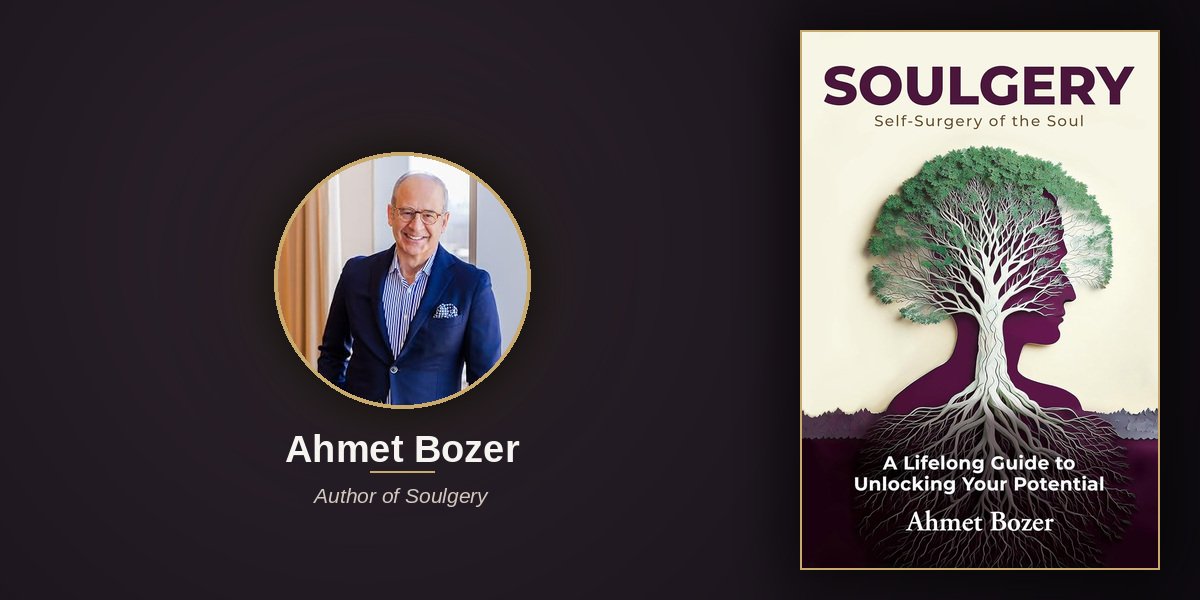

By: Samantha Borcy
Ahmet Bozer spent decades at the Coca-Cola Company, where he served as President of the Eurasia and Africa Group and later as President of Coca-Cola International. Building and sustaining a global business across very different cultures taught him that leadership tests character as much as strategy. Many executives at that level write about organizational effectiveness or the lessons of their careers. Bozer took a different route with his book Soulgery, which looks at the inner journey that runs underneath the professional one.
What Is the Idea Behind Self-Surgery of the Soul?
The book takes its name from a concept Bozer calls self-surgery of the soul, the deliberate and ongoing process of examining and cultivating one’s own psyche. He presents it less as a therapeutic framework or a spiritual practice in the conventional sense and more as a lifelong discipline open to anyone willing to examine their experience honestly.
The Self Map serves as the book’s main guide, and the Four Acts of Growth give it a practical structure. Both draw on Eastern and Western philosophical traditions. Bozer lets those traditions inform each other throughout the book instead of leaving them side by side.
Why Does Performance Depend on Knowing Who You Are?
Bozer refuses to separate how a person performs from who that person is. He has watched successful people reach major professional milestones and find that the milestones did not bring the fulfillment they expected. Drawing on direct observation as well as his own experience, he argues that sustained high performance and personal flourishing rest on the same underlying work.
That work means understanding oneself well enough to direct growth with intention. The alternative, in his view, is collecting achievements and hoping they add up to something meaningful.
How Do Real Stories Shape the Book?
Stories from his own career give the book its grounded detail. They are not illustrations built to support a fixed conclusion. Each one describes what happened when a single person faced specific professional and personal challenges, and what he learned that his formal preparation had not covered.
Combined with the philosophical depth and practical structure of the framework, that personal testimony gives readers a reason to return to the book at different stages of life rather than reading it once and setting it aside.
For readers who have built a successful professional life and sense that success and fulfillment are not quite the same thing, Soulgery by Ahmet Bozer addresses that gap through a framework grounded in both business experience and philosophy.