
By: Sara Wolfe
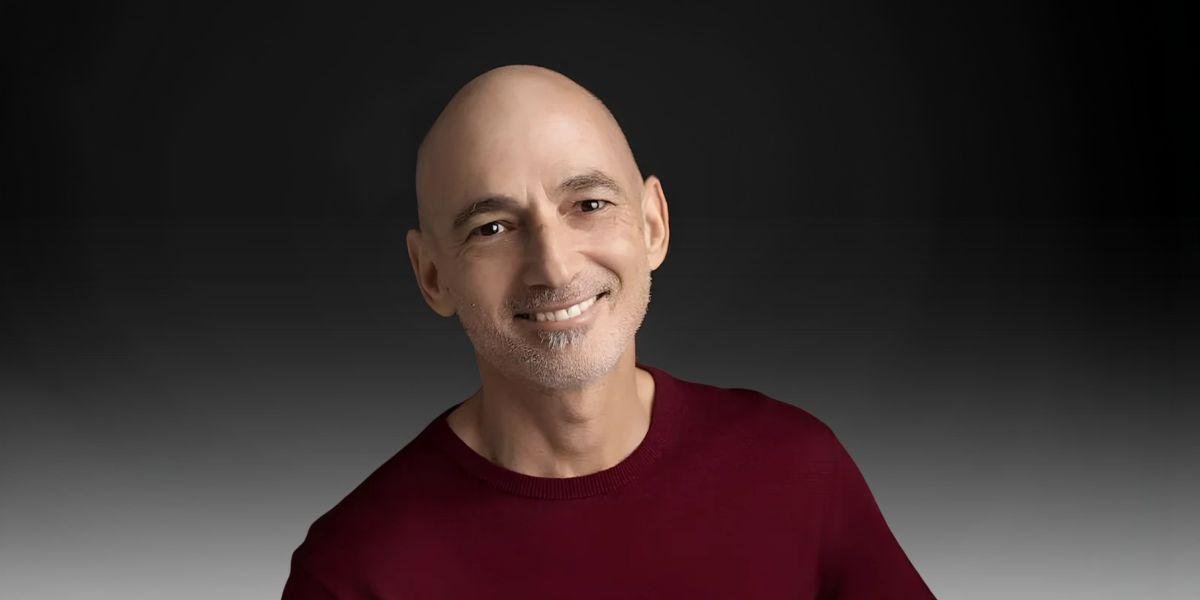
For more than three decades, Billy Planer has built his work around a deceptively simple idea: people understand one another better when they hear one another’s stories. After taking more than 35,000 people on journeys centered on history, identity, public issues, and human connection, the Atlanta native is bringing those lessons to the page in Conversations That Matter. The book is designed for readers who have watched political disagreements strain friendships, families, workplaces, congregations, and communities and are looking for a way to stay engaged without turning every disagreement into a rupture.
Planer describes the book in direct terms. “Conversations That Matter is about how and why we must talk with people who don’t look, think, pray, love, and in 2026, vote like us.” His goal is not to make difficult conversations easy or to persuade readers that serious disagreements do not matter. Instead, he argues that people can learn how to remain present when a discussion becomes uncomfortable. “We must become comfortable being uncomfortable having what I term a conversation that matters,” he says. “It is full of strategies and techniques as well as great stories that show the power of what happens when we share our story and hear other people’s stories.”
That emphasis on stories grew out of Planer’s work with young people. In 2003, after years of running youth groups, he created a five-week cross-country summer journey called Etgar 36. Teen participants explored history, politics, and activism while meeting people on opposing sides of major public debates. The purpose was not to tell participants what to think. It was to give them firsthand encounters with people whose experiences and arguments differed, then ask them to develop their own views through civil discourse.
One example involved gun policy. Planer’s group met with a father whose son was murdered at Columbine High School and who later became a national gun-safety activist. Two days later, the teens met with a gun-rights lobbyist and activist. Similar paired encounters addressed some of the most contentious social and public-policy debates of the time. Those experiences became a practical laboratory for the principles Planer now presents in Conversations That Matter: hearing a position directly, resisting caricatures, asking questions, and recognizing the person behind the argument.
Planer expanded that work in 2004 by creating three-day Civil Rights journeys in the American South for teens and adults. He found that physically leaving familiar surroundings often changes how people listen. “I found that leaving your comfort zone and going somewhere new opens you up to engaging in things you may not normally do. It expands your boundaries,” he says. “Much like a good conversation that matters will.” The trips connect historical sites and stories to present-day questions about identity, responsibility, and community.
His interest in connection also has a deeply personal origin. As a Syracuse University senior in 1988, Planer lost friends, including his junior-year roommate, in the bombing of Pan Am Flight 103. The attack changed how he thought about distance between people and events. He began asking whether violence becomes harder when people know one another’s stories and recognize shared humanity. That question has remained at the center of his professional life.
A native of Atlanta, Planer brings both counseling and educational training to that work. He earned a bachelor’s degree from Syracuse University and a master’s degree in education and counseling from Georgia State University. Over the years, he has carried his approach into keynote speeches, panel discussions, media appearances, teen programs, and adult learning experiences. Across those formats, the consistent emphasis is participation rather than passive observation: people are asked to listen, speak, question, and reflect rather than simply consume another argument from a distance.
Planer does not promise that conflict disappears when people talk. He says the point is to build the skills needed to stay calm, listen, push back without pushing away, and avoid reducing another person to a political label. “The ultimate goal is not to learn how to avoid these conversations because we need to have them, but how to have them with others and continue to see each other’s humanity,” he says.
For Planer, that is also the book’s larger argument. The country does not need universal agreement to become less hostile. It needs more people capable of disagreement without dehumanization in everyday life and personal relationships today. Conversations That Matter turns decades of travel, teaching, facilitation, speeches, and difficult discussions into a practical guide for readers who want to keep talking when walking away would be easier.
Planer will bring that conversation to a live audience on Oct. 25 at 4 p.m., when journalist Greg Bluestein moderates a discussion with him at the Marcus Jewish Community Center of Atlanta, 5342 Tilly Mill Road in Dunwoody, Georgia, as part of the Atlanta Book Festival. The appearance allows readers to hear Planer explore the ideas behind Conversations That Matter and the experiences that shaped the book.
Conversations That Matter is available on Amazon.