
By: Francis Belmont
You probably know exactly when your prana started leaking. It was not one event. It was the accumulation of small agreements you made with exhaustion, the mornings you woke up already behind, the conversations where you said yes when your body said something completely different. The moment you started running on the backup generator so long you forgot what the real one felt like.
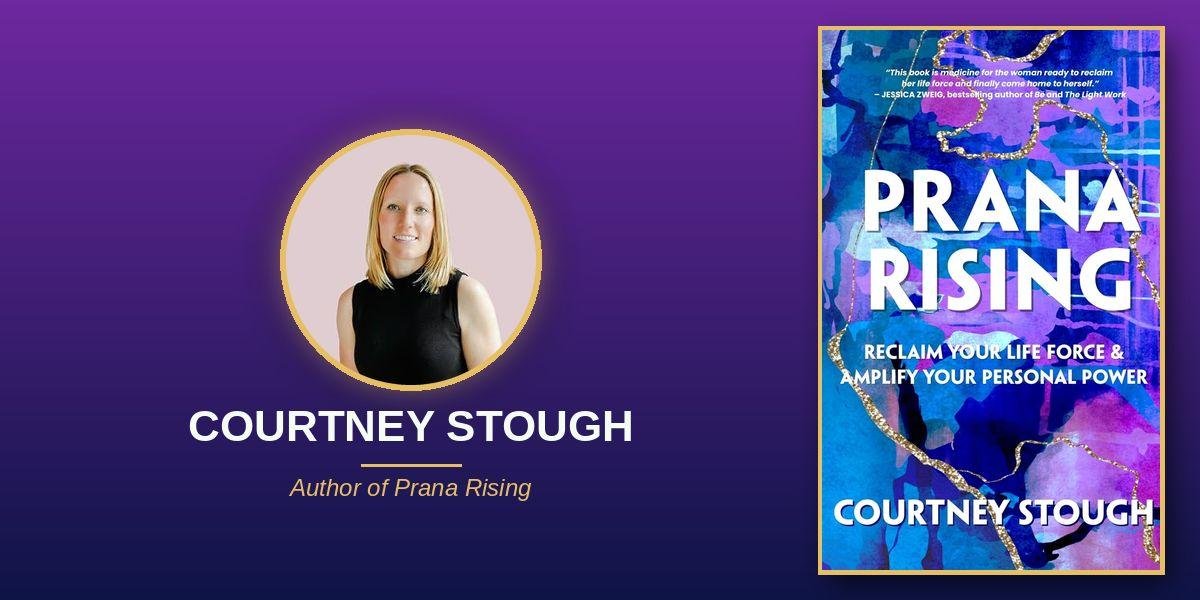
Courtney Stough knows. She was a Yale-educated attorney grinding through the prestige circuit of Big Law, chronically depleted, physically compromised, and quietly losing herself inside the life she had worked so hard to build. She did not have a dramatic breakdown. She had something slower and, in some ways, harder. It was the gradual recognition that she was burning through her own life force to keep a version of herself alive that was no longer true. Prana Rising: Reclaim Your Life Force & Amplify Your Personal Power is the book she wrote from the other side of that recognition.
What makes this book different from most of what you have already read in this space is Stough’s refusal to clean it up. The marriage she almost lost. The pregnancy loss she grieved. The years she spent chasing healers, pills, and gadgets for a pain no treatment could touch. She keeps all of it in. Not because she is performing rawness but because she understands something most wellness writers miss. You cannot trust a guide who shows you their highlights. The reason her account of reclaiming energy carries weight is that she has watched herself waste it, in nearly every way a person can.
Her framework is built around prana, the Sanskrit concept for vital life force, the spark that animates your body, sharpens your thinking, and lets you show up with actual presence rather than just presence. The book opens with a self-assessment that asks you to rate yourself across physical energy, mental clarity, emotional well-being, and connection to your higher self. It is not a quiz you game. It is the kind of honest inventory that tells you something you already know but have been avoiding putting into words.
From there, Stough takes you into the territory most people sidestep. Her Energy Vampire chapter is going to sting a little if you are in a season of over-functioning, and it is going to sting in the right way. She catalogs the obvious culprits but then goes after the sneaky ones: the wellness routines that became compulsions, the spiritual practices you picked up to process your emotions without actually feeling them, the endless self-help consumption that keeps you reading about transformation while doing just enough to feel like you are working on yourself. Reading that chapter feels like being seen by someone who is not trying to shame you. She has done all of it too.
Then she moves you from head to heart. Stough lived from her mind for most of her life, making the right choices on paper while her heart kept trying to steer her elsewhere, and she reaches for an unexpected teacher to explain the cost: Moana. When the island goddess Te Fiti loses her heart, she forgets who she is and becomes Te Kā, a raging lava monster. When her heart is returned, she remembers. Stough’s point is that the same thing happens to us, and she offers her practice of heart-mind resonance as a way to begin remembering.
The emotional heart of the book lives in the marriage chapters. Stough traces, with the kind of precision that comes from real reckoning rather than retrospective tidying, how she played her part in the patterns that brought her partnership to the edge of collapse. The Good Girl who bit her tongue. The Cool Girl who kept everything smooth. She describes unspoken resentments stacking up like kindling, twigs, then logs, until one trivial spark set everything ablaze. What she discovered in the rupture, and what the slow work of repair taught her, is that the feelings she spent years managing were not the problem. Avoiding them was. That insight, simple in statement and genuinely difficult in practice, drives everything in Part II of the book.
Part III is where Stough gives you the tools she actually uses. The Powerhold™ framework, her term for the inner architecture that sustains personal power, is built from Four Energy Generators: Embodiment, Mindfulness, Creativity, and Community. None of these are ideas you have never heard. What Stough does that others often do not is strip them of perfectionism. She is the working mother writing a book while pregnant, walking her son to school on good days, adapting her practice because adaptation is not failure. Her concept of “Right for Right Now” is the kind of permission slip people who struggle with all-or-nothing thinking need to actually begin.
The boundaries chapter is the one to underline. Not because it tells you to say no more often but because it reframes the entire question of boundaries as a matter of energy stewardship. Every choice carries a cost and a return. Holding a line is not an act of withdrawal. It is how you stay in relationships without disappearing inside them. Stough brings in the yogic principle of ahimsa, non-harm toward yourself as well as others, and uses it to navigate the difference between honesty and cruelty, between protecting your energy and punishing someone else for taking it.
She closes the book carrying her rainbow baby. Still testing the lessons. Still falling and recovering. Still on the journey she wrote the book about. That humility is its own kind of teaching.
Prana Rising is available on Amazon and through Courtney Stough’s official book page.