

Why “How Long Does It Last” Doesn’t Have One Answer
Balloon garland lifespan is the question everyone asks eventually, though most people ask it the wrong way: how long does a balloon garland last? The honest answer isn’t a single number, and anyone who gives one without first asking where the garland will hang is guessing. A garland installed the morning of an indoor gala can look just as fresh at the end of the night as it did at noon. The same design, set up outdoors on a July afternoon, might start sagging before the first guest arrives. It swings that much because location and conditions matter more than any timer ever could. So the real question isn’t how long a garland lasts in general. It’s how long this particular garland, in this particular spot, is actually going to hold. This is exactly why the “can I install it a day early” question doesn’t have a single answer either. For an indoor, climate-controlled venue, a day early is usually fine, while the same head start outdoors in summer heat can mean arriving to a garland that’s already lost its shape.
What Determines a Garland’s Lifespan Indoors
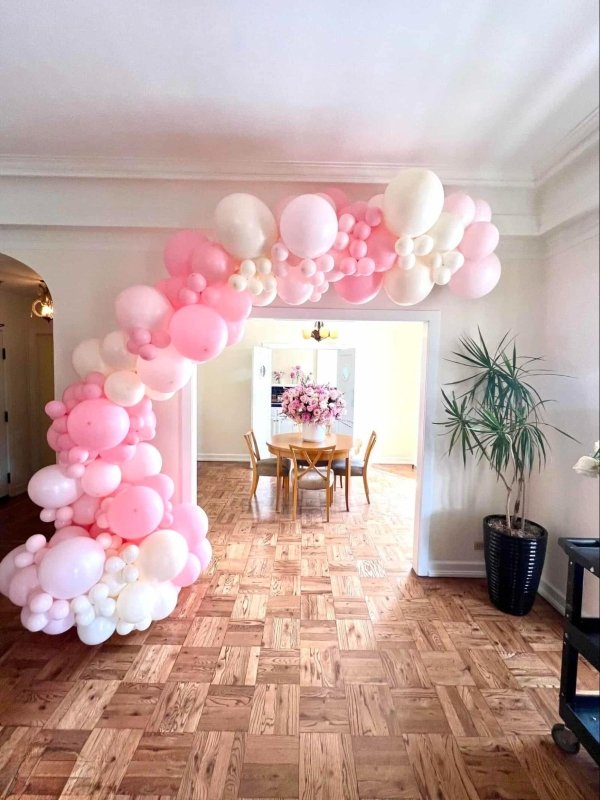
Indoors is generally the friendliest environment a garland can get, but “friendly” doesn’t mean immune to every variable. A climate-controlled room keeps temperature and humidity steady, which is most of the battle. Direct sunlight through a bank of windows, though, can still heat balloons enough to stress the latex, even inside. Even indoors, air vents matter more than people expect; a garland hung directly above an HVAC outlet gets a steady blast of temperature swings all day, which adds up. Fill type matters just as much as the room itself. Air-filled balloons hold their shape for days, sometimes over a week, because there’s no gas slowly working its way through the latex the way helium does. The Balloon Guy’s founder has installed enough of these to know the variables people overlook. “People assume indoor automatically means it’ll hold up fine,” he said. “But I’ve seen a garland start to sag by the afternoon because it was hanging a few feet from a south-facing window nobody thought twice about.” Balloon-industry sources back up the fill-type piece directly: air-filled latex balloons last dramatically longer than helium-filled; we’re talking weeks instead of hours. That gap is exactly why most professional garlands are built air-filled rather than helium-filled, reserving helium for balloons meant to float freely.
What Changes When a Garland Moves Outdoors

Outdoor balloon decor plays by a different set of rules than anything installed inside. Heat is the first problem: rising temperatures make the gas or air inside a balloon expand, stretching the latex until it eventually pops well before it would indoors. Direct sun adds a second layer of damage on top of that. One event-decor resource puts the mechanism plainly: the heat causes the latex balloons to grow and eventually pop, while the sunlight exposes them to faster degradation as a result of UV rays. Humidity and wind complicate things further. Humidity can make latex tacky and prone to sagging, and wind puts constant physical stress on a structure that was built to hang still. Sean Edwards, Founder of The Balloon Guy, whose Los Angeles-based team builds outdoor installations on a regular basis, plans around all of this before a single balloon goes up. That planning is what separates an outdoor garland that survives a full event from one that needs a mid-party rescue.
How Installation Choices Extend (or Shorten) That Timeline
None of this means outdoor garlands are a bad idea, or that indoor ones are risk-free. It means the actual lifespan comes down to choices made before installation, not luck. Balloon quality is one of them. Thinner, lower-grade latex stretches and weakens faster than professional-grade balloons built to hold air or helium under pressure. Technique is another. A garland tied too tight or overinflated is already working against itself before the first guest walks in. How long balloons sat in storage before installation matters too. Latex that’s already a few months old starts out more brittle than fresh stock, regardless of how well it’s handled on the day. Edwards has watched both mistakes shorten a garland’s life more than any weather ever did. “People think the weather is the enemy,” Edwards said. “But half the garlands I’ve seen fail early failed because of how they were built, not because of the heat or the wind.” Spacing, knot tension, and even which balloons get placed where all factor into how long a piece actually holds, regardless of whether it ends up indoors or out.
What a Realistic Timeline Actually Looks Like
There isn’t a single honest number that answers how long a balloon garland lasts, and anyone who gives one without asking about the venue is skipping the actual work. Lifespan comes down to where a garland hangs and how carefully it was built, together, not either one on its own. That’s worth asking a vendor about directly: what conditions will this specific installation face, and how does that change the plan? That kind of specificity is rare, and it’s usually the clearest sign of someone who has actually done this work long enough to know where things go wrong. Edwards has spent more than fifteen years learning which combinations of environment and technique actually hold up, and which ones only look good in a photo taken an hour after setup. A vendor who can answer the venue question specifically, rather than quoting a generic number, is usually the one whose garlands are still standing by the time the party winds down.