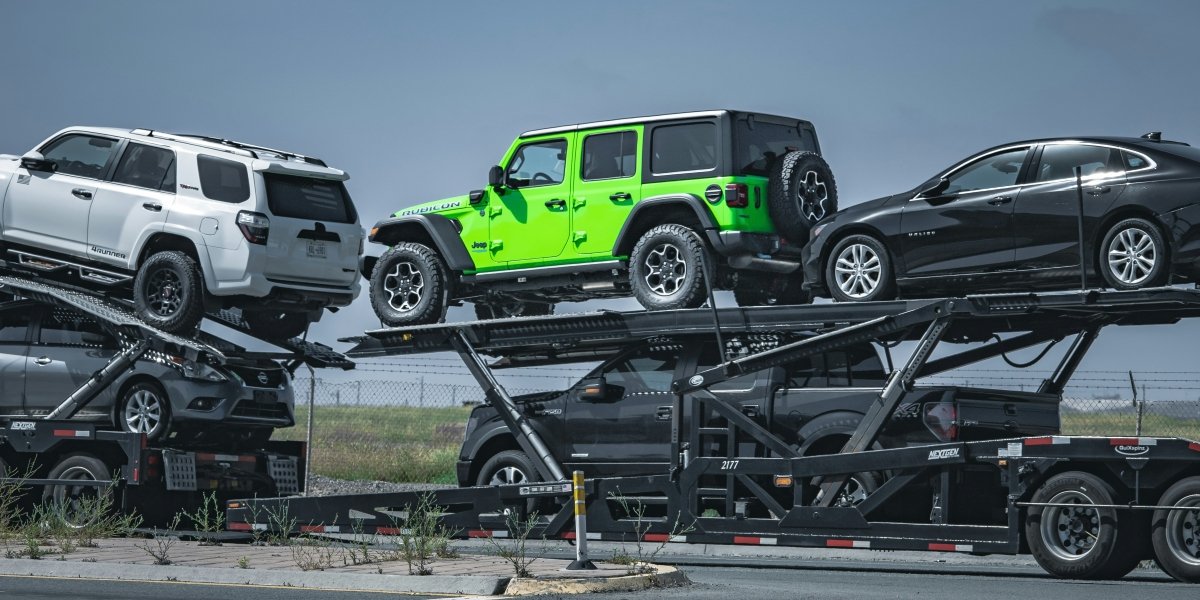

The transport carrier arrived at the new commercial facility on schedule. The vehicles were secured, the delivery paperwork was ready, and the receiving manager knew the shipment was close. From the logistics office, the move looked like a success.
Then the truck reached the property entrance.
The driveway handled ordinary delivery vans without trouble, but the transport combination could not finish its turn without crossing a landscaped island. A row of parked employee vehicles narrowed the space further. Past the gate, the receiving yard had no clear area where the carrier could set its unloading ramps.
The vehicles had reached their destination, yet the delivery was not complete.
This hypothetical scenario points to a common weakness in business vehicle relocation. Companies spend plenty of energy on transport quotes, departure dates and arrival windows, then overlook the physical conditions at the receiving site. For organizations moving service vans, company cars, dealer inventory or operational fleets, the last stretch of the delivery matters as much as the long-distance haul. The final 100 feet can decide whether a shipment goes straight into business use or sits idle because of an avoidable access problem.
Why Does Arriving at an Address Not Complete a Delivery?
A transport booking names a pickup location and a destination. Those addresses are essential, but they say little about the conditions a carrier will actually meet. A commercial property may serve employee vehicles, customer parking, supply trucks and service contractors through different entrances or different sections of the same lot.
The gate that daily delivery vans use may not suit a vehicle transporter. Even when the carrier gets onto the property, the space may not allow safe positioning for unloading. A trailer may need extra clearance, a firm surface or access to a particular part of the yard, and none of that shows up in a street address.
Business managers should separate the legal destination of a shipment from the spot where the handoff can actually happen. When those two differ, the transport arrangement has to account for the difference before dispatch.
How Do Turning Space and Unloading Areas Affect Fleet Delivery?
Large vehicles do not follow the same path through a turn as passenger cars. Turning requirements depend on length, configuration and steering geometry, and different parts of a long combination can track different paths. Driveway width is only one of the relevant measurements.
The Federal Highway Administration’s Freight and Land Use Handbook addresses this directly. It treats turning radii, access routes and loading-area design as core considerations for facilities that truck traffic serves. The same principle applies to vehicle transport deliveries, where a carrier needs room to enter, line up with a suitable unloading area and leave safely.
A driveway that looks generous when empty can become unusable once employee parking, construction materials or stored containers take up part of the maneuvering area. Site access deserves an evaluation under realistic operating conditions, not a glance at an aerial image or an assumption that the usual delivery entrance fits every truck. A receiving manager should also ask whether the unloading area will still be open at the expected arrival time, which may depend on security staff, parking management or contractors.
Established receiving routines create another trap. Facilities usually have procedures for boxed freight, and unloading a business vehicle from a transporter is a different job. The transporter may need space for ramps, equipment positioning and controlled movement of the vehicle once it leaves the trailer. Some properties have a designated exterior area for this, while others need a different agreed handoff point.
An instruction to use the loading dock can fail for the same reason. Dock levelers, trailer restraints and powered industrial trucks address the risks of moving goods between a trailer and a building. They do not necessarily offer a workable way to unload passenger vehicles or fleet units from an auto transporter.
OSHA has published guidance on trailer movement during dock operations, including wheel chocks and restraint systems where relevant. The underlying point is that vehicle movement during loading must be controlled with measures suited to the equipment and the workplace. Dock rules are not a universal procedure for every auto transport trailer, though, and operating the transporter remains the job of qualified carrier personnel.
The receiving business should pick a suitable area and coordinate access. It should not direct transport personnel to use unsafe or incompatible equipment.
Why Do Vehicle Dimensions and Securement Rules Matter at the Destination?
A company fleet can mix passenger cars with work vans, pickups, utility-body vehicles and other specialized units. Height, width, weight, wheelbase and installed equipment all influence which transport equipment fits the job and what access the destination must provide. Roof-mounted accessories and extended bodies can change a vehicle’s effective dimensions, so the numbers should describe the actual vehicle rather than a model name.
The same logic applies on the receiving side. An unloading area that works for a sedan may be a poor match for a longer commercial vehicle or one with low ground clearance. Companies arranging commercial vehicle transport planning should weigh vehicle characteristics and delivery-site requirements together, not as two unrelated stages.
Federal cargo-securement rules show how much equipment differs by load. Under 49 CFR 393.128, automobiles, light trucks and vans weighing 10,000 pounds or less individually must be restrained at the front and rear with at least two tiedowns. Section 393.130 covers heavier wheeled or tracked vehicles and machinery of 10,000 pounds or more, and it includes a four-tiedown minimum for heavy equipment of that kind.
These rules govern securement during transport. A receiving facility cannot work out its unloading needs from a tiedown count. Still, the distinction shows why a business should give accurate vehicle information and confirm that the assigned carrier has equipment suited to the shipment.
Who Needs to Be Ready When the Carrier Arrives?
Arrival windows are estimates. Traffic, weather, route conditions, loading sequences and driver operating requirements can all shift timing, so a window works as a planning tool rather than a promise of an exact minute. That uncertainty matters at facilities that limit commercial deliveries to certain hours or require security staff or an authorized employee on site.
When the window moves, someone needs the authority to approve the updated arrangement. Naming a primary contact and an alternate who can settle routine access questions keeps a scheduling change from becoming a failed delivery. The goal is not to keep employees waiting around. It is to make sure nobody is stuck unable to authorize entry or confirm a handoff location.
A message saying a shipment is close tells the receiving employee very little. That person also needs vehicle identifiers, the expected number of units, the designated receiving area and the name of whoever may accept the delivery. The business should decide who will inspect the arriving vehicles and how the handoff gets documented. When responsibility is vague, several employees can each assume someone else has it covered.
Departments hold different pieces of the puzzle. Fleet management knows the vehicles and priorities, procurement or finance manages the transport agreement, facilities understands property access, and security may control the gate. A booking can look complete from the procurement side while facilities has never approved an unloading location. A shared record listing the vehicles, the approved handoff point, the receiving contact and the site restrictions closes most of these gaps.
Condition documentation belongs at the handoff too. Records can show what both parties observed when the carrier released the vehicle and the receiving party accepted it, though the specific procedures depend on the transport agreement and applicable law. A general delivery confirmation does not settle every question about condition.
Employees should also avoid declaring that damage happened in transit before they have looked at evidence of the vehicle’s earlier state. Clear records serve a dispute better than memories collected after the vehicle returns to service.
The cost of a vehicle that has arrived but cannot be used reaches past any extra transport charge. A service van may be needed for customer appointments, a company car may be assigned to a field employee, and a dealership unit may need inspection before it joins inventory. Delays leave employees without vehicles and force work to be rescheduled. Those effects vary by business, so no single delay-cost figure applies. The more useful measure is when the delivered vehicle becomes available for its job.
What Should a Final-100-Feet Review Cover?
Before dispatch, the business should check conditions at the destination. The review should establish whether the planned transport equipment can reach the property, whether a suitable unloading area exists and whether the receiving contact understands the arrangement. It should also account for vehicle dimensions and any handling limits.
The carrier confirms the equipment and operating requirements within its responsibility, and the business confirms what the site permits and who can accept the shipment. If a facility cannot accommodate the transport combination, the parties can discuss an alternative handoff point. Such a location needs agreement beforehand, with attention to legal access, site permissions, vehicle handling and each party’s responsibilities.
A nearby parking lot is not automatically available because it looks spacious. The owner may restrict commercial activity, and the lot may have its own maneuvering or safety limits. Moving the delivery point without coordination muddies where possession transfers and who answers for the vehicle afterward.
Current maps and photographs help a transport provider see entrances, barriers and traffic patterns, and they let the business point to the right gate. A photograph does not establish dimensions, surface suitability or delivery-day obstructions, though, and a map drawn before construction may no longer match what the carrier finds. For sites with several entrances, naming the commercial access point keeps a driver from following the ordinary street address to the wrong gate.
The review should be repeated whenever something meaningful changes, such as construction at the property, a different transport configuration or a revised delivery window.
A carrier can cover hundreds of miles without trouble and still hit an unresolved problem at the receiving gate. Turning space, unloading conditions, vehicle dimensions, site restrictions, receiving authority and handoff records all feed into a successful delivery. Federal securement rules and freight-facility guidance do not supply a universal unloading design, but they show why equipment and site conditions belong in the plan.
For businesses relocating fleets or receiving commercial vehicles, success is not that the carrier reached the property. It is that the vehicles came through a suitable, coordinated process and moved into daily operations without a last-minute handoff problem.