
The proposal that Atlanta’s south-side communities have waited years to see in writing is now on file with the state. Charlotte-based Atrium Health submitted a formal application to the Georgia Department of Community Health on June 24 to build a teaching hospital at 675 Metropolitan Parkway SW in southwest Atlanta, in partnership with Morehouse School of Medicine. If approved, the facility would become Atlanta’s only hospital south of Interstate 20 — a distinction that speaks as much to what the city lost as to what this project aims to build.
What the Filing Contains
The state proposal outlines a hospital with a 24-hour emergency department and the potential for Level 2 trauma center designation, which would allow the facility to provide initial trauma stabilization, perinatal and neonatal care, diagnostic imaging, and surgical services. The project, known internally as “Project Robin,” carries an estimated cost of $800 million and would sit on a 40-acre campus that extends well beyond hospital walls.
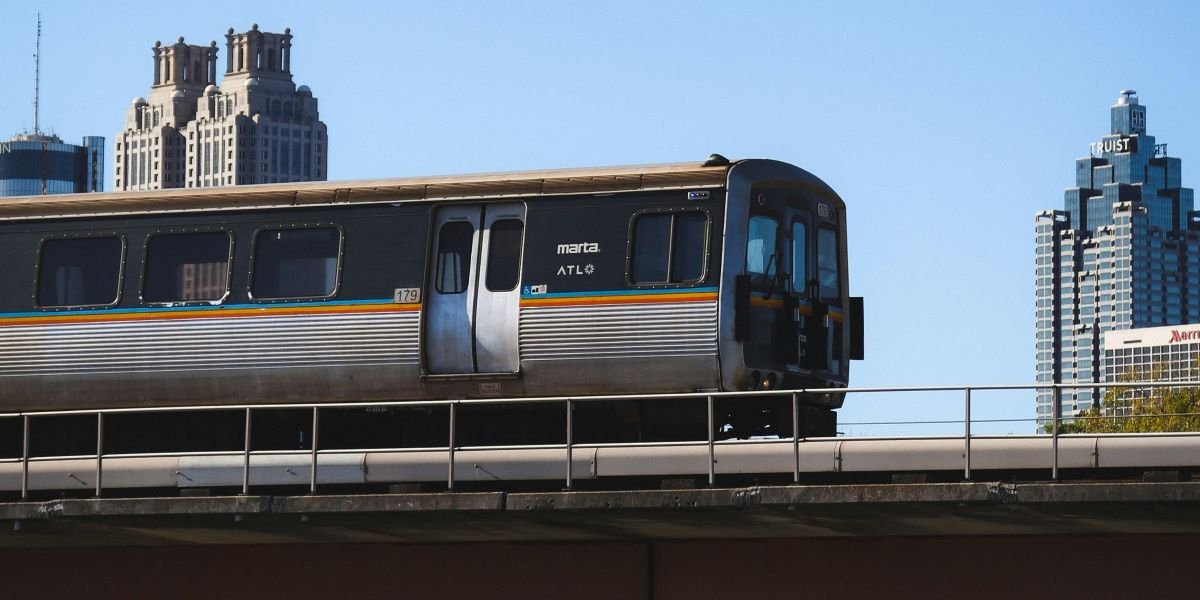
The site plan includes research facilities, medical offices, retail, residential housing, and academic spaces — a mixed-use footprint designed to function as an anchor institution rather than a standalone medical building. The location is adjacent to the West End MARTA station and sits approximately half a mile from Morehouse School of Medicine’s main campus, a proximity that supports the teaching-hospital model and positions the facility within an existing corridor of academic medical infrastructure.
Morehouse School of Medicine would serve as the operating partner, creating a pipeline between the HBCU’s medical training programs and the hospital’s clinical operations. The school issued a statement supporting efforts to expand healthcare access in Atlanta, noting its commitment to “building clinical pipelines, enhancing training for physicians and other healthcare and science professionals, and improving outcomes for the communities we serve.”
Atrium Health, which acquired the Metropolitan Parkway campus site in 2024, described the partnership as an opportunity to “restore critical healthcare services and address longstanding gaps in access to communities who have suffered far too long from losing two safety net hospitals.”
The Gap This Hospital Would Fill
The closures of Wellstar Atlanta Medical Center in 2022 and Atlanta Medical Center South shortly thereafter removed two critical access points for emergency and inpatient care south of I-20. The impact was immediate and measurable. Residents in neighborhoods including Adair Park, Mechanicsville, Pittsburgh, and the West End were left with drive times of 30 minutes or more to reach the nearest emergency department, depending on traffic. Grady Memorial Hospital, the city’s only Level 1 trauma center, absorbed a significant share of the displaced patient volume.
City data cited by Atlanta officials during earlier council presentations placed the life expectancy gap between north and south Atlanta at roughly 20 years — a disparity that public health researchers have linked to differences in healthcare access, income, housing quality, and environmental exposure. The absence of a hospital south of I-20 became a focal point for community organizers, neighborhood planning units, and elected officials who argued that the closures deepened an already acute health equity crisis.
Breanna Zimmerman, a resident near the proposed site, told Atlanta News First that the lack of nearby emergency care creates real anxiety for families in the area. Ambulance response times and transport distances compound conditions that are already time-sensitive, particularly for cardiac events, strokes, and traumatic injuries.
Erika Brayboy Collier, chair of Southwest Atlanta’s Neighborhood Planning Unit S, framed the need in personal terms during earlier public sessions: “I have six children and a husband. I’ve been married for twenty years. And I don’t have a hospital.”
How the Project Connects to City Hall
The hospital proposal does not exist in isolation. It is embedded within Mayor Andre Dickens’ broader Neighborhood Reinvestment Initiative, a $5.5 billion package of investments targeting south and west Atlanta that includes housing, grocery access, parks, transit, and infrastructure improvements. The hospital’s funding mechanism is tied in part to revenue from a Tax Allocation District connected to the Atlanta BeltLine.
The city council has been reviewing the NRI package through committee sessions, with the administration spending recent weeks answering questions and gathering feedback. Courtney English, Mayor Dickens’ chief of staff, told an earlier council committee that the hospital deal was actionable. “For folks who care about a hospital on the city’s south side, we can build one. The deal is there. All the partners are at the table.”
The TAD funding structure has drawn scrutiny from Atlanta Public Schools, which established a Tax Allocation District Investment Review Committee to assess how diverted property tax revenue might affect school funding. APS Board Chair Jessica Johnson noted that “any diversion of funding from students has direct impacts on staffing, programming, and school resources.” The tension between economic development financing and public education funding is a recurring theme in Atlanta’s TAD debates, and the hospital proposal will not resolve it — but it does give the administration a tangible, high-need deliverable to justify the investment.
What Comes Next
The state filing initiates a regulatory review process through the Georgia Department of Community Health, which evaluates certificate-of-need applications for new hospital construction. Morehouse School of Medicine already holds a certificate of need for a hospital in the area, and city officials have indicated they hope the paperwork can advance through the state process in the coming months.
If approved, construction timelines for a project of this scale typically extend three to five years, meaning the hospital would not open before 2029 at the earliest. In the interim, south-side residents will continue relying on Grady and other facilities north of I-20 for emergency and specialty care.
The filing represents the most concrete step yet in a process that has moved from community demand through political commitment to regulatory application. Whether the $800 million price tag, the TAD funding mechanism, and the state approval process align on the timeline Atlanta’s south side needs remains the open question. But for neighborhoods that have spent four years without a hospital, the fact that “Project Robin” now has a state filing number is itself a milestone.