
The watchmaking industry has been increasingly dependent on materials science to produce watches that satisfy unique client demands through global supply chains for OEMs and ODMs. Despite the continued dominance of stainless steel as the basic material used in watch production, customer needs have evolved to incorporate other materials such as titanium alloy, ceramic composite, bronze alloy, damascus steel, and carbon fiber forging. The choice of materials is driven by factors such as durability needs, weight considerations, resistance to corrosion, machining constraints, and client-defined aesthetics, independent of any branding strategy adopted by the company. Against this backdrop, the production process at Shenzhen manufacturing plants has become versatile enough to accommodate different materials using one production process.
Billow Time Watch Co., Ltd., established in 2004 in Shenzhen, operates within this OEM and ODM manufacturing structure. The company is documented as a contract manufacturer producing watches for third-party clients rather than a consumer-facing brand organization. Its operations are built around producing watches according to external design briefs, technical drawings, and material specifications supplied by clients, with both OEM and ODM workflows used depending on project requirements. Public company information describes its core service as OEM and ODM production for international buyers, including private label manufacturing and design implementation services for external brands.
The company’s material portfolio reflects the requirements of client-driven manufacturing rather than internally developed product segmentation. Available production data indicates that Billow Time Watch Co., Ltd. works with stainless steel grades including 316 and 904, titanium alloys, bronze identified as CuSn8, ceramic compounds, Damascus-style patterned steel, and forged carbon fiber components. These materials are not deployed as part of a branded product strategy but are selected based on technical specifications provided in OEM and ODM contracts. For example, titanium is commonly requested for reduced weight and corrosion resistance, while ceramic is used for scratch resistance in case components. Bronze alloys are typically specified for controlled oxidation finishes, while forged carbon fiber is used for structural and aesthetic variation in limited production batches.
In OEM workflows, material selection is defined by client technical drawings and performance requirements. The manufacturer is responsible for sourcing compatible raw materials, verifying machining feasibility, and adjusting production parameters for each batch. In ODM workflows, material selection is partially influenced by internal engineering proposals. However, final approval remains with the client before production begins. Company descriptions indicate that CAD design, SolidWorks modeling, and CNC programming are used to convert design specifications into production-ready technical files, ensuring that different material types can be processed within standardized manufacturing steps.
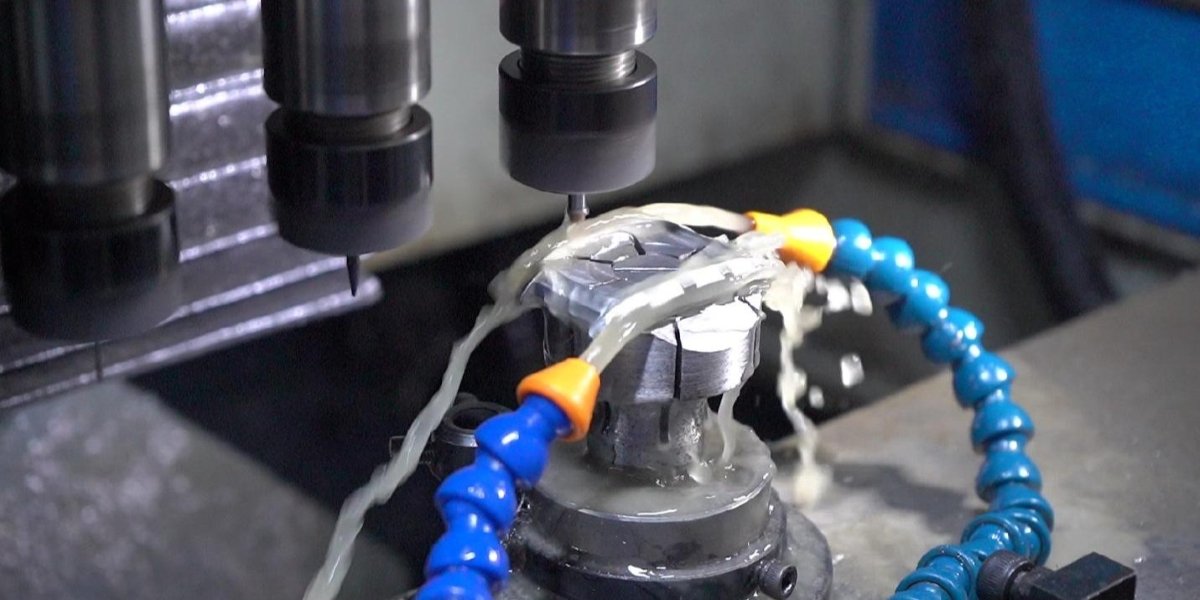
The use of multiple materials introduces operational constraints in machining, tooling wear, and process calibration. Stainless steel requires conventional CNC milling and turning processes with established tooling standards, while titanium demands slower cutting speeds and specialized tooling due to hardness and heat sensitivity. Ceramic components require sintering and precision grinding rather than conventional machining in many cases. Forged carbon fiber introduces layering and resin control requirements that differ significantly from metal-based machining workflows. Damascus-style steel production involves pattern welding or surface treatment processes that require controlled finishing stages to preserve material structure during polishing.
To manage these requirements, manufacturing systems are structured around segmented production units rather than linear assembly lines. Publicly available descriptions of the company’s operations indicate the presence of CNC machining departments, polishing and finishing sections, quality control units, assembly lines, and engineering support functions. These units operate in sequence depending on material type and product complexity. For example, CNC machining precedes heat treatment or surface finishing for metal components, while composite materials may bypass certain machining stages and proceed directly to shaping and assembly.
Quality control processes are integrated into each stage of material handling rather than applied only at final inspection. Stainless steel components are checked for dimensional tolerance after CNC machining. Titanium parts undergo additional inspection due to tool wear variability. Ceramic components require fracture testing during handling stages. Forged carbon fiber parts are inspected for layering consistency and void formation. This multi-stage inspection model reflects the variability introduced by material diversification and is necessary to maintain consistency across different production batches supplied to OEM clients.
The expansion of material capabilities is closely linked to the broader development of OEM and ODM demand in the watch industry. Industry reporting and manufacturing disclosures indicate that OEM production often requires flexibility in material sourcing to accommodate brand-specific design requirements, especially for mid-range and customized watch segments. Within this structure, manufacturers are expected to adapt production lines rather than standardize outputs around a fixed material set. This requirement has contributed to the adoption of multi-material machining environments in Shenzhen-based watch manufacturing clusters.
Operational adaptation at Billow Time Watch Co., Ltd. is therefore centered on process flexibility rather than product identity. The company’s documented transition from basic workshop operations in 2004 to a larger manufacturing structure with CNC machining, R&D functions, and assembly systems reflects the need to support varied material processing requirements at scale. As order complexity increased, production workflows were reorganized to accommodate multiple material types within the same facility while maintaining separation between machining, finishing, and inspection stages.
In this structure, material diversification is not treated as a branding feature but as a logistical outcome of contract manufacturing. Each material type introduces distinct production parameters that must be managed through standardized engineering controls, tooling selection, and inspection protocols. The company’s operational model reflects this requirement by maintaining parallel production capabilities for different material categories, allowing OEM and ODM orders to be processed according to client-defined specifications without restructuring core manufacturing systems.
Overall, the use of stainless steel, titanium, bronze, ceramic, Damascus steel, and forged carbon fiber in production at Billow Time Watch Co., Ltd. reflects the technical demands of contract-based watch manufacturing. The system is shaped by external design input, material feasibility constraints, and machining requirements rather than internal product planning. This structure places emphasis on adaptability in production systems, ensuring that varied material requirements can be executed within a unified operational framework.