
By: ES Savannah
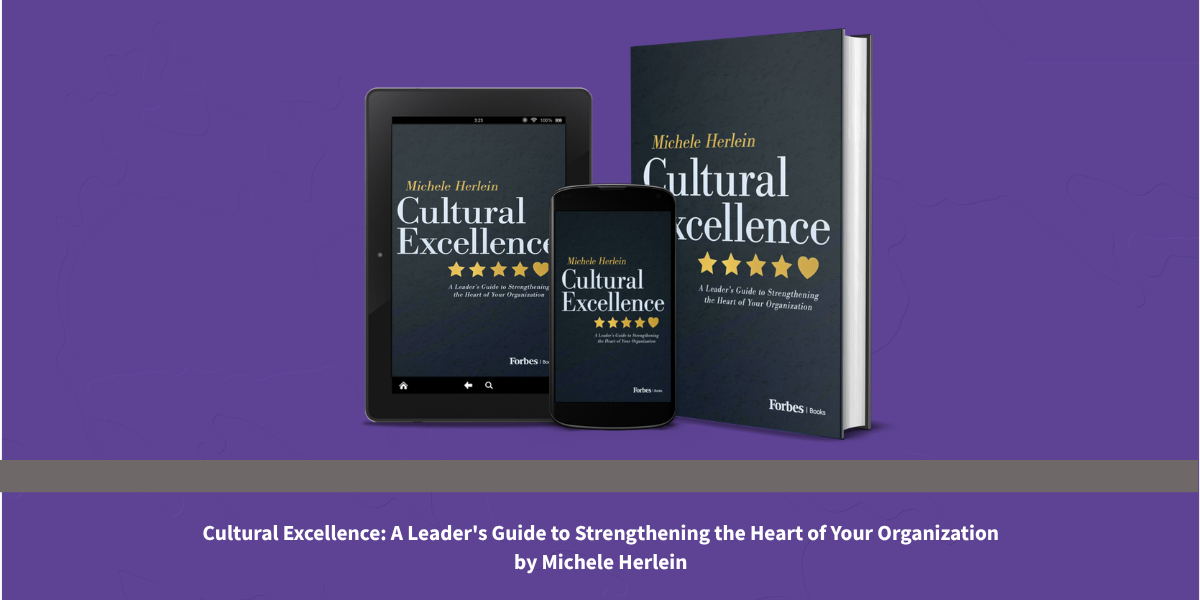
Most conversations about organizational culture happen at the wrong level of abstraction. They happen in the register of values and vision and engagement scores, and they stop before reaching the specific, practical, sometimes uncomfortable work of actually changing how an organization functions day to day. Michele Herlein is not interested in the conversation that stops too soon. She is interested in the one that goes all the way through to implementation, to the systems and behaviors and leadership practices that determine whether cultural values are living realities or expensive decorations. Cultural Excellence is that conversation in book form, and it is one of the most genuinely useful leadership resources to come along in recent memory.
The Experience Behind Cultural Excellence
Herlein brings to this work a combination of credentials that is unusual and worth noting. She holds a doctorate in business administration focused on organizational development, which gives her the theoretical grounding to understand why culture works the way it does. But she also spent twenty-five years inside major organizations, actually leading cultural transformations, which gives her the practical grounding to know what that theoretical understanding looks like when it meets a resistant middle manager on a Tuesday morning. The integration of those two kinds of knowledge is what gives the book its particular texture, rigorous enough to be trustworthy, practical enough to be immediately applicable.
Culture by Design or Culture by Default
The question she opens with is one that most leaders instinctively recognize, even if they have never heard it framed so directly: Is your organization’s culture intentionally designed or simply a default setting? That framing cuts through a lot of the comfortable vagueness that typically surrounds cultural conversations and lands you immediately in the territory of genuine accountability. Because if culture is a default setting, then the disengagement, turnover, and misalignment that follow from it are not mysterious organizational phenomena. They are predictable consequences of a choice that was never consciously made. Herlein makes that accountability feel energizing rather than crushing, because she immediately follows it with a clear and specific framework for making different choices going forward.
The practical guidance she provides for diagnosing cultural health, aligning executive teams, and activating middle management reflects a sophisticated understanding of where cultural initiatives most commonly lose momentum. Her recognition that the middle management layer is where most cultural transformations either take root or quietly collapse is one of the book’s most valuable insights, and she addresses it with enough specificity that leaders at every level can identify exactly where their own organization might be leaking cultural energy and what to do about it.
A Leadership Guide Built for Real Organizations
Herlein writes with the kind of direct, grounded warmth that makes even technically demanding content feel accessible without dumbing it down. She respects the intelligence and the real-world pressures of the leaders she is writing for, and that respect shows in how she structures the guidance, moving from diagnosis to alignment to activation in a sequence that mirrors how organizational change actually unfolds rather than how consultants prefer to present it. Cultural Excellence is the kind of book that can shift how leaders see their own organizations, and it offers real tools to act on what they notice. That combination is rarer than it should be and more valuable than it is easy to quantify.
For leaders who have stopped treating culture as a soft topic and started approaching it as the strategic asset it can be, Cultural Excellence offers a concrete place to begin. The book brings together the diagnostic tools, the alignment framework, and the practical guidance that connect cultural intention to the daily work of running an organization. Cultural Excellence by Michele Herlein is available on Amazon.