
By: Christian Cooper
Some lessons arrive with fanfare. Others sneak in through the most boring job you’ve ever had.
John Berra’s defining lesson came from the second kind. Early in his career at Monsanto, he spent his days doing repetitive engineering work, wiring connections over and over, the kind of task that leaves plenty of room for your mind to wander. And wander it did, repeatedly, toward one question: there has to be a better way, doesn’t there?
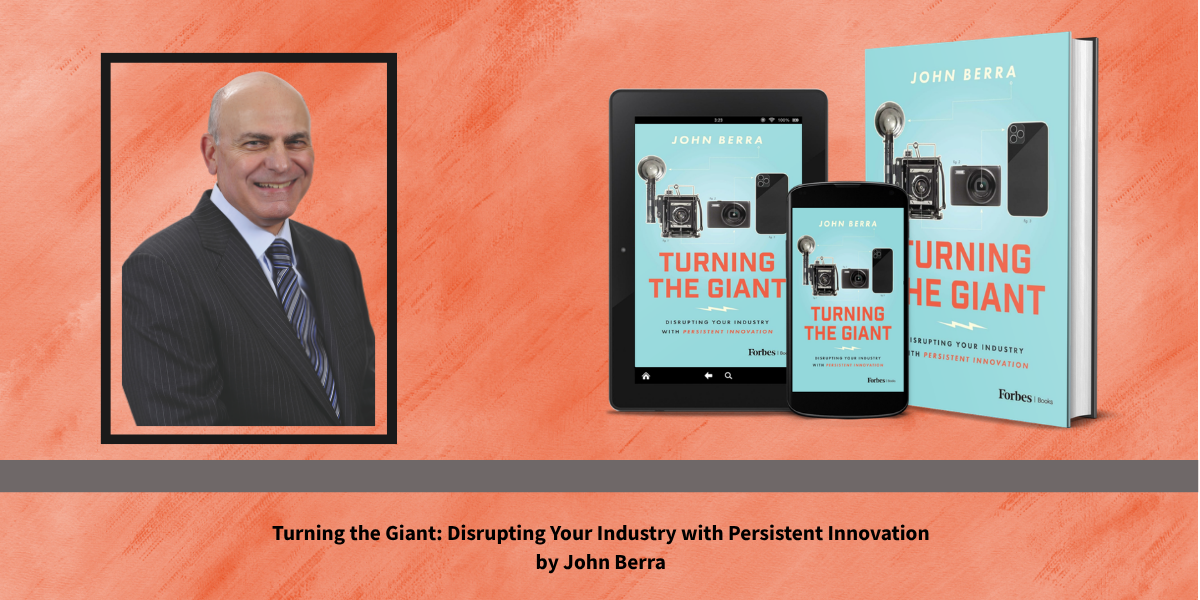
That question followed him for the rest of his career. It eventually became the foundation for Turning the Giant, his book about how leaders can stop fighting the obstacles in their way and start using them.
Giants Don’t Get Smaller. You Get Better at Handling Them.
When John first started encountering resistance in organizations, corporate bureaucracy, skepticism, and entrenched habits, he assumed the goal was to defeat these things outright. Knock them down. Clear the path.
Over time, working his way up through Fisher-Rosemount Systems and eventually Emerson, he realized that the approach doesn’t scale. The bigger the organization, the bigger the giants. Bureaucracy doesn’t disappear as a company grows. It often intensifies.
What changes is how a leader relates to it. Instead of trying to eliminate resistance, John learned to redirect it. Turn skeptics into allies one conversation at a time. Build trust incrementally. Keep moving toward a vision even when the immediate response to it is doubt.
Frustration Isn’t a Problem. It’s Fuel.
There’s a specific idea in John’s thinking that’s easy to miss if you’re skimming. He doesn’t talk about frustration as something to manage or suppress. He talks about it as something to channel.
Properly channeled frustration, in his words, can become one of the greatest catalysts for innovation and transformation. The frustration he felt doing repetitive work wasn’t wasted energy. It was the spark that eventually led him to challenge the status quo constructively, rather than just enduring it.
That’s a different relationship with frustration than most people have. Most people either push it down or let it turn into cynicism. John found a third path: let it point you toward what needs to change, and then go change it.
Innovation Doesn’t Need a Garage
One assumption John pushes back on directly is the idea that real innovation only happens in scrappy startups, small teams, minimal red tape, maximum freedom.
His career suggests otherwise. Some of the most significant transformations he witnessed happened inside very large, well-established organizations. The difference wasn’t the size of the company. It was whether leaders were willing to challenge entrenched ways of doing things, empower the people around them, and persist through resistance instead of accepting “that’s just how it’s done” as a final answer.
Large organizations have more giants. They also have more opportunities for someone willing to turn them.
One Idea Worth Acting On Today
If there’s a single takeaway John hopes sticks, it’s a reframe more than a tactic. When you hit resistance, don’t default to fighting harder or giving up. Ask a different question instead: how can I turn this giant?
It sounds simple. It is simple. But simple isn’t the same as easy, and John is the first to admit that turning giants is genuinely hard work. It’s also, in his experience, one of the most rewarding things a leader can do.
If innovation feels impossible inside a big, slow, resistant organization, John Berra has been there and found the way through. Turning the Giant is available on Amazon.